What if the best way to keep a renovation on budget isn’t to pick a number and hope for the best, but to plan for decisions and changes from the start? If you’re wondering how to budget for a home renovation, it’s understandable to feel unsure about what belongs in the total. Estimates may use different assumptions, and an older home may reveal conditions that weren’t visible during planning.
A useful budget is more than a spending limit. It connects your priorities to a clearly defined scope, estimates based on that scope, and a plan for handling surprises. That gives you a stronger foundation for discussing the work and costs before the project begins.
This guide explains how to set priorities, understand what an estimate includes, account for allowances and unexpected work, and compare proposals on an apples-to-apples basis. You’ll also learn how to track changes without losing sight of what matters most, whether you’re updating a kitchen, renovating a bathroom, or taking on a larger project.
Key Takeaways
- Learn how to budget for a home renovation by connecting available funds to a clearly defined project scope.
- Separate essential repairs from upgrades you may be able to defer, so spending reflects what matters most.
- Build a more complete estimate by accounting for labor, materials, project management, and selections that are still undecided.
- Set aside a contingency reserve for unexpected conditions, since no estimate can remove every uncertainty in an existing home.
- Use a five-step budgeting process and a project-specific estimate to plan a Greater Boston renovation with a clearer view of scope and costs.
How to Budget for a Home Renovation: Start with Goals and Scope
A renovation budget works best as a plan, not just a spending limit. It connects the work you want done, the related expenses, and the funds you can make available. Before assigning amounts, get specific about what the household needs from the project. “A brighter kitchen” is a useful goal, but deciding whether the work includes a new layout, added storage, or updated finishes turns that goal into a scope that can be estimated.
This distinction matters in Greater Boston, where the age and condition of homes, along with the work involved, can vary from property to property. Generic averages can’t describe what your particular project requires. A useful estimate starts with the actual home and a clear description of the work. For a broad look at the kinds of projects homeowners take on, see this Home Improvement Overview.
Turn renovation ideas into a clear project scope
Write down the rooms involved, the problems to solve, and the outcomes your household needs. Scope means the work included, not just the finished look you’re picturing. For example, a kitchen plan might include changing the layout to improve movement, adding storage, and replacing worn finishes. Note which areas or features are staying as they are, too. Those details give the estimate something concrete to describe.
Sort each idea into a practical group:
- Must-haves: Repairs or changes needed for safety and everyday function.
- Preferred upgrades: Improvements that would make the space work or feel better but aren’t essential to the project’s purpose.
- Later possibilities: Items that could be handled in a future phase if the current scope needs to stay focused.
If a kitchen refresh is part of your plans, decisions about layout and storage can help define the kitchen remodeling work included in the project.
Set priorities before assigning budget amounts
Rank choices by safety, function, durability, and personal importance. Imagine a family choosing between moving a wall to create a more useful kitchen layout and upgrading the finishes. If the current arrangement makes cooking difficult, changing the layout may better address the household’s everyday needs. Finish upgrades can stay on the preferred list while the essential work is defined.
Priorities also depend on who uses the home. A family might put accessible storage or easier movement through a room ahead of decorative details. Naming that priority helps keep conversations focused on how the space needs to work, not only on how it should look.
Be deliberate about changes after planning. Adding work later can affect the estimate, selected materials, and coordination of the work. Before settling on a scope, clarify what each priority means in practical terms. That gives you a stronger starting point for reviewing estimates and deciding which improvements belong in this phase.
What to Include in a Home Renovation Budget
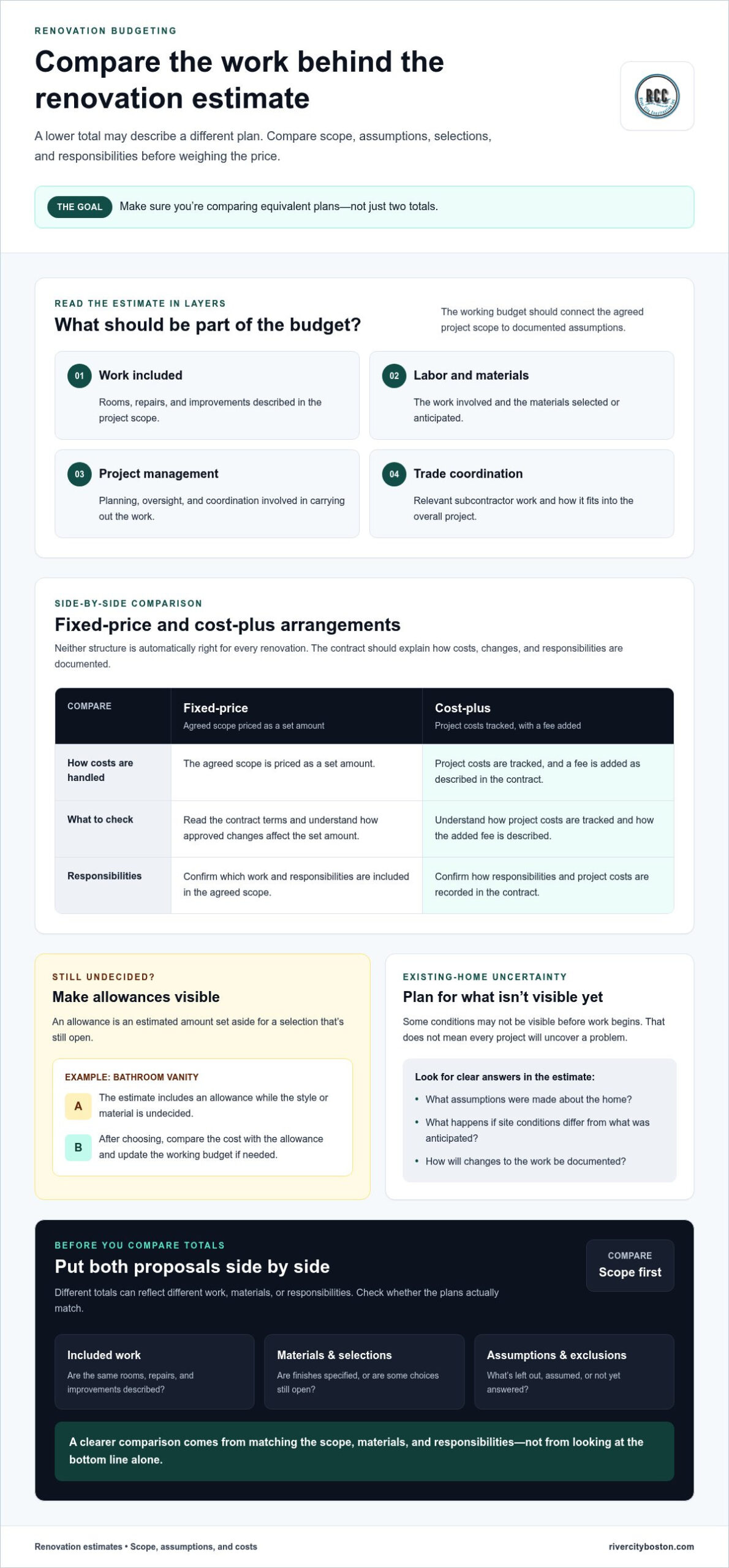
A renovation budget is the planned total for the agreed scope of work, based on documented assumptions about materials, responsibilities, and selections. It should make clear what the estimate covers, what remains undecided, and what could change if the project’s conditions or choices change.
Use this checklist to see whether your budget covers the main parts of the work:
- Work included: Each room, repair, and improvement in the project scope.
- Labor and materials: The work involved and the materials selected or anticipated.
- Project management: Planning, oversight, and coordination involved in carrying out the work.
- Subcontractor coordination: Relevant trade work and how it fits into the overall project.
Resources from the National Association of Home Builders can provide broader housing and construction context, but your working budget should still be tied to your home and the specific scope being estimated.
Separate known costs from selections and uncertainties
Mark which parts of the plan have a defined scope and which depend on decisions you haven’t made yet. An allowance is an estimated amount set aside for a selection that’s still open. For example, a bathroom estimate might include an allowance for a vanity because the homeowner hasn’t chosen a style or material. Once the choice is made, compare its cost with the allowance and update the working budget if needed.
Record which materials have been selected and which are still flexible, since those choices can affect the estimate. Existing homes can also have conditions that aren’t visible before work begins, although that doesn’t mean every project will uncover a problem. Review how the estimate describes changes to the work if site conditions differ from what was anticipated.
Compare estimates by scope, not just by the bottom line
Two estimates can show different totals because they describe different work, materials, or responsibilities. One may include a specific finish or coordination task that another leaves out. List exclusions, assumptions, and unanswered questions side by side before comparing totals. This helps you see whether you’re weighing equivalent plans or different versions of the project.
Contract structure matters, too. In a fixed-price arrangement, the agreed scope is priced as a set amount, subject to the contract’s terms and any approved changes. In a cost-plus arrangement, project costs are tracked and a fee is added as described in the contract. Neither structure is automatically right for every renovation. Make sure you understand how costs, changes, and responsibilities are documented.
If you’re working through how to budget for a home renovation, bring the scope, assumptions, and open questions into the estimate discussion. River City Construction Inc provides project quotes that connect a defined plan with an estimate. To discuss your renovation, share your project details.
How to Protect Your Renovation Budget from Surprises
No estimate can remove every uncertainty in an existing home. It is based on visible conditions and the agreed scope at the time it’s prepared. If work reveals a condition that couldn’t reasonably be seen beforehand, take time to understand the options and how they affect the plan. Don’t assume every older home will have hidden problems.
Plan for uncertainty without treating every surprise as inevitable
Keep expected costs for the defined work separate from a contingency reserve. This reserve is money set aside for genuinely unforeseen conditions, not a pool for adding upgrades or expanding the project on a whim. The amount depends on the home and scope. Discuss what uncertainty the estimate does and doesn’t account for instead of relying on a one-size-fits-all percentage.
For example, imagine a bathroom renovation where opening a wall reveals a damaged section that wasn’t visible during planning. The repair may affect the work, materials, and schedule. A clear process lets the homeowner review the issue and decide how to proceed before the added work moves forward. If you’re exploring possible funding support, Experian’s Government Grants for Home Improvement guide offers a place to learn about assistance programs. Don’t treat potential assistance as money available until eligibility and terms are clear.
Keep decisions and changes visible
A simple project log can prevent confusion as selections and plans evolve. Keep dated notes on choices, requested changes, revised estimates, and approvals. For each proposed change, record:
- What is changing: Describe the added, removed, or revised work.
- Cost effect: Note how the estimate or contract amount will be affected.
- Schedule effect: Record any change to the planned sequence or timing.
- Decision status: Track whether the change is still under review or has been approved.
Delayed selections can affect purchasing and coordination. If a finish hasn’t been chosen, the project team can’t plan that part of the work with the same clarity as a finalized selection. Set decision dates with the project team and keep the current selection status in the log, so everyone is working from the same information.
Approve a change only after its scope, cost effect, and schedule effect are clear. Written approval gives the homeowner and project team a shared record of what was agreed to and when. It also makes estimate revisions easier to follow, rather than leaving important decisions scattered across conversations. A clear record won’t prevent every surprise, but it can make the response easier to understand and keep decisions tied to the renovation’s priorities.
A Step-by-Step Plan for Building Your Renovation Budget
A budget becomes easier to use when you build it in a clear order, then keep it current as decisions are made. For Greater Boston homeowners, the goal isn’t to find one area-wide figure and apply it to every home. Estimates should reflect the property, agreed work, and selections involved.
- Define the scope. Write down the rooms and work included, along with what the project will leave untouched. A clear scope gives estimates a consistent starting point.
- Rank priorities. Identify which parts of the project matter most to the household. If resale appeal is one of your goals, treat it as a consideration, not a promised return.
- Gather project-specific estimates. Use estimates based on the actual home and the same described work. A kitchen update and a bathroom renovation have different requirements, even in the same property.
- Review assumptions. Note which selections are final, what remains an estimate, and what the proposal assumes about the home and responsibilities. Permit requirements can vary by municipality, so verify applicable requirements with the relevant local authority.
- Track decisions. Record selections, approved changes, estimate revisions, and who approved each change. Update the working budget as the project moves forward.
Build a working budget before construction begins
Start with estimates that describe the same scope, then organize the figures so you can see the project’s status at a glance. Keep planned expenses, committed amounts, and remaining funds in separate columns. “Planned” means an expense is anticipated, “committed” means it has been agreed to, and “remaining” shows what’s left in the available project funds.
Keep selections and assumptions visible beside the numbers. Record chosen materials separately from items still awaiting a decision, and show any contingency reserve on its own line. That way, an undecided finish or reserve for uncertainty doesn’t get mistaken for money available to expand the scope.
Review the budget as the renovation progresses
Review the working budget at key decision points, such as when selections are finalized or a proposed change is considered. Compare approved commitments with planned amounts, update the totals, and note who authorized any scope change. This helps prevent an old estimate from being treated as current after the plan has changed.
For instance, during a kitchen or bathroom project, a homeowner may select a different material from the one assumed in the estimate. Record the new selection and its effect on the budget before treating the revised figure as settled. This also helps the project team coordinate around current decisions instead of relying on outdated information.
Building a practical budget is an ongoing part of project planning. River City Construction Inc can help translate renovation priorities into a defined scope and project estimate for a Greater Boston home.
Plan a Greater Boston Renovation Budget with a Clear Project Scope
A general contractor can help turn your priorities into a defined set of work, organize estimates, and coordinate the trades involved in a renovation. A budget is easier to understand when the estimate reflects the actual scope and shows how the work fits together, rather than presenting a number without context.
River City Construction Inc works on residential remodeling and design-build projects in Greater Boston, including comprehensive renovations. For a homeowner planning a kitchen update, the conversation might start with an everyday frustration: there isn’t enough room to prepare meals, or the current layout doesn’t work for the household. From there, the project discussion can clarify what work addresses the need and which selections or decisions remain open.
What a project estimate should help clarify
A defined scope gives the estimate a useful structure. It helps organize the labor, materials, and project coordination needed for the agreed work, while making assumptions easier to see. A kitchen estimate, for example, is more meaningful when it describes the included work and distinguishes settled selections from choices still to be made. Homeowners planning this kind of project can explore River City Construction Inc’s kitchen remodeling services.
Before discussing totals, make sure you can follow how the estimate relates to the project. Write down any unclear line items or assumptions. A scope-focused conversation can connect each part of the proposed work to your household’s goals and show what the estimate covers, along with the decisions that may still affect the plan.
Move from budget planning to a project conversation
Bring a short, practical brief to the first conversation. Include the rooms involved, the problems you want to solve, your highest priorities, known constraints, and questions about the work. You don’t need to have every finish selected. A clear picture of what matters most is a helpful start.
- Project goals: Describe how you want the space to work for your household.
- Known constraints: Note any limits that may shape the plan, such as areas that need to remain usable.
- Open questions: List choices or scope details you’d like to understand before moving ahead.
Local context matters, too. A homeowner in Cambridge or Somerville may be planning for a different home and scope than a household elsewhere in Greater Boston. River City Construction Inc serves homeowners in Boston, Winchester, Medford, Somerville, Cambridge, Belmont, Lexington, Concord, Wellesley, Newton, Wayland, and Natick. A project quote can reflect the work being discussed rather than a generic area-wide figure.
Once the scope is clearer, the conversation can focus on practical next steps: which work belongs in the project, what assumptions shape the estimate, and what decisions remain. River City Construction Inc offers homeowners a free quote to discuss renovation plans.
Take the First Step Toward a Well-Planned Renovation
Your next step doesn’t need to be a finished design. Start with a clear description of what you want your home to do better, what matters most to your household, and which decisions are still open. That brief gives a project conversation a useful starting point and helps keep future choices connected to your priorities.
Learning how to budget for a home renovation is ultimately about making decisions with a clear view of the work and its trade-offs. As your plans take shape, keep your questions visible and give yourself time to consider changes before approving them. A thoughtful conversation can turn a broad idea into a more defined direction for your home.
With a clear starting point and the right conversations, you can move ahead with greater confidence and build a space that better serves the way you live.
Frequently Asked Questions
How do I create a budget for a home renovation?
Start with your household’s main goals, then turn them into a written project plan before assigning funds. A practical way to learn how to budget for a home renovation is to separate essential work from optional improvements and note which decisions are still open. In Boston, Winchester, Medford, Somerville, Cambridge, Belmont, Lexington, Concord, Wellesley, Newton, Wayland, and Natick, base your plan on estimates tailored to the actual home and scope.
What should be included in a home renovation budget?
Include the planned work, labor, materials, project coordination, and any relevant subcontractor work. Also account for items such as protecting nearby rooms, removing debris, and delivering materials when they apply to the project. If a selection is still undecided, keep its estimate separate from confirmed choices so you can see what may change. For example, choosing a different countertop material later may affect the amount assigned to that part of a kitchen project.
How much should I set aside for unexpected renovation costs?
There’s no single reserve amount that fits every renovation. Consider how much uncertainty the scope carries, the condition of the home, and what funds your household can reasonably keep available without relying on them for planned upgrades. A project with clearly visible work may call for a different reserve than one involving areas that haven’t been opened or inspected. Keep this money separate from planned spending and agree on how it can be used.
Why do renovation estimates vary so much?
Estimates can differ because they describe different work, materials, assumptions, or responsibilities. One proposal may include a specific finish, while another may use an allowance or leave that selection open. Access to the work area and the condition of existing components can also affect what’s anticipated. Compare the written details behind each total, not just the final amount. A lower figure may reflect a narrower scope rather than the same work at a better price.
Should I renovate one room at a time or do several rooms together?
Choose the approach that fits your priorities, available funds, and household’s ability to live through the work. Several connected rooms may make sense as one coordinated project if the work overlaps, while separate phases can help keep the immediate scope smaller. Before deciding, consider whether later work could affect finishes or materials completed earlier. For instance, planning a kitchen and nearby dining area together may help you make consistent decisions about how the spaces function.
Can I change my renovation plans after work begins?
Plans can change, but a change may affect the work, materials, project schedule, and total. Before approving a revision, review its details in writing, including the updated estimate and timing. For example, switching a planned fixture after related work is underway could require different materials or coordination. Keep a copy of the approval with your project records, and make sure the current plan reflects the decision before the team proceeds.
Do I need a permit for a home renovation in Greater Boston?
Permit needs depend on the project and the municipality, so there isn’t one answer for every Greater Boston home. Check the applicable requirements with the local building department before work begins, and include relevant permit steps in your planning. Homeowners in Boston, Cambridge, Somerville, Medford, Newton, Winchester, Belmont, Lexington, Concord, Wellesley, Wayland, or Natick should verify requirements for their own community and project rather than relying on a neighboring town’s process.
How can I compare renovation contractor estimates fairly?
Compare matching details side by side: work included, material descriptions, selections, exclusions, assumptions, and responsibilities. Note unanswered questions and clarify them so you understand what each proposal covers. Also compare how each estimate handles undecided selections and changes, since those terms affect how you track the project. If two totals still differ, identify which scope items or assumptions explain the gap before making a decision.
Ready to plan a renovation in Greater Boston? Contact River City Construction Inc for a free quote and share your project goals, priorities, and questions.