A polished pitch isn’t enough to establish trust. Finding a trustworthy contractor in Boston starts with a clear project plan, straightforward conversations about permitting, and a management approach you can understand. Look at the full picture, including relevant experience, awards, and what homeowners say about working with the contractor.
It’s reasonable to want more than attractive photos before inviting a contractor into your home. A remodeling project affects your routines as well as your property, so clear information about the work ahead can make the decision feel more manageable.
This guide explains how to assess a Boston-area contractor through planning, permitting discussions, communication, project management, credentials, and homeowner experiences. You’ll also learn how to relate those details to your own project and make a considered choice based on more than a first impression.
Key Takeaways
- Read homeowner testimonials for details about communication, planning, and how concerns were handled, not just overall praise.
- Compare Boston-area contractors by how clearly they explain the project scope, schedule, permits, and day-to-day management.
- Use awards as one signal of recognition, then consider them alongside homeowner experiences and relevant project examples.
- Learn which official records can help you review a Massachusetts contractor’s registration, license, complaints, and disciplinary history.
- Connect your project goals to the right remodeling service, then use a clear scope of work to guide the next conversation.
Contractor testimonials and client experiences
Testimonials can show how a contractor works once renovation plans meet daily life. Look for specific examples about schedule updates, dust control, changes to the work, and how the team handled concerns. “The kitchen looks beautiful” speaks to the result. An account of how a delayed cabinet delivery was explained gives you more insight into communication.
Read several reviews from different sources instead of relying on one glowing quote on a contractor’s own site. Note the project type and location, such as a Boston bathroom renovation or a nearby basement remodel. A similar project can reveal more about relevant experience than a review of unrelated work. Pay attention to recurring details, not just star ratings or broad praise.
Use a simple process to assess reviews. First, compare the project described with your own plans. Then look for details about planning, communication, and cleanup. Finally, note how the reviewer describes problems, since renovations can involve decisions and changes. For example, did the contractor discuss a revised work plan before continuing? That account tells you more than a general claim of “great service.”
Massachusetts consumer protections for covered home-improvement contracts include written-contract requirements. Cancellation rights can depend on the agreement and the circumstances in which it was signed, so read the cancellation terms promptly and follow the stated process.
- Look for detail: Specific comments about who answered questions, how updates arrived, or how a concern was resolved are more useful than “good job.”
- Check project fit: A review of a kitchen renovation may offer relevant insight for your kitchen, but not necessarily for an addition or another type of work.
- Notice patterns: If several homeowners mention clear change discussions, that repeated experience is more informative than one isolated compliment.
- Ask about context: If a contractor shares a homeowner reference, ask about the project scope, communication, and how unexpected decisions were handled.
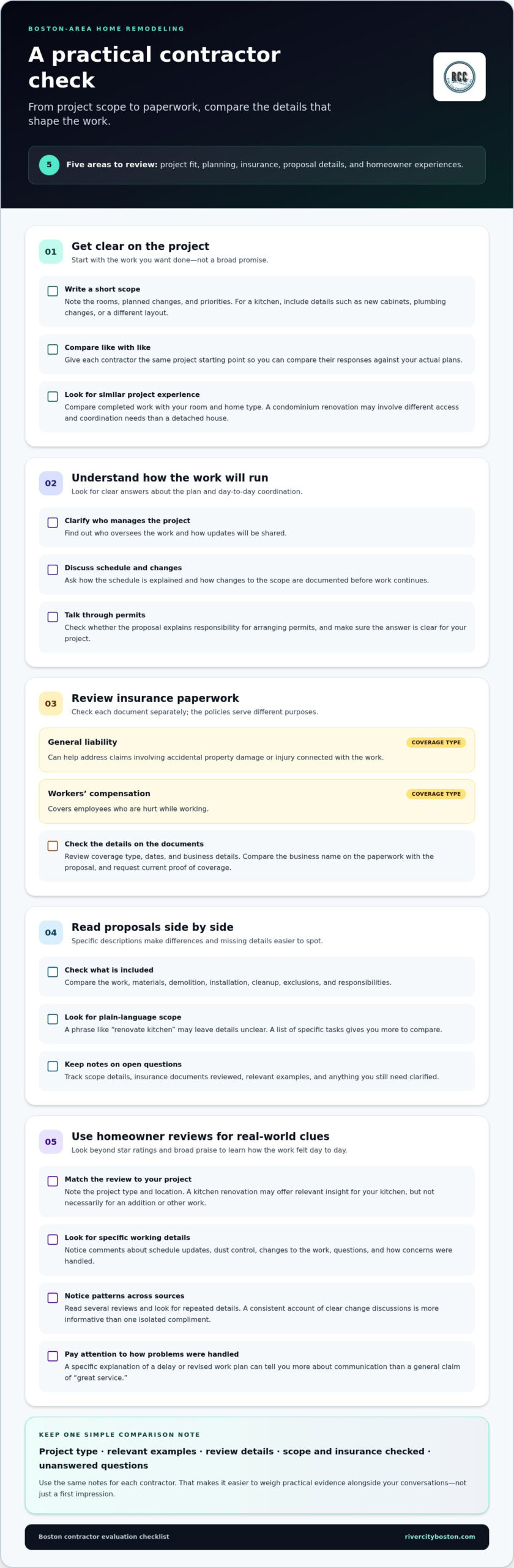
Keep a short comparison note for each contractor: project type, review details, repeated strengths, and any unanswered questions. For instance, “Boston condo renovation, clear updates, unclear change process” gives you a practical point to discuss before signing. Finding a trustworthy contractor in Boston involves weighing these homeowner experiences alongside the written scope and planning process, rather than treating testimonials as proof on their own. For readers considering kitchen work, the Boston kitchen remodeling page offers a relevant local point of reference.
Finding Boston-area general contractors
Start with the work itself: a contractor suited to kitchen remodeling may not be the right fit for a basement conversion. Write a short scope describing the rooms, changes, and priorities. For example, note whether your kitchen plan includes new cabinets, plumbing changes, or a different layout. This helps you compare contractors against the same project instead of weighing broad promises, and gives each conversation a practical starting point.
For a Boston-area search, build a shortlist using local project examples, homeowner recommendations, and contractors’ descriptions of their work. Look for experience with homes and projects like yours. A condominium renovation may involve different access and coordination needs than work in a detached house. Ask how the contractor approaches those details and whether the answer addresses your situation directly.
Ask what insurance the contractor carries and request current proof of coverage. General liability insurance can help address claims involving accidental property damage or injury connected with the work. Workers’ compensation covers employees who are hurt while working. The policies serve different purposes, so review each document separately and compare the business name with the proposal.
Use the first conversation to understand how the project will be organized. Ask who manages the work, how updates are shared, and how scope changes are documented. If you’re remodeling a bathroom, for example, ask how the contractor will communicate decisions that affect the sequence of work. Clear answers give you a better basis for comparing working practices.
- Match experience to scope: Compare completed projects with your room, home type, and planned changes.
- Clarify the project plan: Ask how the scope, schedule, updates, and changes will be documented.
- Review insurance documents: Check the coverage type, dates, and business details shown on the paperwork.
- Compare proposals carefully: Look for differences in included work, materials, exclusions, and responsibilities.
A proposal is more useful when it describes the work in plain language. Compare what each document includes, such as demolition, installation, cleanup, and responsibility for arranging permits. If one proposal says “renovate kitchen” while another lists specific tasks, ask for a clearer scope before comparing them. The detail makes gaps easier to spot.
Keep a simple comparison sheet with the contractor’s name, relevant project examples, insurance documents reviewed, scope details, and follow-up questions. This helps you make a decision based on practical evidence, not a single impression. If you’re ready to discuss a home remodeling project, share your project details and the work you’re considering.
Awards and homeowner testimonials
An award can be a useful clue, but its meaning depends on who gave it and what it recognized. For a Boston renovation, look for the awarding organization, category, year, and stated selection criteria. A design award may recognize appearance, while a customer-service award may reflect homeowner feedback. These distinctions help you decide whether the recognition matches your priorities.
Look beyond the badge on a contractor’s website. Find the original award announcement or recipient listing, then check that it names the same business and category. If a contractor highlights a “best of” distinction, identify who organized it and how recipients were selected. Clear criteria provide more context than an unexplained graphic, but an award still doesn’t show how a specific project was managed.
Homeowner testimonials offer another perspective. Look for concrete details about the experience, such as whether the team protected floors, explained a change, or kept the homeowner informed during a renovation. A review describing how a family managed temporary kitchen access may help you picture the disruption. A short comment praising the finished room says less about the working process.
- Match the category: Compare the award’s focus with your priorities, such as design, workmanship, or customer experience.
- Check the source: Identify the organization, award year, selection method, and exact category.
- Read the full review: Look for details about communication, decisions, and the homeowner’s experience during the project.
- Compare like with like: A Boston bathroom renovation review may be more relevant to your plans than feedback about an unrelated project.
Notice how the contractor responds to criticism, too. A measured reply that addresses a homeowner’s specific concern may reveal more about communication than a stream of generic thank-you responses. Check whether the response explains a practical next step without exposing private details. A reply acknowledging a missed update and explaining how it was addressed is more informative than a defensive argument.
Use awards and reviews together, not as substitutes for project documents or direct conversations. An award can point to public recognition; a detailed testimonial can describe one homeowner’s experience. Neither guarantees the same result in your home. As you assess contractors in Boston, record the award source, relevant category, review examples, and questions they raise. This evidence-based note helps keep a polished profile from outweighing the project facts that matter to you.
How do I verify a Massachusetts contractor’s license and registration?
Ask the contractor for the exact business name and any license or registration number they use. In Massachusetts, search official state records using those details rather than relying on a logo, estimate, or verbal assurance. Compare the name on the record with the proposal. If the business uses a different legal name, clarify how the names are connected before moving forward.
Check the available record details, including status, business identity, and any listed work category. A number alone doesn’t show whether a record belongs to the contractor you’re considering. If a proposal names one company but a search result identifies another, pause and resolve the mismatch. Save a copy or note the record date so you can compare it with your project documents later.
Be precise about license and registration terms. Contractors may refer to different credentials, so ask what each number represents and what work it relates to. Don’t assume one credential automatically covers every type of renovation. A kitchen project involving structural changes, for example, may raise different credential questions than a straightforward finish update. Match the record to the proposed work rather than relying on a general claim of being “fully licensed.”
- Collect the details: Write down the contractor’s business name, any alternate business name, and each license or registration number provided.
- Search official records: Use Massachusetts state records and enter the identifying details exactly as supplied.
- Compare the results: Check whether the listed business identity and record details align with the proposal and project scope.
- Keep a record: Save your notes with the estimate, contract, and other project documents.
If a record is difficult to interpret, focus on the specific mismatch. A spelling difference, former business name, or unclear work category calls for a clear explanation, not a guess. Write down the question and answer, including which credential applies to the work described. This creates a practical paper trail alongside the written scope and helps prevent confusion later.
Before signing, compare the verified business identity with the contract name, payment instructions, and insurance paperwork. If the contract names a company but the registration search shows an individual, for example, ask how those records relate and keep the answer in writing. Finding a trustworthy contractor in Boston means reviewing credentials alongside the scope, project plan, insurance details, and homeowner experiences. Consistent names across those records make it easier to identify the business responsible for the agreement.
How can I check a Boston contractor’s complaints, lawsuits, and disciplinary history?
Search the contractor’s exact business name, then repeat the search using any alternate name shown on its proposal. A business may operate under a name different from its owner’s, so record both when available. For a Boston contractor, search Massachusetts consumer complaint resources and court records separately, since each may show different information.
A complaint is an account of a concern, not proof that the contractor did something wrong. Read the details before drawing conclusions. Check the date, project type, stated issue, and any response or resolution. A complaint about missed communication, for example, differs from one describing unfinished work. Several similar accounts deserve closer attention than one vague entry, but context still matters.
For lawsuits, search court records using the business name and relevant owner or principal names. Read the case details and current status, not just a search result or case title. A filing shows that a legal dispute was brought; it doesn’t establish that every claim is true. Note whether the record concerns a renovation dispute, payment disagreement, or unrelated matter.
Search disciplinary records separately. Identify the credential or registration relevant to the work, then look for records from the Massachusetts agency or board responsible for it. Match names and identifying details carefully. Similar business names can lead to the wrong record, and an owner’s name may appear separately from a company name.
- List the names: Copy the exact business name, alternate names, and names of principals from project documents.
- Search complaints: Review Massachusetts consumer complaint information and record the issue, date, response, and resolution.
- Search court records: Check relevant business and principal names, then read case details and status.
- Review discipline: Search the appropriate licensing or registration record and compare its identifying details.
- Keep context: Note whether each record concerns residential work similar to your project.
Keep a dated note of what you reviewed and what each record actually says. Exclude results concerning a different company from your comparison. If a record describes an unresolved concern, note the specific issue and compare it with the contractor’s written project scope and explanations. This careful approach supports a fair assessment without treating every allegation as a finding.
Use these checks alongside project documents and homeowner accounts, not as a stand-alone verdict. A clear record search can help you identify focused questions about a Boston renovation before making a decision.
Warning signs worth closer review include several similar complaints, unresolved concerns such as unfinished work, and relevant disciplinary records. Lawsuits involving renovation or payment disputes may also merit attention, but allegations are not proof of wrongdoing. Confirm that each record concerns the contractor and the work in question.
River City Construction: Kitchen Remodeling
River City Construction Inc can help when your Boston home needs kitchen remodeling planned around how you cook, gather, and use the space. After comparing contractors and reviewing project details, a conversation about your priorities is a practical next step. Consider what feels limiting now, such as crowded counters, worn finishes, or a layout that interrupts family routines. These details help shape a scope around your household’s needs.
River City Construction Inc also works on bathroom and basement remodeling, along with accessory dwelling units (ADUs). If your plans focus on a kitchen, begin with the changes that matter most and discuss how they fit the room. Contact River City Construction Inc to talk about your remodeling project.
Turn Your Research Into a Clear Project Plan
The next step is to turn your priorities into a written scope to discuss with a contractor. Think about how your household uses each room, what needs to change, and which decisions matter most. That preparation makes finding a trustworthy contractor in Boston a practical process, not a choice based on a polished first impression.
River City Construction Inc offers kitchen, bathroom, and basement remodeling for homeowners planning updates to those spaces. Bring your goals and questions to the conversation, and use it to explore how the work could fit your home. A thoughtful plan gives you a steadier starting point for the decisions ahead.
Your home project can begin with one clear conversation and a plan shaped around the way you live.
Frequently Asked Questions
How do I compare contractor quotes and spot unusually low bids?
Compare what each quote includes, not just its total. Check whether the same tasks, materials, preparation, cleanup, and permit responsibilities appear in each proposal. A lower bid may leave out work another contractor has included, such as removing old cabinets or repairing surfaces. Ask what any planned amounts cover when product choices or costs remain undecided. Compare exclusions and included work before deciding.
How can I verify a contractor’s references and past work in Boston?
Ask for examples of completed projects similar to yours, then compare the stated scope with the photos or project details. With permission, speak with a past homeowner about how the finished space works in daily life. For a Boston renovation, ask whether the home type and room layout resemble yours. You can also ask what changed during the work and how the contractor handled final adjustments or cleanup.
What should a Massachusetts home improvement contract include?
Clearly describe the scope of work, including tasks, materials, exclusions, and who is responsible for arranging permits. Document the schedule and how scope changes will be recorded.