Materials aren’t automatically included in a handyman’s labor charge. For a handyman for a Boston rental property, repair materials may be billed separately or supplied by the property owner, so it helps to distinguish labor from materials when reviewing an estimate. Massachusetts Department of Revenue says materials purchased for handyman repairs in Boston are subject to 6.25% sales tax.
Turnover work can seem straightforward until a loose handle leads to a sticking door, a wall patch, or a fixture that needs replacing. Before work begins, it’s reasonable to ask how labor is charged, whether there’s a minimum service fee, whether an estimate visit costs extra, and how material costs are handled.
This guide explains how handyman charges are structured in Boston, what can affect a minimum fee or estimate visit, and which common repairs can help prepare a rental for its next occupant. You’ll also learn how to plan for materials, prioritize safety-related repairs, and recognize when a larger plumbing or electrical job needs a different scope. These details can help you organize turnover repairs and set expectations.
Key Takeaways
- Separate labor from parts when reviewing a turnover estimate, and account for the 6.25% sales tax on materials purchased for handyman repairs in Boston.
- Group door, drywall, hardware, and fixture repairs into one clear task list so the scope of a rental turnover is easier to assess.
- Check smoke alarms as part of turnover planning; their age and battery type can affect whether they remain suitable for use.
- Understand what an hourly rate or minimum service fee covers, and how task complexity, access, and materials can shape the final estimate.
- For estimate visits, clarify the work to be assessed and how the visit relates to the written estimate before planning the repair schedule.
Turnover repairs: doors, locks, drywall, fixtures, and smoke detectors
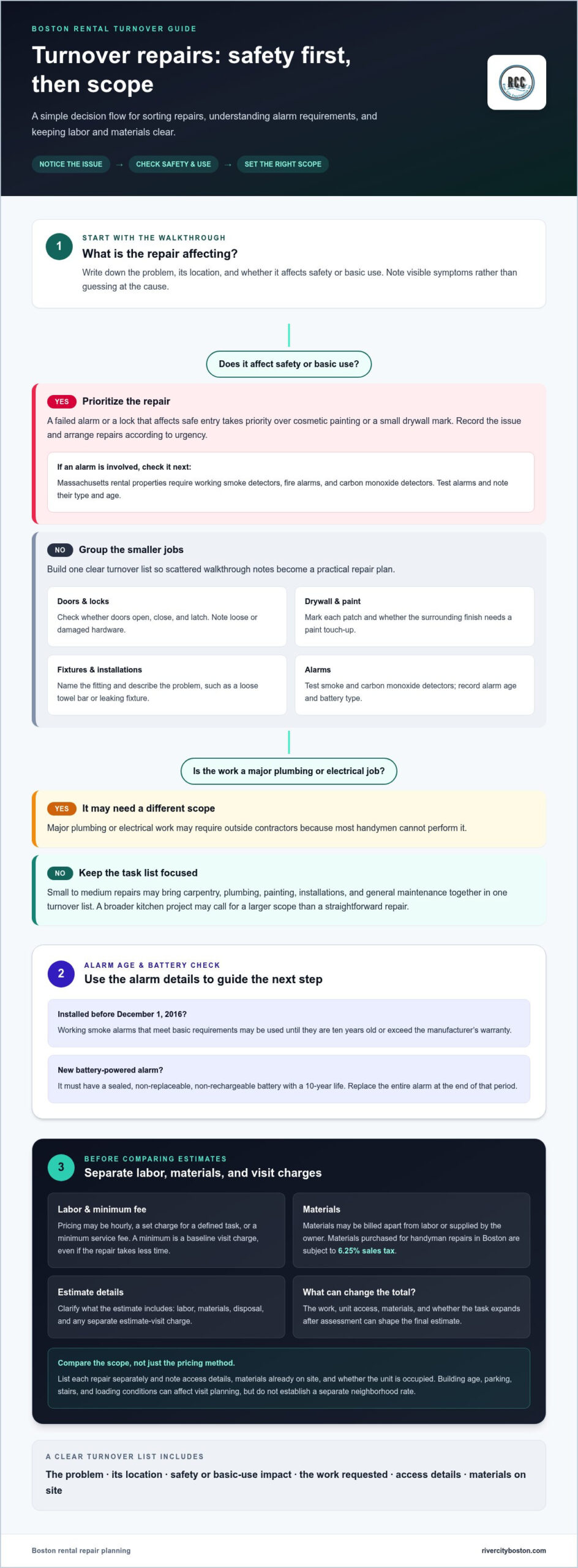
A move-out can leave a short list of small repairs that still affect the next resident’s first day. A handyman for a Boston rental property may handle tasks such as patching drywall, adjusting a sticking door, changing hardware, and completing simple installations. Grouping the jobs helps turn a scattered walkthrough into a practical repair plan.
Massachusetts rental properties require working smoke detectors, fire alarms, and carbon monoxide detectors. During a turnover, test the alarms and note their type and age. Working smoke alarms installed before December 1, 2016, that meet basic requirements may be used until they are ten years old or exceed the manufacturer’s warranty. New battery-powered alarms must have a sealed, non-replaceable, non-rechargeable battery with a 10-year life; replace the entire alarm at the end of that period.
There’s no single response time for every urgent repair. Prioritize a failed alarm or a lock that affects safe entry over cosmetic painting or a small drywall mark. Record the problem, its location, and whether it affects safety or basic use, then arrange repairs according to urgency.
Common apartment repairs and installations include tightening door hardware, adjusting a door that won’t close, patching nail holes, and replacing a simple fixture. A bedroom door that catches may need adjustment, while damaged drywall may need patching and painting. During a quick refresh, walk through the kitchen and bathroom too, where a loose handle or leaking fixture can be easy to miss.
Small to medium residential repair and maintenance work can bring carpentry, plumbing, painting, and general repairs together in one turnover list. Separate visible symptoms from suspected causes: note a dripping faucet, for instance, rather than assuming which part has failed. Major plumbing or electrical work may require outside contractors because most handymen cannot perform it.
- Doors and locks: Check that doors open, close, and latch properly, and identify loose or damaged hardware.
- Drywall and paint: Mark each patch needed and whether the surrounding finish also needs a paint touch-up.
- Fixtures and installations: List the fixture or fitting and describe the issue, such as a loose towel bar.
- Alarms: Test smoke and carbon monoxide detectors, then record alarm age and battery type.
If a kitchen turnover points to more than a small repair, a broader Boston kitchen remodeling project may better suit the work. For a straightforward turnover, a clear list of doors, drywall, fixtures, and alarms helps keep the scope focused.
Boston handyman labor rates and minimum service fees
Boston handyman pricing may be based on hourly labor, a set charge for a defined task, or a minimum service fee. The minimum is a baseline charge for a visit, even if the repair takes less time. It matters most for small jobs: fixing one cabinet hinge may take less labor than a longer drywall repair, but still requires a visit.
No single rate fits every repair. The total depends on the work, access to the unit, materials, and whether the task expands after assessment. A loose fixture differs from a hidden leak, even if both appear on the same turnover list. Compare estimates by scope and included work, not just by pricing method.
Ask what the estimate covers: labor, materials, disposal, and any separate visit charge. Materials may be billed apart from labor or supplied by the owner. Massachusetts Department of Revenue says materials purchased for handyman repairs in Boston are subject to 6.25% sales tax. Keep the parts list and labor description together so the final total is easier to understand.
Boston neighborhoods can vary in building age, parking, stair access, and loading conditions. Those practical details can affect how a repair visit is planned, but they don’t establish a separate neighborhood rate. For a unit in a multi-story building, mention entry instructions and the location of the repair. For a nearby community outside Boston, the address matters when determining whether a service area includes it.
Same-day or next-day scheduling depends on the task, access, required materials, and work calendar. A broken lock or active leak needs different attention from a paint touch-up. Describe the issue clearly, including whether the unit is occupied, so scheduling can account for urgency and the work involved. Appointment timing varies by request.
Skilled work has boundaries. A handyman may take on small repairs, drywall repair, installations, and general maintenance. Major plumbing or electrical work may fall outside a handyman’s scope. Cleaning can help prepare a unit, but it’s separate from repair labor unless it’s included in the agreed scope.
- List each repair separately, such as a sticking door, a loose shelf, or a drywall patch.
- Note access details, materials already on site, and whether the unit is occupied.
- Compare labor, materials, and visit charges as distinct parts of each estimate.
For a Boston rental repair list, request a quote for the work with the tasks and unit details together.
Boston handyman hourly pricing
Hourly pricing shows how labor charges add up, while a fixed quote can define a specific repair. In Massachusetts, compare the included work, materials, and task limits before choosing a pricing format.
Handyman Pricing and Quotes
A quote should connect each labor charge to a clear task, such as repairing a cabinet door or installing a shelf. For an hourly estimate, review the expected work and any exclusions. A quote for a full-unit refresh may need separate descriptions for interior repairs, exterior work, materials, and disposal.
For example, a list with one loose hinge and several damaged wall areas differs from a single installation. Separate items make it easier to see how added work could change the estimate. If the work involves major plumbing or electrical repairs, those tasks may require outside contractors because most handymen cannot perform them.
Upfront Pricing
Upfront pricing means understanding the proposed scope and charging method before work begins. The price depends on the job and is provided after a quote request. Key factors include task size, access, materials, and whether disposal is needed. A written scope can also distinguish labor from parts supplied by the owner.
For a Boston rental, describe each repair and share useful details, such as whether a room is occupied or an exterior area needs attention. Photos can show the location and visible condition. A clear description gives the estimator a better basis for defining the work without assuming a visible problem has only one cause.
Hourly pricing can suit work whose duration depends on what’s found during the repair. A defined task may be easier to price as a fixed job. The distinction matters if opening a damaged area reveals additional work or an installation needs preparation. Ask for the proposed scope in writing so you can discuss changes before the work expands.
- Labor: Identify whether the estimate uses an hourly rate or a task-based charge.
- Materials: Record which items the owner supplies and which are part of the estimate.
- Access: Mention stairs, parking instructions, occupied rooms, or exterior work areas.
- Disposal: State whether removed items need to be taken away as part of the job.
For a clearer estimate, submit the repair list with the unit’s access details through a handyman quote request.
Rental-unit turnovers for landlords and property managers
A smooth turnover depends on clear responsibilities, organized visits, and a written repair scope. Landlords can coordinate directly or assign that work to a property manager.
Hiring and Managing a Handyman
Hiring directly gives a landlord control over scheduling and repair priorities. A property management company can coordinate visits and communicate between the owner, residents, and repair professionals. Choose the arrangement that fits who can manage access, approve work, and track completion. For ongoing work, keep one current task list and update it after each visit.
To book efficiently, combine related home repairs into one appointment when practical. List a loose faucet handle, a ceiling stain, and a damaged cabinet door separately, identifying each room. Note whether the unit is occupied, how the repair area can be accessed, and which work needs approval before it begins. After each visit, record completed tasks and any follow-up work.
Landlords can hire directly when they want to manage scheduling and decisions themselves, or assign coordination to a property manager. The key is deciding who receives repair reports, approves work, and communicates with residents. Write down those roles before the next turnover to avoid missed messages or duplicate bookings.
For after-hours emergency handyman service in Boston, arrange a clear coverage plan before an urgent repair arises. The plan should explain how to report the problem, who receives the call, how access is handled, and which work requires owner approval.
Project Fees and Service Agreements
Project-management fees cover coordination of a managed project, rather than repair labor. Include the fee basis and managed tasks in the written agreement so the owner can distinguish coordination from repair work.
A handyman service agreement should identify the unit, repair scope, access arrangements, approval process, and how changes are documented. It can also specify who supplies materials, how visits are scheduled, and how completed work is reported. For example, state whether the repair list can be expanded during a visit or requires the owner’s approval first.
Keep the agreement practical. Name the person authorized to approve work, the best way to send updates, and how follow-up tasks will be recorded. If a ceiling leak appears during a turnover, note its location, report the condition, and document the next approved step. Clear records help landlords and managers track repairs without confusing an urgent report with permission for unrelated work.
- Assign one person to coordinate access, approvals, and resident updates.
- Keep a dated repair list for each unit and record outcomes after visits.
- Separate management fees from repair labor and describe each in writing.
Estimate response times and onsite estimate fees
For a Boston rental repair, estimate timing and visit charges depend on the information available and the work being assessed. A sticking apartment door can often be described clearly, while an opening in an interior wall may need an onsite assessment to define the repair scope.
There’s no single response time or onsite estimate fee for every request. The price depends on the job and is provided after a quote request. Key factors include repair complexity, access, materials, and the number of areas to assess. An estimate for one loose handle differs from a walkthrough covering an entire apartment.
Help the estimate process get started with useful details. Provide the property address, identify each room, and describe what needs attention. Photos of a ceiling stain, damaged trim, or loose fixture can show visible conditions. Mention whether the unit is occupied and explain how to enter the building and apartment.
An onsite visit is most useful when photos can’t show the full scope. For example, a soft-looking spot on an interior ceiling may need closer inspection to define the repair. A clear visit plan should identify the areas to assess and distinguish the estimate request from repair work. That keeps the walkthrough focused on the landlord’s decision.
Before scheduling, organize the work into a short list. Separate safety or access concerns from cosmetic items, such as a damaged door handle or paint mark. Note whether materials are already at the property. If an insured loss caused the damage, keep relevant claim details with the repair notes so you can describe the scope consistently.
Use the estimate to understand the proposed work, not just the total. Check whether it describes labor, materials, and disposal. If it covers multiple rooms, make sure each area has a corresponding task. “Repair bedroom door and patch living-room wall” is more useful than a general note to refresh the apartment.
Landlords can also use the visit to clarify access and coordination. Identify who will meet the estimator, where keys are kept, and which rooms need entry. For a vacant unit, confirm how the building is accessed; for an occupied apartment, plan around the resident’s availability. These practical details help the estimate reflect the actual job conditions.
- Send the address, room-by-room task list, and clear photos.
- Identify access arrangements and whether the apartment is occupied.
- Review the written scope for labor, materials, and disposal.
River City Construction: Kitchen Remodeling
River City Construction Inc can help when a rental property needs more than isolated turnover repairs. If recurring kitchen issues point to a larger update, kitchen remodeling may be a better fit than treating each concern as a separate small repair.
A clear project scope connects the work to the property’s needs, whether the priority is the kitchen, bathroom, basement, or an accessory dwelling unit (ADU). An owner planning a broader rental upgrade can consider how these spaces support the property as a whole. Small repair lists and larger remodeling plans are different kinds of work, so identify the project’s scale before choosing a next step.
Contact River City Construction Inc to discuss a remodeling project for your property, especially when you need a reliable handyman for rental property Boston landlords trust for larger property improvements.
Plan the next step for your rental property
Choosing a handyman for a Boston rental property can help address routine repair needs, while a larger renovation calls for a broader plan. If recurring maintenance points to worn or outdated spaces, consider whether a lasting update would better serve the property and its residents.
River City Construction Inc offers Kitchen Remodeling, Bathroom Remodeling, and Basement Remodeling. These services help owners approach a room or living area as a complete project rather than a collection of separate fixes. Start with the property’s priorities: the kitchen may need a more functional layout, while a basement may need a renewed purpose.
Set out your project goals and the areas you want to improve. A clear starting point makes it easier to discuss the right scope for your home or rental property.
With a practical plan in hand, you can move forward thoughtfully and make the next improvement count.
Frequently Asked Questions
Are materials included?
Materials are included only when the written estimate lists them as part of the job. For example, a quote to replace a damaged cabinet handle should clarify whether the handle is supplied or owner-provided. Keep the parts description with the labor scope, especially if you’ve already purchased supplies. This makes it easier to see what the estimate covers and distinguish labor from materials.
Are the repairs guaranteed?
River City Construction Inc states a satisfaction guarantee, with work revised until the customer is happy, and a “5 Years of Limited warranty” on craftsmanship. These are distinct assurances: the satisfaction guarantee describes revisions, while the warranty concerns craftsmanship. For a rental repair, keep the written scope and completion record together. Those details help identify which work was performed if a concern comes up later.
Are you licensed and insured?
River City Construction Inc is Licensed & Insured. For a rental property owner, that’s a clear credential to consider when planning repairs or a larger remodeling project. Keep the estimate and work scope with the property’s maintenance records. If a job includes several areas, recording what was completed makes those records more useful for future upkeep and planning.
How long will it take?
Completion time depends on the repair scope, access to the unit, materials, and whether the work changes after assessment. Replacing one handle differs from repairing several rooms or addressing a problem hidden behind a finished surface. A detailed task list helps define the work, while a project timeline can account for the steps involved. Include resident access and unit availability in the schedule.
How much does preparing a rental for its next tenant cost?
Main cost factors include the number and type of repairs, the unit’s condition, access, materials, and any work added after assessment. A vacant apartment needing several different repairs has a different scope from a unit needing only a small touch-up. Group the tasks to describe the project clearly.
How soon can you get here?
Arrival timing depends on the work schedule, repair urgency, property access, and job scope. Make scheduling clearer by sharing the unit address, entry instructions, and whether a resident is present. Include the main issue in your first message, such as a door that won’t latch or a fixture that needs attention. That gives the visit a defined purpose.
Is there a job minimum?
There’s no universal Boston-wide minimum charge: it depends on the provider’s pricing terms and the requested work. A single small repair may be handled differently from several tasks completed during one visit. For a useful estimate, describe each item separately and include access details. The scope helps clarify whether the work is priced as a defined task or assessed as a larger job.
What is the average hourly rate for a handyman in Boston in 2026?
There’s no single hourly rate for every Boston handyman job. The amount depends on the work, skills required, access, materials, and whether the task is priced hourly or by scope. For a rental turnover, compare what each estimate includes rather than relying on an hourly figure alone. A written task description makes the pricing approaches easier to assess side by side.