The wall can matter as much as the frame when you’re estimating the cost of a picture hanging service in Boston. Pricing depends on the number and size of pieces, the wall material, and the work needed to hang them securely. Drywall, plaster, brick, and concrete each call for a suitable hanging method.
It’s reasonable to want a clear idea of the cost before deciding how to arrange your art. Customer reviews can also show what a visit involves, from hanging a few pieces to planning a gallery wall across several rooms. The right approach depends on the artwork, the wall surfaces, and access to each location.
This guide explains the factors that affect picture hanging service costs in Boston, what reviews can tell you, and how hanging methods differ for plaster, brick, drywall, and concrete. You’ll also learn what to plan before the work begins.
Key Takeaways
- One customer review describes an organizing project that took roughly 30 hours across five visits, illustrating how larger projects can extend beyond a single appointment.
- Identify whether a wall is plaster, brick, drywall, or concrete before choosing how to hang artwork; the surface guides the method.
- Plan the arrangement and gather details about the artwork and walls to make a professional hanging visit more focused.
- For a broader home update beyond hanging art, explore remodeling options that can reshape how a room looks and works.
Customer reviews of picture hanging work
A useful review describes what the customer needed, how the work unfolded, and the result. For picture hanging, look for details about the frames, wall surfaces, layout decisions, and communication. A specific account of how an arrangement was planned and completed offers more practical guidance than a brief “great job” comment.
One customer review describes an organizing project that took roughly 30 hours across five visits. That account is not a picture-hanging-only testimonial, so it shouldn’t be treated as a typical hanging appointment. It does show why the project scope matters: a review about organizing several rooms tells a different story from one about placing a few frames on a wall.
Read testimonials for details about the process. Did the worker discuss placement before making holes? Did the customer mention changes to spacing or alignment? Was the finished arrangement described clearly? These details help you judge whether the experience sounds relevant to your project, whether you’re hanging one large frame or arranging a gallery wall.
Taskprotect is another term readers may encounter while reviewing service information. Treat it as a prompt to look closely at the support details provided, rather than as proof of a particular protection or outcome. Look for clear explanations of who handles questions, how concerns are addressed, and what the customer says happened. A label alone doesn’t explain the support process.
Customer support matters before and during a visit, especially if plans change. For example, you may decide a frame looks better a little higher once you see it on the wall. Reviews that describe how the worker responded to a change can help you understand the communication style. Concrete examples are more useful than broad praise.
Use a simple review-reading process:
- Separate the customer’s stated task from other work included in the visit.
- Notice whether the review mentions frames, placement, wall conditions, or adjustments.
- Distinguish a reported experience from a promise that every project will have the same result.
- Compare the review’s scope with your own, such as a single piece versus a full-room arrangement.
For a broader home project, Boston kitchen remodeling involves a different scope than arranging frames, so reviews should be judged against the work described. The same principle applies to picture hanging: a helpful testimonial gives enough context to show what was done, how communication worked, and whether the outcome matched the customer’s stated goal.
Hanging pictures on different wall surfaces
A frame that sits securely on drywall may need a different approach on brick or plaster. Start by identifying the surface where each piece will hang. Check a discreet area near the intended spot, and note visible clues such as masonry, a smooth painted finish, or a hollow sound. If one room has several wall materials, record each location separately before planning the arrangement.
Wall material and placement also affect the tools and access needed. A ladder may be necessary for a high ceiling, tall stairwell, or artwork above a doorway. Before work begins, clear the floor beneath the planned location and move furniture out of the ladder’s path. On a staircase, the landing, stair angle, and available space affect ladder placement. Don’t assume a standard step ladder will reach every wall comfortably.
A staircase display needs a layout that follows the slope without making the frames look scattered. Choose the area the arrangement should fill, such as the wall from the first step to the landing. Then arrange the frames on the floor in the same pattern and adjust their positions before transferring the layout to the wall. A high-ceiling hallway calls for similar planning: assess the arrangement from the floor, not only from a ladder.
For a gallery wall, start with the largest frame as an anchor. Arrange smaller pieces around it, keeping a consistent visual rhythm across the group. The gaps don’t have to match exactly, but a deliberate pattern looks more cohesive than placing each frame independently. Mark the intended positions with removable notes, then step back and assess the layout from the doorway. This can reveal awkward gaps before any holes are made.
Use this preparation sequence for a mixed-wall project:
- List each frame and the room or wall where it belongs.
- Record the visible wall material at every location.
- Flag staircases, high ceilings, and furniture that limits ladder placement.
- Arrange gallery-wall frames on the floor before setting their final positions.
These notes give a picture hanging service in Boston practical details to plan around, including wall surfaces, frame placement, and access. For example, a home with a brick living-room wall and a high stairwell needs a different setup from a single frame on an open drywall wall. A clear room-by-room plan helps keep the work organized and the finished arrangement intentional.
Mounting artwork on plaster, brick, drywall, and concrete
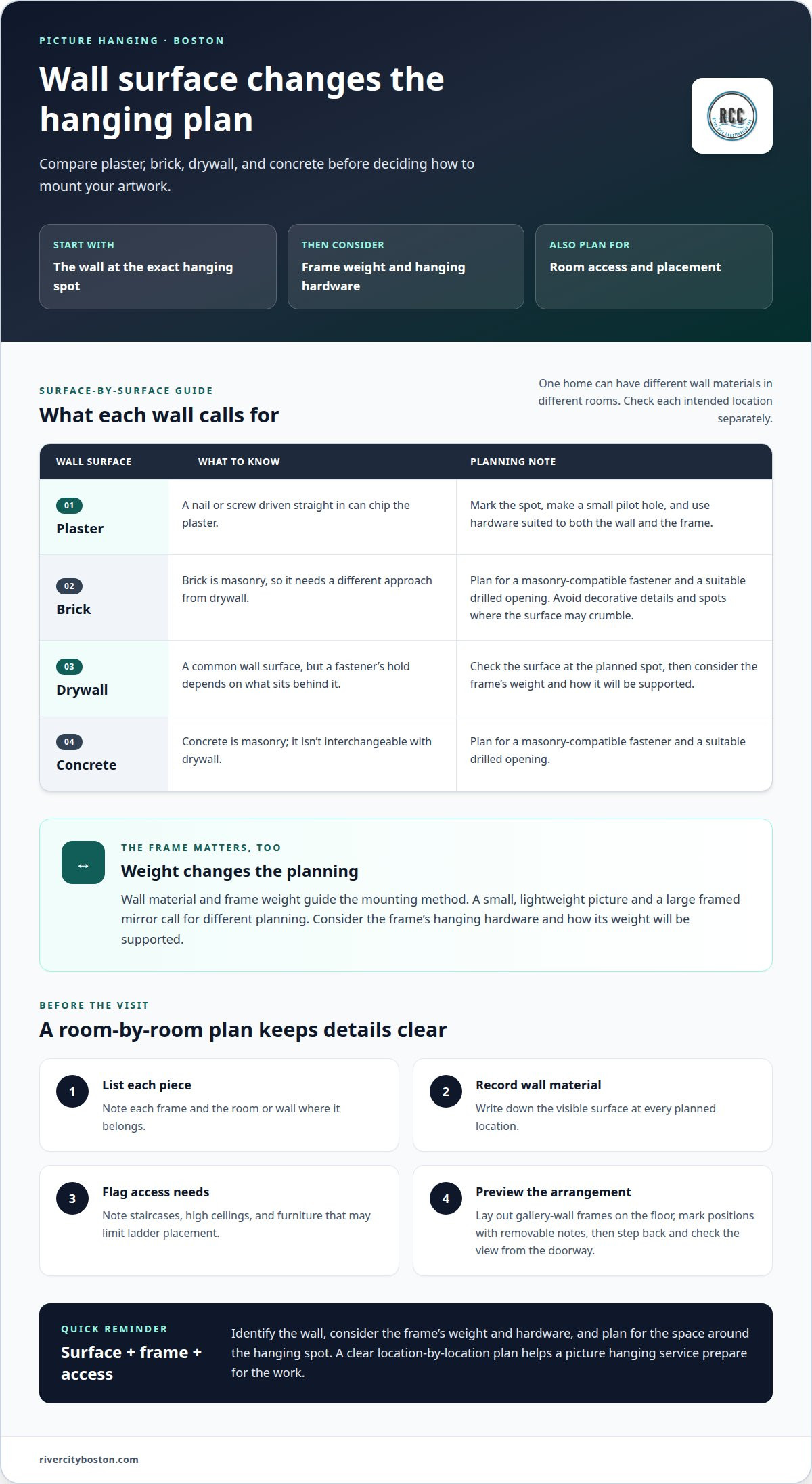
A frame’s weight and wall material guide the mounting method. Identify the surface at the exact hanging spot, since one home may have plaster in one room and drywall in another. Then consider the frame’s hanging hardware and how its weight will be supported. A small, lightweight picture and a large framed mirror call for different planning.
Plaster can chip if a nail or screw is driven straight into it. Mark the position, make a small pilot hole, and use hardware suited to the wall and frame. Brick and concrete are both masonry, but they aren’t interchangeable with drywall. Their hard surfaces usually need a masonry-compatible fastener and a suitable drilled opening. On brick, choose a position that avoids decorative details and areas where the surface may crumble.
Drywall is common, but a fastener’s hold depends on what sits behind the surface. A screw driven into a wall stud has a different attachment point from a fastener in a hollow section of drywall. If there’s no suitable stud at the planned spot, a properly matched wall anchor can spread the load across the material. Concrete calls for hardware made for masonry, rather than a general-purpose nail. Match the fastener to the wall and artwork, not just the frame’s appearance.
Protect the artwork while hanging it. Use the frame’s intended hanging points, keep tools away from the artwork, and set the piece on a padded surface during preparation. After mounting, check that the frame sits level and doesn’t rock when lightly touched. A level helps align the top edge; stepping back from the doorway can reveal a tilt that’s hard to see up close.
Valuable artwork needs planning beyond the wall attachment. Photograph each piece, record identifying details, and retain purchase or appraisal records where available. Review your insurance documents to understand how they describe artwork, coverage limits, and documentation. Don’t assume that secure mounting determines insurance protection. The frame, artwork, and policy are separate considerations.
Before installation, prepare a short list:
- Note whether each wall is plaster, brick, drywall, or concrete.
- Record each frame’s hanging points and approximate weight.
- Choose positions that preserve the artwork and allow a level finish.
- Keep records for valuable pieces with your household documents.
A picture hanging service in Boston can use details about each wall to plan suitable anchors and hardware. A plaster hallway and a concrete feature wall, for example, may need different fasteners even when the frames look similar.
Boston picture-hanging service pricing
Picture-hanging costs depend on the project’s scope, not simply the number of frames. The price depends on the case and is given after a quote request. Factors include the number and size of pieces, wall material, placement height, and whether you want a coordinated gallery layout. Several frames on one accessible drywall wall involve different preparation from artwork spread across brick, plaster, and a staircase.
A useful estimate starts with a clear inventory. List each frame, its approximate dimensions, the room, and the wall surface. Note high ceilings, stairwells, and furniture that could limit access. These details help describe the labor and tools involved. Hanging one small frame is a different task from aligning a collection across multiple rooms.
DIY can reduce labor costs, but you’ll need suitable hardware and tools, as well as time to plan and level each piece. Professional help can be useful for heavy artwork, mixed wall materials, high placements, or a gallery wall that needs careful alignment. You may feel comfortable hanging a light frame on drywall but prefer help with a large piece above a stairwell. Safe access, appropriate hardware, and steady placement all matter.
Apartment and condo requirements depend on the building’s own documents and management practices. Review your lease, condominium rules, or resident guidance for instructions about wall changes, shared areas, and repairs. If the guidance addresses drilling or particular wall finishes, follow those terms before making holes. A Boston apartment and a privately owned condo may have different procedures, so use the rules that apply to your home.
- Count the frames and note their approximate sizes.
- Identify the wall material at each planned location.
- Flag high walls, staircases, and access limitations.
- Describe whether you want individual placements or a gallery arrangement.
- Share any applicable apartment or condo requirements.
Project details help clarify the main cost drivers without assuming a per-frame price. A hallway with several lightweight pieces may need layout planning, while a single heavy frame on masonry raises different hardware and access considerations. Describe the work clearly before it begins.
For a small, straightforward project, weigh the time and tools DIY requires against the value of professional help. For a complex layout or challenging wall, River City Construction Inc’s handyman service can handle installation as part of home-maintenance work. The right choice depends on your frames, surfaces, access, and confidence using the necessary tools.
What is included in professional picture hanging service
A professional hanging visit usually starts with a review of the artwork and its intended locations. The installer can note each frame’s size, hanging points, and approximate weight. A framed print above a console, for example, needs different placement planning from a large mirror on a stairwell wall. This review helps shape the work before any holes are made.
Next comes layout planning. For a gallery wall, the installer can arrange frames visually, discuss spacing, and mark proposed positions. A paper template or removable markers can show the arrangement before drilling. You can review the composition from the doorway and request adjustments while the frames are still on the floor.
Installation also means matching the fastener to the wall. Plaster, drywall, brick, and concrete each call for suitable hardware and preparation. The installer identifies the material, considers the frame’s hanging points, and chooses an attachment method for that combination. A heavy frame on masonry, for instance, shouldn’t be treated like a lightweight picture on drywall.
During placement, a level helps keep frames straight. The installer can check alignment after hanging and adjust a frame that tilts or sits unevenly. For a staircase display, the arrangement may follow the angle of the steps. High walls may also require ladder access, so clear the surrounding floor and move nearby furniture.
Before the visit, make the work area easier to reach. Gather the artwork in one place, identify the rooms, and share your placement ideas. If a wall has a known finish or your apartment has a rule about drilling, include that detail in your project notes. Clear information helps the installer prepare for the specific frames and surfaces in your home.
A well-organized visit can include these practical steps:
- Review the frames and planned locations.
- Agree on the layout before making holes.
- Match hardware to the wall material and artwork.
- Hang and level each piece, then review the finished arrangement.
A few straightforward frames may need only placement and installation. A multi-room project can involve more layout decisions, different wall materials, and high or awkward locations. Describing those details in advance helps define the work and keep the visit focused on the result you want.
River City Construction Inc: Kitchen Remodeling
River City Construction Inc offers home remodeling when a room needs more than a refreshed wall display. If your kitchen’s layout, storage, or finishes no longer suit your household, kitchen remodeling can address the space as a whole. The company also offers bathroom and basement remodeling, as well as accessory dwelling unit (ADU) design-build solutions.
Picture placement can be part of a larger home-improvement plan. A remodeled kitchen can create a more comfortable setting for family meals, while a finished basement can give artwork a new place to shine. Consider a broader renovation when the room’s function needs attention alongside its appearance.
For a conversation about a home remodeling project, contact River City Construction Inc.
Make a Clear Plan for Your Walls
Choose the artwork you most want to display, then decide where it belongs. A quick room photo and a note about the wall surface can turn a loose idea into a practical plan. Consider how each piece looks from the doorway, beside nearby furniture, and in the light you use every day.
If placement feels difficult, a picture hanging service in Boston can help you plan the arrangement. Share the wall type, the frame, and the location you have in mind. For a challenging wall or an involved layout, a picture hanging service in Boston can help make the next step more manageable.
If you’re also considering a larger home update, River City Construction Inc offers kitchen, bathroom, and basement remodeling. Tell the team which spaces you want to improve and what changes you’re considering.
A thoughtful plan can make your walls feel more like home.
Frequently Asked Questions
What does a picture hanging service in Boston, MA, include?
A picture hanging project can include planning artwork placement and attaching frames to suitable wall surfaces. Before arranging a visit, list the pieces you want hung by room. Include each frame’s dimensions, approximate weight, and preferred location. For example, note whether a large canvas belongs above a sofa or beside a doorway. These details help define the project and focus the work on your home.
What are Boston picture hanging service prices and minimum fees?
There isn’t one price that fits every project, and minimum fees can vary by service. The price depends on the case and is given after a quote request. Main cost factors include the number and size of frames, wall materials, access to each location, and layout complexity. A few accessible frames require different work from a multi-room arrangement with high walls or mixed surfaces.
How should I assess Boston art and picture installation company reviews?
Look for reviews that describe a specific installation, not just a general rating. A useful account might explain how the installer handled a narrow hallway, adjusted a gallery arrangement, or communicated about a placement change. Check whether the reviewer’s project resembles yours. A review about organizing an entire home may offer less insight into hanging one heavy framed piece than a detailed account of that task.
How do I choose a picture hanging service in Boston?
Choose a picture hanging service in Boston that suits the specific work you need. Before booking, prepare photos of the walls, a list of frames, and notes about difficult locations, such as a stairwell or high ceiling. Clarify whether you want layout help as well as installation. For apartment or condo walls, review your building’s written guidance first, since property rules can affect where or how you hang artwork.
What should I know about insurance and damage liability?
Insurance and responsibility for damage are separate questions, so read the written service terms before work begins. Photograph valuable artwork and its condition, and keep purchase or appraisal records with your household documents. A contractor’s general insurance status doesn’t by itself explain how damage to a particular frame or wall would be handled. The policy wording and service agreement define those details.