Imagine stepping into your 19th-century Boston home and realizing your morning routine is held hostage by a cramped layout and a faucet that barely trickles. You love the intricate millwork and the spirit of the era, but the reality of old galvanized pipes and drafty floors is far from luxurious. It’s a common struggle for local homeowners who feel stuck between honoring the past and enjoying the present. You want a space that reflects the history of the neighborhood without the frustrations of outdated plumbing.
We understand that a historic home bathroom remodel Boston project is a significant emotional and financial investment. You shouldn’t have to sacrifice your home’s architectural integrity just to get a spa-like experience. In this article, you’ll discover how to balance heritage with high-end comfort. We’ll walk through the process of upgrading hidden infrastructure, selecting period-appropriate finishes, and managing the renovation with transparency. From heated floors to modern plumbing that respects your home’s original framing, you’ll learn how to create a sanctuary that feels like it has always been part of the house.
Key Takeaways
- Learn why a successful historic home bathroom remodel Boston focuses on preserving your home’s unique character while integrating high-end modern comforts.
- Understand the essential steps for modernizing outdated plumbing and electrical “bones” hidden behind your home’s original plaster walls.
- Discover how to pair custom millwork with timeless materials to create a spa-like oasis that feels like it has always belonged in your home.
- Navigate the complexities of Boston’s Historic District Commissions with a clear understanding of the permit process for interior renovations.
- Explore how a partnership-oriented design-build approach ensures your project stays on track with total transparency and expert craftsmanship.
The Unique Challenge of a Historic Home Bathroom Remodel in Boston
A historic home bathroom remodel Boston isn’t like a standard renovation in a modern suburb. In our city, we’re often dealing with homes that have stood for well over a century. Whether you live in a Federal-style rowhouse in Beacon Hill, a grand Victorian in Dorchester, or even a mid-century gem in the suburbs, the goal is preservation rather than just replacement. You aren’t just swapping out a sink. You’re acting as a steward for a piece of local history. This requires a shift in mindset where we look to honor the original craftsmanship while making the space livable for a modern family.
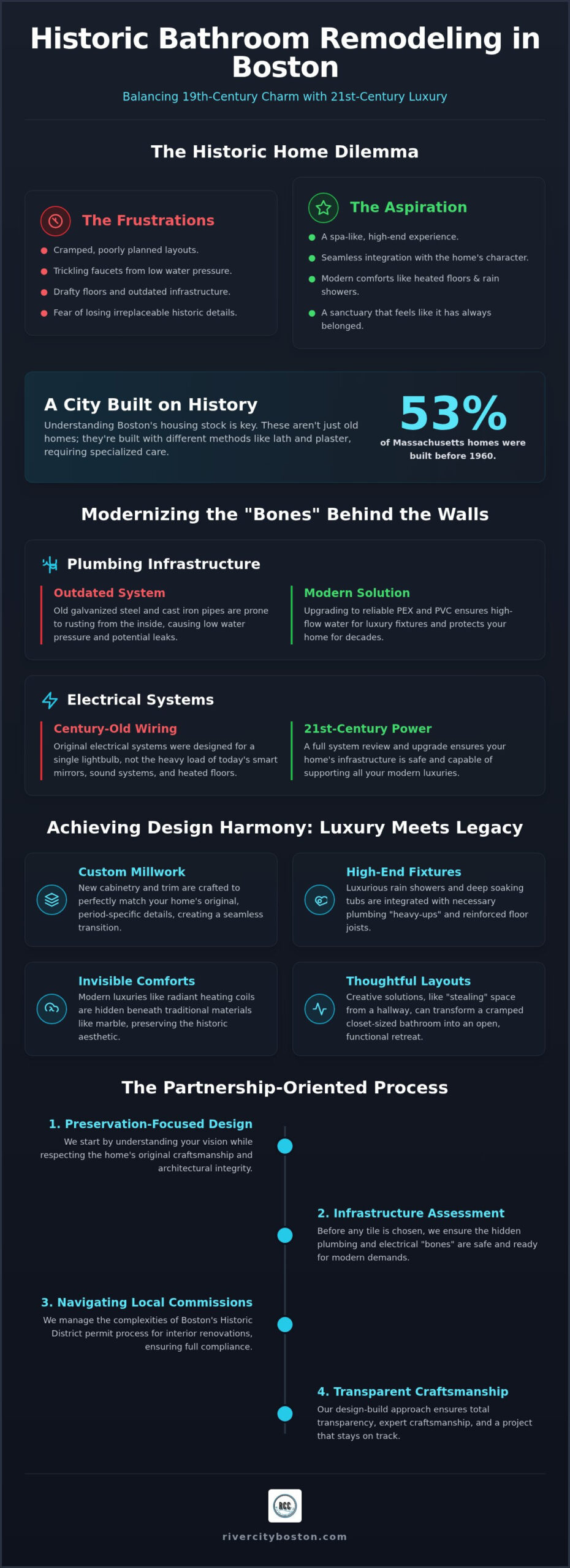
Standard remodeling techniques often fail in homes built before 1920. Many modern contractors try to apply “quick-fix” methods to materials they don’t fully understand. Older Boston homes rely on structural methods like balloon framing and lath and plaster, which is a technique using thin wood strips and layers of plaster. Over 53% of Massachusetts homes were built before 1960, meaning these “old school” bones are the rule, not the exception. Treating these unique structures with a one-size-fits-all approach can lead to structural issues or the permanent loss of beautiful, irreplaceable details. There is deep emotional value in keeping that legacy alive while improving your daily quality of life.
Why Layout is Your First Big Hurdle
In the 19th century, indoor plumbing was a luxury that was often “tucked in” wherever it could fit. Many of the bathrooms we see in older neighborhoods were originally small dressing rooms or even closets. This leaves you with a tiny footprint that feels cramped and dark. One of the biggest challenges is maximizing this space without moving load-bearing walls that support the rest of the house. We often look at “stealing space” from an adjacent hallway or a back staircase to gain those extra few inches. It’s about being creative with the square footage you have to create a more open, functional flow.
Balancing Modern Comfort with Original Character
You don’t have to choose between a high-pressure rain shower and a period-appropriate look. By following established architectural conservation principles, we can integrate high-end luxury into a classic design. This might involve custom millwork that matches your original baseboards or hiding radiant heating coils under traditional marble floors. For a deeper look at how we handle these projects across the city, you can read more about Renovating Old Homes in Boston. Maintaining this continuity ensures your new bathroom feels like a natural extension of the house rather than a jarring, modern addition. It should feel like it has always been there, just much more comfortable.
Modernizing the “Bones”: Plumbing and Electrical Infrastructure
Opening the walls during a historic home bathroom remodel Boston often feels like opening a time capsule. Instead of modern drywall, you’ll likely find lath and plaster. This traditional method used thin wood strips and thick plaster to create solid walls. While it’s durable, it wasn’t built to house the complex systems we expect today. Most older homes still rely on galvanized steel pipes that have rusted from the inside out, or cast iron waste lines that have become brittle with age. Replacing these “bones” with modern PEX and PVC ensures your home stays dry and functional for decades.
Electrical needs have also changed drastically. A century ago, a single light bulb was enough for most bathrooms. Today, we’re installing radiant heated floors, high-definition smart mirrors, and integrated sound systems. These luxuries place a heavy load on old electrical panels. We take a Master Craftsman approach, which means we look at the entire system before we ever think about picking out tile. We ensure your home’s infrastructure is safe and capable of supporting your 21st-century lifestyle. If you’re ready to see what’s possible in your space, you can talk to our team about your vision.
The High-Flow Spa Experience vs. Old Pipes
If you’re dreaming of a high-end rain shower, you need more than just a fancy fixture. Many historic Boston neighborhoods struggle with low water pressure due to narrowed, ancient pipes. A luxury shower requires a plumbing “heavy-up” to provide the necessary water volume. We also pay close attention to the structural support under your feet. A modern soaking tub, when full, can weigh as much as a small car. We carefully inspect and reinforce 100-year-old floor joists to ensure they can handle the weight without sagging or cracking the ceiling in the room below.
Advanced Waterproofing for Antiquated Structures
Water is the primary enemy of historic wood and masonry. Old homes were designed to “breathe,” but modern bathrooms trap significant amounts of moisture. We use advanced membrane systems to create a completely watertight envelope behind your tile. This prevents steam and splashes from reaching the original timber framing. By following guidelines from Boston’s Office of Historic Preservation regarding structural changes, we help you protect your home’s integrity. Our goal is to build a bathroom that lasts another 100 years without compromising the heritage of the house.
Design Harmony: Blending Luxury with Historic Details
Achieving a successful historic home bathroom remodel Boston requires a delicate balance between looking back and moving forward. You want a space that feels like it belongs in a 19th-century rowhouse, but you also deserve the comforts of a modern spa. The secret lies in selecting materials that are timeless rather than trendy. While a sleek, ultra-modern aesthetic might look good in a catalog, it often feels jarring against the backdrop of a Victorian or Federal-style home. Instead, we focus on high-quality materials that age gracefully and respect the house’s original soul.
Natural stone remains the gold standard for these projects. Carrara marble and soapstone were frequently used in historic Boston interiors, making them perfect for vanities and flooring. These materials offer a tactile, organic feel that synthetic products simply can’t replicate. We also specialize in integrating modern technology invisibly. You can enjoy the warmth of radiant floor heating or the luxury of a hidden steam shower without compromising the room’s classic appearance. By consulting with Boston’s Office of Historic Preservation guidelines, we ensure your design choices honor local standards while providing the 21st-century amenities you need.
Choosing the Right Fixtures and Finishes
Hardware and fixtures are the “jewelry” of your bathroom. We often recommend “living finishes” like unlacquered brass or polished nickel. These metals develop a beautiful patina over time, echoing the character found throughout the rest of your home. While modern walk-in showers are popular, a restored clawfoot tub or a high-end pedestal sink can serve as a stunning focal point in a master suite. For a look at how these classic elements are evolving, check out our Luxury Bathroom Remodel Boston guide for 2026 design trends.
Custom Vanities and Built-in Storage
One of the biggest frustrations in old homes is the lack of storage. Standard, off-the-shelf vanities rarely work because they don’t account for the unique dimensions or the slightly “out of square” walls common in older structures. We prefer to design custom cabinetry that mimics the original millwork and built-ins found in other parts of your home. This approach allows us to tuck away modern necessities like electric toothbrush chargers and hair dryers inside beautiful, period-appropriate furniture. You can explore our custom bathroom services to see how we maximize storage in small, historic footprints without losing an ounce of style.
Navigating the Local Process: Permits and Commissions
The administrative side of a historic home bathroom remodel Boston can feel like a maze. If you live in a protected area like Beacon Hill or the Back Bay, your first step is identifying which commission oversees your street. These boards primarily care about what is visible from the sidewalk. If you’re changing a window or adding an exterior vent, you’ll need approval from the Boston Landmarks Commission. They often require physical samples of materials or paint colors before you can proceed. However, even if the work is purely internal, you still need to secure the right building permits. For minor repairs, a Short Form permit is often sufficient, costing a $20 application fee plus $10 for every $1,000 of the project cost. A “gut” renovation that involves structural changes requires a Long Form permit and detailed architectural drawings.
All work must comply with the 10th edition of the Massachusetts State Building Code (780 CMR). Plumbing and electrical work require their own specific filings. In Boston, the licensed contractor performing the work is responsible for applying for plumbing permits; homeowners aren’t permitted to apply themselves. These fees include a $20 application fee plus $5 for each fixture, such as your new soaking tub or high-efficiency toilet. We handle these technical details to keep your project moving forward without delays.
Neighborhood Specifics: From Cambridge to Somerville
Rules shift slightly as you cross city lines. For instance, a master bathroom remodel in Somerville follows different local ordinances than one in Boston proper. Many communities, including Cambridge and Newton, have adopted the “Stretch Code.” This 2026 energy code requires advanced insulation and ventilation solutions, even in older homes. Managing a historic home bathroom remodel Boston in the suburbs like Winchester or Lexington demands a partner who understands these regional nuances. Because bathroom renovations in Massachusetts typically take 25 to 40 percent longer than the national average, having a team that knows the local boards is essential for staying on schedule.
The “White-Glove” Approach to Site Protection
Construction is messy, but your home’s original character is fragile. We treat every project like we’re working in a museum. This means more than just laying down a few drop cloths. We use professional-grade dust containment systems to protect your original wood floors and plaster walls. We also use temporary floor protection that is breathable, ensuring your original wide-plank pine or oak floors aren’t damaged by trapped moisture. Our team seals off the work area and uses HEPA air scrubbers to keep the rest of your home breathable. We take pride in leaving the non-renovated parts of your house exactly as we found them.
Starting Your Historic Remodel with River City Construction
Embarking on a historic home bathroom remodel Boston is about more than just choosing a new faucet or a vanity. It is a significant emotional and financial investment that requires a true partnership. You need a team that respects the legacy of your property as much as you do. We use a design-build approach because it is the most effective way to handle the complexities of older homes. This means the designers and the builders are on the same team from the very first day. When we discover a structural surprise behind a lath and plaster wall, we solve it together. There is no blame game between an outside architect and a contractor. We simply find the best way forward for your home.
We believe in total transparency and integrity. This is why we utilize fixed-price contracts for our residential projects. You deserve to know exactly what your investment looks like before the first hammer swings. We treat your budget with the same discipline we give your home’s architecture. It is about providing the peace of mind that comes from working with a seasoned expert who values honesty and high standards. Our goal is to move you away from a transactional experience toward a collaborative relationship where your vision is the priority.
The River City Difference
Our team has deep roots in the Greater Boston area. We have spent years working on the unique framing and infrastructure of homes across Middlesex and Suffolk counties. We project the persona of a Master Craftsman and Trusted Neighbor because we truly value quality over speed. We won’t rush a complicated tile layout or a custom millwork installation just to move to the next job. We take the time to ensure every detail is durable and aesthetically perfect. This dedication to professional standards is why many of our clients trust us with multiple areas of their homes. You can see how we handle kitchen remodels too if you are considering a more comprehensive renovation.
Your Next Steps to a Luxury Bathroom
Transforming your 19th-century space into a 21st-century sanctuary starts with a simple conversation. We’ll schedule an initial consultation to walk through your bathroom and discuss your goals. During this feasibility study, we look at your plumbing, the structural integrity of your floor joists, and your must-have features for 2026. Whether you want a high-end steam shower or a period-appropriate clawfoot tub, we help you define a realistic path forward. We are here to guide you through every step of the process with order and clarity.
Schedule your free historic home consultation today
Restoring Your Home’s Legacy with Modern Comfort
Preserving a piece of Boston’s history doesn’t mean you have to settle for outdated plumbing or cramped layouts. A successful historic home bathroom remodel Boston project blends the architectural soul of the past with the high-end luxury of today. We’ve explored the importance of modernizing hidden infrastructure, selecting timeless materials like natural stone, and navigating the specific requirements of local historic commissions. These steps ensure your renovation is both beautiful and built to last for another century.
River City Construction brings decades of experience to every project in Greater Boston’s historic districts. We specialize in working with local architectural commissions to ensure your home remains a neighborhood treasure. Our fixed-price contracts provide the transparency and peace of mind you need for a stress-free experience. We treat your home with the care of a master craftsman, focusing on the fine details that make a space feel original to the house.
Your home has stood the test of time, and your new bathroom should do the same. We look forward to helping you create a sanctuary that honors your home’s unique heritage while providing the comfort your family deserves.
Frequently Asked Questions
Do I need special permits for a historic bathroom remodel in Boston?
Yes, you will likely need several permits before work begins. If your home is in a designated Historic District like Beacon Hill or the Back Bay, you must get approval from the local commission for any changes visible from the street. Even for interior work, you’ll need building, plumbing, and electrical permits. We handle the application process to ensure everything meets the 10th edition of the Massachusetts State Building Code and local municipal requirements.
Can I install a modern curbless shower in a 19th-century brownstone?
You can, but it requires careful structural planning. Older homes often have floor joists that aren’t deep enough to allow for the necessary drainage slope without modification. We often have to reinforce or “sister” the joists to create a safe, waterproof recessed area. This Master Craftsman approach ensures your luxury shower doesn’t compromise the ceiling below. It’s a complex task that demands a deep understanding of historic framing and modern waterproofing systems.
Will adding a steam shower or spa features damage older walls?
Not if you use a professional “watertight envelope” approach. Older lath and plaster walls aren’t built to handle high moisture levels. During a historic home bathroom remodel Boston project, we install advanced vapor barriers and waterproof membranes behind the tile. This prevents steam from reaching the original wood structure. We also ensure your ventilation system is powerful enough to clear humidity quickly, protecting both your new bathroom and the home’s historic fabric.
How long does a luxury historic bathroom renovation usually take?
These projects typically take 25% to 40% longer than renovations in modern homes. Because we often find hidden issues like brittle cast iron pipes or outdated wiring, a high-end remodel can take anywhere from six to ten weeks. We prioritize quality over speed to ensure every detail is perfect. Our disciplined pace and methodical structure help manage the timeline while accounting for the extra care needed to protect your home’s original architectural details.
How much does a historic bathroom remodel cost in the Boston area?
Costs for a high-end renovation vary significantly based on the age of your home and the level of luxury you desire. Factors like structural reinforcements, custom millwork, and high-flow plumbing upgrades will influence the final budget. While every project is unique, we provide fixed-price contracts to give you total transparency. This ensures you know the full investment before construction starts, helping you avoid the financial surprises often associated with working on historic properties.
Can you upgrade the plumbing without tearing out my original hallway trim?
We always aim to preserve as much original material as possible. We often access plumbing through the bathroom floor or by carefully opening small sections of plaster that will be covered by new tile. This allows us to replace old galvanized pipes with modern PEX without disturbing your beautiful hallway millwork or crown molding. It’s about being strategic with our “surgical” demolition to keep your home’s historic charm intact while modernizing the systems behind the scenes.
Do I need to move out during a historic bathroom renovation?
Most homeowners stay in their homes, provided there is another working bathroom available. We use a “white-glove” approach to site protection, including HEPA air scrubbers and professional-grade dust containment. This keeps the rest of your house clean and breathable while we work. However, if the project involves the only bathroom in the house or extensive structural work, you might find it more comfortable to stay elsewhere for a few weeks to avoid the noise and activity.
What is the “living finish” on hardware and why is it used in old homes?
A living finish, like unlacquered brass, is a material that doesn’t have a protective coating. This means it will naturally oxidize and develop a unique patina over time. It’s a popular choice for a historic home bathroom remodel Boston because it mirrors the aged character found in the rest of the house. Unlike modern finishes that can look artificial, living finishes age gracefully and feel authentic to the era of your 19th-century home.