What if the best contractor isn’t the one with the lowest estimate, but the one who can clearly explain how the work will be managed? A kitchen or bathroom proposal can look straightforward at first, yet leave important details unanswered about what’s included, how schedule changes are handled, and who’ll keep you informed. The right questions to ask a general contractor can help you uncover those details before you commit.
It’s reasonable to want more than a confident promise. You need a clear picture of the project scope, costs, communication, and next steps so you can compare contractors on more than price or presentation. A thoughtful conversation can also help you decide whether a contractor’s working style fits your home and expectations.
This checklist will help you prepare for contractor interviews, compare estimates, and spot answers that need clarification. It covers project experience, schedules, extra work, payment terms, and communication, with practical prompts for what to listen for. By the time you review an agreement, you’ll have a more organized way to assess your options and choose a remodeling partner with confidence.
Key Takeaways
- Ask about experience with projects like yours to understand whether a contractor’s approach fits your home and goals.
- Compare proposal scope, materials, exclusions, allowances, and assumptions before weighing estimates by price.
- Ask how you’ll hear about progress, decisions, and delays so you know what to expect if plans change.
- Review the written agreement, including responsibilities, payment terms, and how changes are handled.
- Weigh project fit, clear documentation, communication, and relevant local experience before choosing a remodeling partner.
Questions to Ask a General Contractor About Project Fit and Experience
Two contractors can both sound capable in an introductory meeting, yet describe very different ways of planning and managing the same remodel. One may ask detailed questions about how you use your kitchen; another may move quickly to a broad estimate. That difference matters. Experience with projects like yours can tell you more than a general claim about being a general contractor. For background, you can read about what a general contractor is, then ask how that role applies to your specific project.
Use the conversation to test fit, not just confidence. A homeowner planning a bathroom update may prioritize different things from someone changing a kitchen layout. Compare each contractor’s answers against your goals, your home, and the work you expect to include. If you’re planning a kitchen project in Boston, River City Construction Inc provides kitchen remodeling in Boston. Confirm service availability for your specific location.
How do you approach projects like mine?
Ask how often the contractor handles your type of project, such as a kitchen or bathroom remodel, and what similar work typically involves. Invite them to describe relevant examples, then clarify what they personally handled. Did they guide the planning, coordinate the work, or focus on another part of the project? Specific answers help you judge whether their experience matches your needs. Ask follow-up questions about the parts of the work that matter most to you, such as changing a layout or coordinating material selections.
Who will manage the work and coordinate the team?
Find out who your primary contact will be once work begins and how the contractor coordinates employees, subcontractors, and material decisions. Ask whom to approach with a concern, how progress updates will be shared, and what happens when the team needs a decision from you. A clear process helps prevent uncertainty when several people or choices are involved.
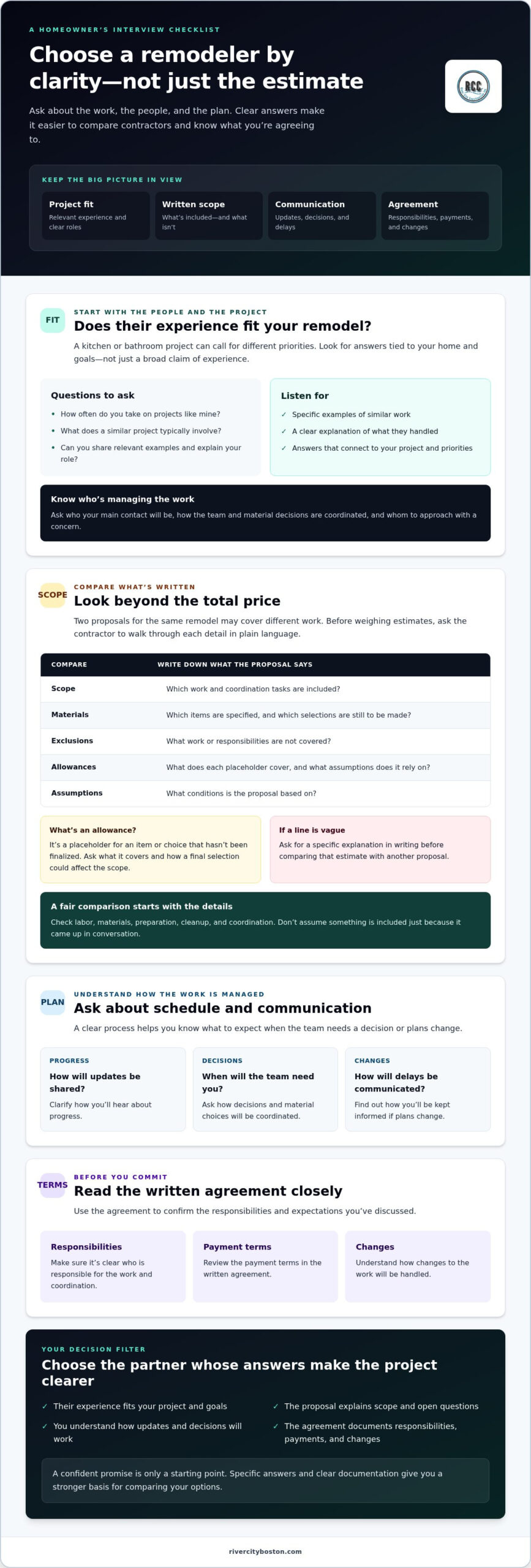
Keep your notes focused with this short checklist of questions to ask a general contractor:
- How often do you take on projects like mine?
- What does a similar project typically involve?
- Can you share relevant examples and explain your role in them?
- Who will manage the work and serve as my main contact?
- How do you coordinate the team, material decisions, concerns, and updates?
Listen for answers that connect directly to your project, and note any points that need follow-up. Specific examples and a clear explanation of roles give you a stronger basis for comparing options and deciding whether the working relationship feels right.
Questions to Ask About Estimates, Scope, and Possible Changes
Two proposals can describe the same kitchen remodel and still cover different work. One may include preparing the space and coordinating material choices, while another may leave those tasks unclear. Before comparing totals, make sure you understand what each estimate includes. Written details help you compare proposals fairly and reduce the chance of mismatched expectations later.
What exactly is included in the written estimate?
Ask the contractor to walk through the estimate in plain language. Clarify which labor, materials, preparation, cleanup, and coordination tasks are included, and which are not. For a bathroom remodel, ask whether the listed work covers only the named items or also related preparation and finishing tasks. Don’t assume a detail is included just because it came up in conversation.
Ask how selections and allowances are recorded. An allowance is a placeholder for an item or choice that hasn’t been finalized. Ask what it covers, what assumptions it relies on, and how a final selection could affect the scope. If a line is vague, request a specific explanation in writing before comparing the estimate with another proposal.
A simple comparison table can make differences easier to spot. Give each contractor a column, then compare:
- Scope: Work and coordination tasks included
- Materials: Items specified and selections still to be made
- Exclusions: Work or responsibilities not covered
- Allowances: Items awaiting a final choice, with their definition
- Assumptions: Conditions the proposal relies on
This turns differently worded estimates into a more useful side-by-side review. Compare what each contractor has described in writing, and flag any gap that could affect your understanding of the planned work. For location-specific questions, confirm applicable details with the relevant local authority rather than relying on a general estimate or an out-of-area checklist.
How do you handle changes and unexpected conditions?
Ask how the contractor will explain a proposed change before work proceeds. Find out how you’ll review and approve it, and how the updated scope and any schedule effects will be recorded. If an unexpected condition changes the planned work, you should understand what is changing, why it is changing, and what decision is needed from you.
A response such as “we’ll figure it out as we go” doesn’t explain the process. Ask for a clearer description, including how changes are communicated and documented. These are useful questions to ask a general contractor because they reveal how the project will be managed when the original plan needs adjustment.
If you’re preparing to discuss a kitchen or bathroom remodel, you can contact River City Construction Inc about your project and start with your goals and the work you have in mind.
Questions to Ask About Schedule, Communication, and Accountability
A remodeling schedule is a plan, not a promise that every step will happen exactly as expected. Decisions, materials, or conditions at the home can affect what happens next. The useful question isn’t only, “When will the project be finished?” It’s also, “How will I know what’s happening if the plan changes?” Clear communication helps you stay informed and understand what needs your attention.
For example, if a kitchen decision affects the next stage of work, ask how the contractor will let you know, when you’ll need to respond, and how the decision will be recorded. Agreeing on a communication routine before work begins can make those moments easier to manage.
How will we track progress and discuss schedule changes?
Ask how often you’ll receive updates, which channels the team uses, and who will share the information. Find out how the contractor explains a delay, revises expected milestones, and tells you what the change means for the next steps. Ask for expectations specific to your project and the assumptions behind them rather than relying on a fixed timeline that may not account for your project’s details.
How are responsibilities and decisions documented?
Clarify who approves selections, answers questions from the worksite, and communicates decisions to the crew. Ask how open questions and decisions are recorded so you can refer back to what was agreed instead of relying on memory. Also ask whom to contact if your main contact is unavailable and how to raise a concern that hasn’t been resolved.
These questions to ask a general contractor help you understand the working relationship as well as the construction plan. Listen for a process you can picture: who contacts whom, how updates arrive, and where decisions are kept. If an answer is unclear, ask for a practical example. The process should be understandable before the project starts.
To compare contractors fairly, use the same notes for each conversation. Record:
- Who provides routine progress updates, and how often
- Which communication channels are used
- How delays and revised milestones are explained
- Who handles decisions, site questions, and crew updates
- Who to contact if the main point of contact is unavailable
- How unresolved concerns are raised and followed up
Consistent notes make it easier to compare specific answers rather than relying on a general impression. They can also reveal gaps to clarify before agreeing to work, so you begin with a shared understanding of communication and accountability.
Questions to Ask Before Signing a General Contractor Agreement
Before signing, check that the written agreement matches the project you discussed. A contractor may have explained a responsibility or schedule detail during a meeting, but if it matters to your expectations, make sure it appears clearly in the paperwork. This review can help prevent different assumptions from becoming problems once work is underway.
Read the agreement in order: confirm the work being done, identify who is responsible for each part, review payment terms, then understand how changes will be handled. Pause on anything unclear. Asking for an explanation before signing is sensible, not confrontational.
Which documents and terms should I review?
Ask for the written scope, schedule assumptions, payment milestones, and process for documenting changes. Check that the agreement names each party’s responsibilities in language you understand. If a term is unfamiliar, ask the contractor to explain it plainly rather than relying on a guess.
Ask whether any project-specific documents or approvals may be relevant to your work. For a Boston-area project, confirm applicable requirements with the relevant local authority instead of assuming the same steps apply in every community. A contractor can explain their understanding, but you can verify what applies to your property locally.
What should I do when answers are unclear?
Compare the agreement with your notes from the estimate and interview. If a conversation included a commitment that isn’t reflected in the written terms, ask how it will be addressed. Request unclear details in writing before deciding, especially responsibilities, payment timing, schedule assumptions, and the process for approving changes. Verbal assurances can be easy to remember differently later.
For example, if you understood that a particular task was included but can’t find it in the scope, ask the contractor to clarify whether it’s covered and where that will be recorded. Don’t sign based on an assumption you still need to confirm. These questions to ask a general contractor help you make a decision with a shared understanding of the work and expectations.
If you’re planning a kitchen project, review this guide to kitchen remodeling in Boston as you prepare to discuss your project details.
How to Choose a Greater Boston General Contractor With Confidence
Choosing a remodeling partner comes down to more than who makes the strongest first impression. Look for a fit for your project, a clearly described scope, a communication process you understand, written documentation, and relevant local experience. These pieces work together: even a contractor with useful experience needs to explain what they’re proposing and how they’ll keep you informed.
Specific, consistent answers are more useful than broad promises. If one contractor explains who will manage the work, how decisions will be recorded, and what the proposal includes, you have concrete details to compare. If another answer sounds reassuring but leaves those details open, ask follow-up questions before deciding.
How can I compare contractor answers fairly?
Give each contractor the same core questions and take notes using the same categories. Compare written scope, project fit, communication, responsibilities, and how changes are handled. A polished presentation can make a good impression, but clear explanations and consistent details give you a stronger basis for your decision.
Mark unanswered questions and request clarification before choosing. For instance, if you can’t tell who will be your main contact, ask directly. A contractor’s willingness to explain the process can help you judge whether the working relationship feels right for your household.
What are the next steps for a remodeling project?
Before reaching out, write down what you want to change, what matters most, and what questions you still have. A homeowner planning a kitchen remodel might list priorities for how the space should function, while someone considering a bathroom project may note the work they want included. That preparation makes the first project conversation more focused.
River City Construction Inc serves Boston and nearby Greater Boston communities with kitchen, bathroom, and other residential remodeling services. Homeowners can explore its Boston kitchen remodeling service or bathroom remodeling service as relevant to their plans. Confirm current availability for your city or town.
Use the questions to ask a general contractor throughout your conversations, then take the next step when you’re ready to discuss your goals. A clear starting point can help both sides understand the project you have in mind.
Take the Next Step With a Clear Plan
Choosing a contractor starts with asking clear questions, then weighing the answers against your project and expectations. The most useful questions to ask a general contractor uncover relevant experience, a well-defined scope, a clear approach to communication, and written terms that match what you discussed. If an answer feels vague, ask for clarification before moving ahead.
Keep your notes handy as you compare options. A consistent, practical process can help you feel more prepared to choose a remodeling partner for your home.
River City Construction Inc provides residential remodeling for kitchens, bathrooms, basements, ADUs, and decks in Greater Boston and nearby communities. Service availability can vary by location, so confirm that your city or town is covered.
A thoughtful conversation is a steady first step toward a project that reflects your goals. You can move forward with confidence, one clear decision at a time.
Frequently Asked Questions
What are the most important questions to ask a general contractor?
Start by asking about experience with similar projects, what the estimate includes, who will manage the work, and how changes are approved. Then ask how progress updates are shared and what the written agreement covers. These questions help you understand the contractor’s process, identify details that need clarification, and compare proposals fairly. For a kitchen or bathroom remodel, make sure the answers address the specific work and priorities you have in mind.
How do I know if a general contractor’s estimate is complete?
Ask for a written breakdown of the project scope, included work, exclusions, material assumptions, and any allowances. An allowance is a placeholder for an item or selection that hasn’t been finalized, so ask what it covers. Find out how final selections or unexpected conditions could affect the proposal. A useful estimate should make the planned work understandable. If a detail is vague, request clarification before comparing it with another estimate.
Should I ask a general contractor for references?
Yes. Ask whether the contractor can share references or examples relevant to your type of project, and clarify what information is available to share. If you speak with a past client, ask how communication worked, how questions or concerns were handled, and whether the completed work matched the agreed scope. Treat references as one part of your decision, alongside the written proposal and your own conversations with the contractor.
What should I ask about a remodeling project timeline?
Ask what schedule the contractor expects for your specific project, what assumptions that expectation depends on, and how progress will be communicated. Discuss how material selections, approvals, or changed conditions could affect planned milestones. An early schedule is an expectation, not a guarantee. Ask how changes will be explained and documented, and who will let you know if the plan shifts. This gives you a clearer idea of how schedule updates will be managed.
How should a general contractor handle change orders?
Ask how a proposed change will be documented, how its effect on the project scope or schedule will be explained, and how approval is recorded before the work moves ahead. A change order is a written record of an agreed project change. You should be able to understand what’s changing and why. Keep the documentation with your project records. If the explanation or next steps are unclear, pause and ask for clarification before agreeing.
What should I check before signing a general contractor agreement in Massachusetts?
Review the written scope, each party’s responsibilities, payment terms, schedule assumptions, and the process for documenting changes. Ask the contractor to explain any language you don’t understand, and compare the agreement with what you discussed. Requirements can depend on the project and location, so confirm what applies to your property with the appropriate local authority or a qualified professional. Don’t rely on verbal assurances for important terms that aren’t reflected in the written agreement.
How many contractors should I interview before choosing one?
There’s no single number that fits every project. Speak with enough qualified contractors to understand different approaches and compare proposals using the same questions and notes. Focus on whether each person understands your goals, explains the scope clearly, and provides written details you can review. River City Construction Inc serves Greater Boston communities including Boston, Winchester, Medford, Somerville, Cambridge, Belmont, Lexington, Concord, Wellesley, Newton, Wayland, and Natick. Confirm availability for your location.