A remodeling contract is more than a price and a start date. To understand what a remodeling contract should include, look for a written scope of work, clear pricing and payment terms, a project schedule, and defined procedures for changes, permits, cleanup, insurance, damage, and disputes.
It’s reasonable to want the key details settled before work begins. A clear agreement helps you and your contractor share expectations, whether you’re updating a kitchen, finishing a basement, or adding living space. This article explains what a home improvement contract is and which terms to review, including how payments relate to progress, how changes are approved, and who is responsible if property is damaged. Written records also help when plans change or questions arise during construction.
Key Takeaways
- Write down the project scope, materials, design details, and who is responsible for each task so you and your contractor share the same expectations.
- Set out payment amounts and milestones in the agreement, and document extra work in a signed change order before it begins.
- Understand how the contract handles unpaid suppliers, subcontractors, and lien waivers before making progress or final payments.
- Review the dispute process, insurance requirements, and responsibility for damage so the agreement explains what happens when problems arise.
- For a California home improvement job or swimming pool, the down payment cannot exceed $1,000 or 10 percent of the contract price, whichever is less, excluding finance charges, according to the California Contractors State License Board.
1. What is a home improvement contract?
A home improvement contract is a written agreement that explains what remodeling work will be done, how it will be completed, and how payment will work. It turns a broad idea, such as “update the kitchen,” into a shared plan with defined tasks, materials, responsibilities, and a timeline. Both parties can refer to the same details when questions come up during construction.
Start with the scope of work, a detailed description of the tasks included in the project. For a bathroom renovation, it might identify which fixtures will be removed, where new tile will go, and whether painting is included. State exclusions, too. If you plan to buy the mirror separately, the agreement should distinguish your purchase from contractor-provided materials.
Describe materials and design choices precisely enough to identify the intended finished result. Include product type, size, color, quantities, and manufacturer model numbers when available. Attach project plans or drawings that show relevant measurements and layouts. For example, a kitchen plan can mark cabinet placement, while a bathroom drawing can show the proposed shower location. Include renderings or other design documents if they clarify the intended result.
List labor and responsibilities alongside the materials. The agreement should explain which tasks the contractor performs and identify work assigned to subcontractors, such as electrical or plumbing work. It should also state who purchases specified items, where materials will be stored, and how the work area will be protected. These details prevent confusion about deliveries, installation, or tasks one party assumed the other would handle.
Permits, inspections, and cleanup also belong in the project description. State who will obtain required permits and how related costs will be handled. Identify whether the contractor will remove construction debris, protect pathways, and leave reusable materials for you. A specific term such as “remove demolition debris from the work area” is clearer than a general promise to leave the site clean.
Put the price structure and timeline in writing, including what the agreed price covers and the planned start, completion, and project milestones. If you request a change, use a written change order before the added or revised work begins. It should describe the new task, its price impact, and any change to completion timing, then be signed by both parties. This record keeps an extra cabinet, relocated outlet, or revised finish from becoming an uncertain verbal agreement.
2. Lien waivers and payment to suppliers and subcontractors
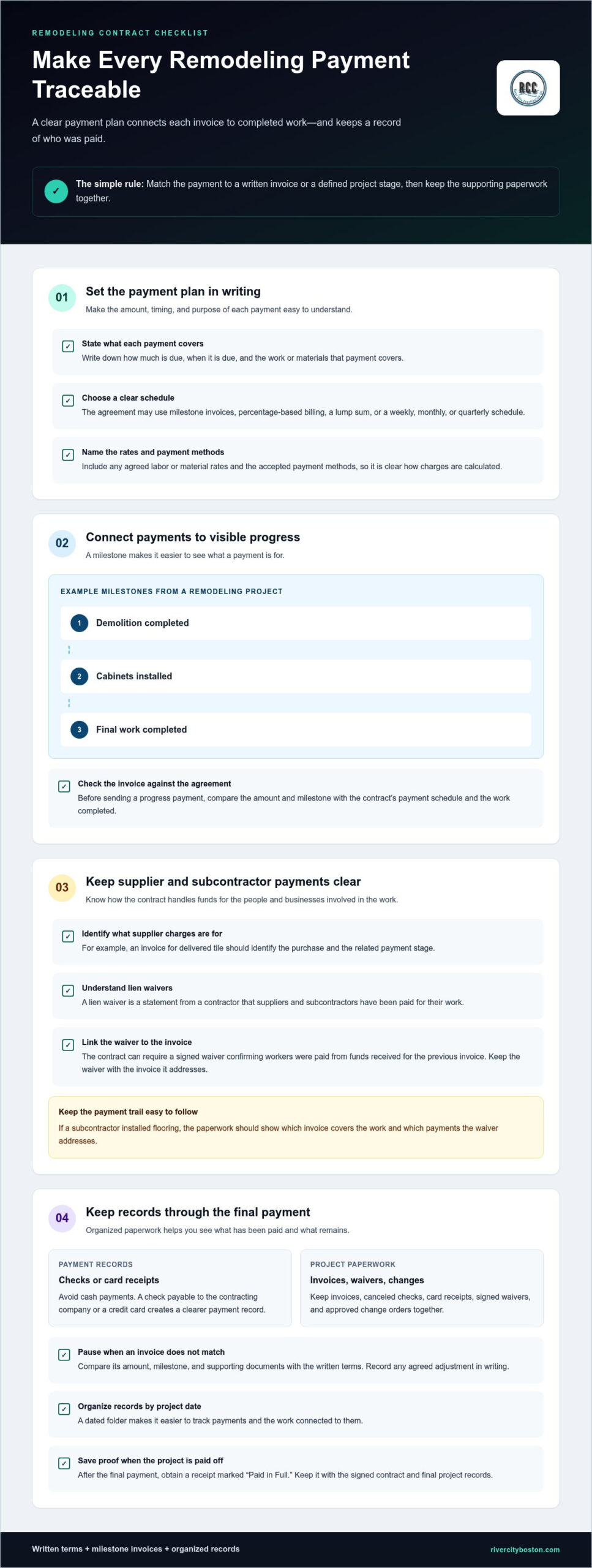
A remodeling payment plan should state how much is due, when it’s due, and what work each payment covers. Tie installments to clear milestones, such as completed demolition, installed cabinets, or completed final work. The agreement may use milestone invoices, percentage-based billing, a lump sum, or a weekly, monthly, or quarterly schedule. Whichever approach the parties choose, connect each payment to a written invoice or defined project stage.
Include payment methods and any agreed labor or material rates so you can understand how charges are calculated. Avoid cash payments. A check payable to the contracting company or a credit card creates a clearer payment record. Credit card payments may also provide recourse if contracted work isn’t completed. The contract should explain how funds intended for suppliers and subcontractors are handled. For example, an invoice for delivered tile should identify the purchase and related payment stage.
A lien waiver is a statement from a contractor that suppliers and subcontractors have been paid for their work. A contract can require a signed waiver confirming workers were paid from funds received for the previous invoice. This connects each payment to the people and businesses involved in construction. If a subcontractor installed flooring, the paperwork should identify which invoice covers the work and which payments the waiver addresses. Keep the waiver with that invoice.
Before sending a progress payment, compare the invoice with the completed milestone and the contract’s payment schedule. Keep invoices, canceled checks, card receipts, signed waivers, and approved change orders together. A folder organized by project date makes it easier to track what you’ve paid and what remains. After the final payment, obtain a receipt marked “Paid in Full” and keep it with the signed contract and final project records.
If an invoice doesn’t match the agreed schedule, pause and compare its amount, milestone, and supporting documents with the written terms. Record any agreed adjustment in writing so both parties have the same account of the payment. For a remodeling project, discussing your project plans can help you prepare for clear conversations about scope and payment expectations.
3. Dispute resolution
A dispute clause explains what happens when you and the general contractor disagree. The issue might involve unfinished work, a missed schedule, payment, workmanship, or expectations that differ from the signed agreement. A useful clause identifies the kinds of problems it covers and provides a practical way to address them. For example, if installed cabinets differ from the agreed design, the contract can explain how to raise and discuss the concern.
Start with direct communication. The agreement can ask each party to describe the problem in writing, identify the relevant contract section, and propose a solution. A written record helps keep the discussion focused on specific facts, such as a delayed task or a disputed invoice. State who receives the notice, how it is delivered, and what information it should include. These details make the first step clear instead of leaving either party to guess how to begin.
If direct discussion doesn’t resolve the issue, the contract can describe mediation. A neutral third party helps you and the contractor seek a solution but doesn’t decide the outcome. The agreement can outline how mediation begins and how its costs are handled. For instance, if you disagree about a completion date, both sides can refer to the schedule and relevant project updates during the discussion.
Some agreements also specify arbitration for disputes the parties cannot resolve. In arbitration, the parties present the disagreement to a neutral arbitrator for a decision. Read the wording carefully: a contract template may describe the decision as final. The agreement should explain when arbitration applies and how it relates to earlier discussions or mediation. “Resolve disputes” alone doesn’t tell you what step comes next.
Give termination terms the same care. The contract should explain what happens if a party fails to meet important expectations about scope, schedule, payment, or quality. It can state how written notice works, what opportunity there is to address the problem, and how completed work or outstanding payments are handled. If either party may end the agreement without cause, put the required notice period in writing.
Attorney’s fees also need precise wording. A contract may assign legal fees to the contractor if a court finds the contractor breached the agreement. The outcome depends on the clause’s language and the court’s finding, so don’t assume a general promise covers every dispute. Before signing, read the dispute, mediation, termination, and fee provisions together. A clear section sets out the steps, each party’s responsibilities, and how the process moves forward.
4. Insurance coverage, liability waivers, and responsibility for damage
Red flags include blank insurance or license details, a broad liability waiver, and unclear terms for damage. Before signing, confirm the contract explains the contractor’s coverage, what records will be provided, and who handles project-related loss. If these details are missing or unclear, important responsibilities remain uncertain.
Insurance language should identify the coverage the contractor must maintain and when proof is due. A sample agreement may require workers’ compensation and liability insurance, with a certificate provided to you before work starts. Workers’ compensation is insurance that helps cover employees if they’re injured while working. The contract should name the required coverage and explain how the certificate will be delivered, rather than relying on a general promise to “stay insured.”
Liability insurance can address different kinds of claims. For example, a contract may describe coverage for bodily or personal injury, property damage, contractual liability, and cross-liability. Contractual liability means responsibility for certain claims arising from obligations in an agreement. Cross-liability concerns claims between parties covered under the policy. The wording should clarify which coverage applies to the remodeling work and what proof you’ll receive. A policy label alone doesn’t explain the details.
License information also belongs in the contract. Include the contractor’s name, business address, and license number where applicable, and identify relevant workers and their license information. State licensing bodies provide a way to verify a contractor’s license. Keep the license details and insurance certificate with the signed agreement, so you can refer to the same documents if questions arise during a kitchen, bathroom, or basement project.
Damage terms should describe reasonable steps to protect the home and surrounding areas. The contractor can agree to make reasonable efforts to prevent disturbance or damage. The contract should also explain who is responsible if damage occurs, how it will be documented, and how the parties will work toward a resolution. For instance, if a hallway wall is damaged while materials are carried through, record the location and condition, then follow the contract’s process for reporting and addressing it.
Read liability waivers carefully. A waiver may affect how responsibility is handled, so the contract should explain what it covers and which obligations remain. A broad sentence releasing one party from “all claims” can leave you unsure how project-related damage will be treated. Compare the waiver with the insurance terms and damage process. If they conflict, ask for consistent wording in writing before signing.
Finally, compare the contract’s terms with the documents attached to it. Check that the named contractor matches the insurance certificate, that coverage is described, and that damage reporting has a clear process. Keeping the signed agreement, certificate, and written updates together gives both parties a useful record if an issue develops.
5. Remodeling contracts for home improvements and additions
Contract rules vary by state, especially for deposits, required disclosures, cancellation rights, and contract wording. In California, the down payment for a home improvement job or swimming pool cannot exceed $1,000 or 10 percent of the contract price, whichever is less, excluding finance charges, according to the California Contractors State License Board.
That California limit is one example, not a nationwide deposit rule. California also requires a written contract for home improvement projects priced over $500. Its payment schedule must be detailed, and payments generally cannot exceed the value of work performed, except for the permitted down payment. These terms show why homeowners should read state-specific requirements alongside the agreement’s payment clause.
Disclosure and cancellation terms can vary, too. The Federal Trade Commission’s cancellation notice form covers a cancellation right within three business days for certain remodeling contracts signed in the customer’s home or through electronic means. California contracts must explain applicable cancellation or rescission rights. Rescission means cancelling or undoing an agreement. Texas has different requirements: Texas Property Code § 41.007 requires a conspicuous contract warning, printed in at least 10-point bold type or equivalent beside the owner’s signature line.
For an addition, the contract should make the project’s purpose and finished result easy to picture. Attach plans showing the proposed layout, dimensions, and relevant construction details. Describe how the new space connects to the existing home, which materials and work are included, and how access to occupied rooms will be handled. If an accessory dwelling unit (ADU), a separate living unit on the same property, or a room addition changes during construction, document the revised scope, price, and timeline before the changed work proceeds.
Review the timeline, permits, and inspection terms together. The agreement should identify expected start and completion dates, explain how schedule adjustments will be communicated, and state who obtains required permits and handles related costs. For example, if an inspection requires a correction before work can continue, the contract should clarify how that correction affects project steps and completion timing.
Warranties deserve a specific clause, not a vague promise. State which labor, products, or materials are covered, how long coverage lasts, and how to report unfinished or unsatisfactory work. For a renovation with new flooring and fixtures, distinguish the installer’s work from any manufacturer warranty. Put all promises and agreed exceptions in the signed contract, and make sure both parties receive a copy.
Before signing, compare state disclosures, payment terms, the schedule, plans, and warranty language. Each clause should explain its purpose in plain language, especially if it affects cancellation, payments, or your ability to address unfinished work.
River City Construction: Kitchen Remodeling
River City Construction helps homeowners turn remodeling plans into clearly defined projects, from kitchen updates to bathroom and basement renovations. If you’re comparing contract terms for a kitchen remodel, a conversation about your project can connect your goals with a practical scope of work. River City Construction also designs and builds accessory dwelling units (ADUs) for homeowners planning additional living space.
Bring your priorities, questions, and any existing plans to the discussion. Whether you’re considering a new kitchen layout, a more functional bathroom, or a finished basement, a clear starting point helps shape the next steps. Contact River City Construction to discuss your remodeling project.
Move from contract review to a confident start
A well-prepared agreement gives your project a clear starting point and becomes a practical reference as decisions unfold. Before signing, read it as a working plan: does it reflect the home you want to improve, and can you see how the next steps fit together? Knowing what a remodeling contract should include helps you approach the conversation with purpose, identify wording that needs clarification, and make decisions with a clearer understanding of the work ahead.
River City Construction helps homeowners plan kitchen, bathroom, and basement remodeling projects. If you’re ready to discuss a renovation or shape your ideas into a workable project, start a conversation and bring the priorities that matter most to your household.
Thoughtful planning can make your next home improvement project more manageable, starting with the first conversation.
Frequently Asked Questions
What is a home improvement contract?
A home improvement contract is a written agreement between a homeowner and contractor for work on a home. It records the agreed project terms so both parties can refer to the same plan if questions arise. For example, a bathroom renovation agreement can clarify which rooms are included and what work marks completion. Keep a signed copy with related plans and later written updates.
What should be in a remodeling contract?
A remodeling contract should identify the parties, describe the work, and explain how payment, timing, and changes will be handled. It should also state who obtains permits, how cleanup is managed, and what happens if the agreement ends early. Before signing, compare the written terms with your proposal and attached plans. If a promise made during planning matters, include it in the agreement.
What should a home remodeling contract include?
A home remodeling contract should include enough detail to guide the project from preparation through completion. Include the contractor’s identifying information, the agreed work and exclusions, payment terms, expected schedule, and a process for handling concerns. For instance, if you will supply a light fixture, the agreement can identify that responsibility and explain how its installation fits into the work. Both parties should sign and keep a copy.
What project scope and materials should a remodeling contract specify?
Specify locations, tasks, and products clearly enough to distinguish included work from optional or excluded items. For example, a contract might cover replacing flooring in the entry and kitchen while excluding the adjoining dining room. Identify product details such as material, size, color, quantity, and model where available. Attach drawings or plans that clarify placement, and note who purchases each item so delivery and installation responsibilities are clear.
How should remodeling contract payment schedules and deposits be structured?
Set out the agreed amount, payment method, due dates, and the work or milestone each payment covers. Avoid paying the full project amount in advance, and keep final payment connected to completion and any agreed inspection process. Deposit rules differ by state. For a California home improvement job or swimming pool, the California Contractors State License Board says the down payment cannot exceed $1,000 or 10 percent of the contract price, whichever is less, excluding finance charges.
What are typical remodeling contract costs and payment terms in the United States?
There isn’t one typical remodeling contract cost for every U.S. project. The price depends on the scope, materials, labor, site conditions, and included services, and is set out in a project proposal. Payment terms may use milestone invoices, percentage-based billing, or a lump sum. For homeowners in Boston, Winchester, Medford, Somerville, Cambridge, Belmont, Lexington, Concord, Wellesley, Newton, Wayland, and Natick, the written proposal should clearly state the project’s payment plan.
What change-order process should a remodeling contract require?
Require a written change order before added or revised work begins. It should describe the requested change and state how it affects the agreed price and completion timing. Both parties should approve and sign it. For example, if you change a planned countertop after ordering, the change order can record the new selection and its schedule impact. Keep each approved change with the original agreement and project records.
What project timeline, milestones, and delay terms should be included?
Include expected start and completion dates, major work milestones, and a process for communicating schedule adjustments. A kitchen schedule, for example, could identify when demolition, cabinet installation, and final work are expected. The contract should also explain how delays are reported and how revised dates are recorded. Clear terms help distinguish a changed schedule from unfinished work and give both parties a shared reference for upcoming project steps.