Did you know that a kitchen renovation in the Greater Boston area typically costs over 17 percent more than the national average? If you’re looking at dated cabinets in Newton or a cramped layout in Cambridge, that statistic might feel a bit daunting. It’s completely normal to worry about hidden costs behind old plaster walls or the complex permitting process required for our historic Massachusetts homes.
We understand that a kitchen isn’t just a place to cook; it’s a major investment in your home’s value and your family’s daily life. This guide provides a clear look at the average cost of kitchen remodel projects for 2026, ranging from minor updates to full-scale luxury transformations. You’ll discover exactly what drives the local price premium and how to tell the difference between a big box store quick fix and a lasting, custom renovation.
We’ll walk through the current cost tiers, identify where it makes sense to splurge on quality materials, and explain how to manage those tricky local building codes. By the end, you’ll have the clarity you need to start your project without the stress of unexpected financial surprises.
Key Takeaways
- Learn why local factors like parking and labor rates mean the average cost of kitchen remodel in Boston sits higher than national figures.
- Compare project tiers to see whether a cosmetic refresh or a full custom overhaul best fits your goals.
- Spot “invisible” expenses like urban debris removal and strict local permitting before they hit your budget.
- Discover why layout changes often offer better long-term value than high-end appliances in the 2026 market.
- See how the design-build model keeps your project on track and protects you from unexpected budget creep.
Defining the 2026 Kitchen Remodel Baseline in Boston
Entering 2026, the landscape for home improvement in New England has shifted significantly. While the extreme supply chain volatility of previous years has largely smoothed out, labor costs in the Greater Boston area continue to climb steadily. Understanding the average cost of kitchen remodel requires looking beyond national trends and focusing on the specific economic pressures of Eastern Massachusetts. We see a market where material availability is predictable, yet the demand for skilled tradespeople remains at an all-time high.
The “Boston Factor” is a very real logistical hurdle that impacts every project quote. If you live in a dense neighborhood like Cambridge or Somerville, your contractor has to account for parking permits, narrow stairwells, and strict debris removal schedules. These logistical challenges often add days to a timeline; they aren’t just minor inconveniences. A local team understands how to navigate these hurdles without letting them derail your entire budget.
It’s also helpful to distinguish between a cosmetic Renovation and a full gut remodel. A standard project might keep the existing layout but replace every surface. A gut renovation involves stripping the room to the studs. This is common in our historic homes where electrical and plumbing systems often need a complete overhaul to meet the latest Massachusetts energy efficiency codes. Starting with a Master Craftsman’s perspective means looking behind the drywall before the first cabinet is ordered.
Why National Averages Don’t Apply to Massachusetts
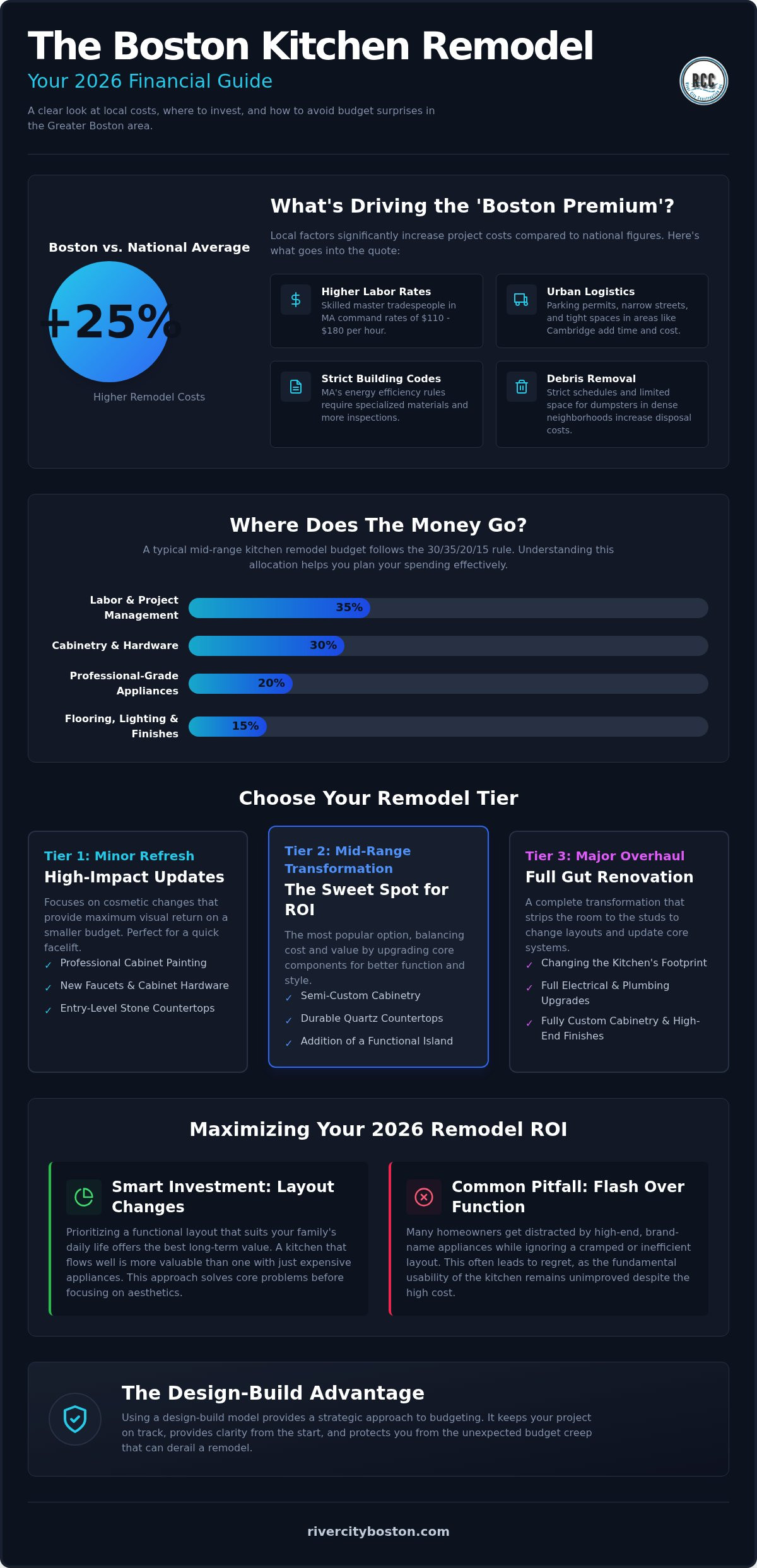
Labor is the primary differentiator in our region. Licensed master tradespeople in Massachusetts often command rates between $110 and $180 per hour. Stricter energy efficiency requirements in the state building code also mean that even “simple” changes require more specialized materials and inspections than they would in other parts of the country. The ‘Boston Premium’ effectively represents a 25% increase over national averages for similar square footage and material quality.
Setting Your Initial Budget Expectations
Planning for a 2026 project means prioritizing function over flash. We often see homeowners get caught up in high-end appliance packages while ignoring a layout that doesn’t actually work for their family’s needs. A professional kitchen-remodeler-boston helps you identify these structural needs early. River City Construction Inc focuses on providing clarity during the initial quote phase to ensure your budget aligns with the structural realities of your home in towns like Winchester or Newton. This grounded approach prevents mid-project cost spikes that often happen with less organized builds.
Cost Tiers: Minor, Mid-Range, and Major Kitchen Remodels
When planning your project, it’s helpful to view your budget through a structured lens. Most professionals suggest a breakdown often called the 30/35/20/15 rule. This balance ensures you aren’t overspending on a luxury stove while leaving your cabinets looking lackluster. Understanding this distribution helps clarify the average cost of kitchen remodel projects because it highlights where the bulk of your investment truly goes:
- 30 percent for cabinetry and hardware
- 35 percent for labor, installation, and project management
- 20 percent for professional-grade appliances
- 15 percent for flooring, lighting, and finishes
It keeps your expectations grounded as you move from the initial concept into the selection phase. By knowing these percentages, you can decide where to splurge on high-end features and where to choose more economical alternatives.
The Minor Refresh: Maximizing Impact on a Budget
A minor refresh focuses on high-touch areas that provide immediate visual impact. Replacing old faucets and dated cabinet hardware can breathe new life into a space without a total overhaul. While DIY is tempting, professional cabinet painting often yields a much more durable finish that stands up to New England humidity. Many homeowners find that entry-level stone countertops like basic granite can elevate the room’s feel without the price tag of a full gut job. If you are looking for a quick update through Kitchen Remodeling Boston MA, concentrating on these surface-level changes is a smart move.
The Mid-Range Transformation: The Sweet Spot for ROI
This tier is where we see the most activity in homes across Newton and Cambridge. It usually involves installing semi-custom cabinetry and a functional central island. Homeowners often upgrade to quartz countertops here because they offer superior durability and lower maintenance compared to natural stone. According to the 2025 Cost vs. Value Report, these mid-range updates often provide some of the best returns on investment for local property values. Adding smart lighting or hidden charging stations also caters to the modern lifestyle while staying within a predictable scope.
The Luxury Gut Renovation: Building Your Forever Kitchen
For those building a ‘forever kitchen,’ a luxury gut renovation is the standard. This process involves stripping the room to the studs to reconfigure plumbing and move walls for an open-concept flow. It’s the best way to integrate custom cabinetry that respects the unique architectural lines of historic New England homes. Structural changes in historic homes require specialized engineering to ensure the integrity of the building remains intact. This level of work transforms the average cost of kitchen remodel into a long-term equity play for your property. We focus on professional project management to ensure these complex transitions happen smoothly. If you’re ready to explore these possibilities, you can request a personalized quote to see how we can help.
The ‘Invisible’ Costs of Remodeling in the Greater Boston Area
When you look at average cost of kitchen remodel estimates, you’re often seeing the price of “visible” items like cabinets and countertops. However, in cities like Medford and Somerville, the “invisible” costs can account for a significant portion of your budget. These aren’t just line items. They’re the essential components that keep your home safe, legal, and functional for the long term.
- Disposal and logistics: In dense urban areas, getting a dumpster on a narrow street or navigating restricted parking adds time and specialized labor costs.
- Historic home surprises: If your home was built before 1978, addressing lead paint or outdated knob-and-tube wiring is often a mandatory safety requirement during a renovation.
- The “Living” cost: Don’t forget to budget for dining out or setting up a temporary kitchen. This lifestyle shift is a real expense that many homeowners overlook until the microwave is sitting on the dining room floor.
According to Remodeling Magazine’s Cost vs. Value report, local experts emphasize that while these hidden costs don’t add “curb appeal,” they’re vital for protecting your home’s equity. Investing in the bones of the house ensures your beautiful new finishes won’t be compromised by old plumbing or failing electrical systems later.
Navigating Local Permits and Regulations
Cities like Cambridge and Somerville are known for their thorough inspection processes. These timelines can be longer than in suburban towns, requiring careful project management to avoid costly delays. Meeting the latest 2026 energy efficiency standards is now a core part of the process, ensuring your new kitchen is as sustainable as it is beautiful. For a deeper dive into these requirements, see our guide on Massachusetts Home Renovation Permits.
Structural and Mechanical Upgrades
Moving to a modern induction cooktop often requires an electrical panel upgrade, especially in older homes in Winchester or Lexington. We also frequently find subfloor issues once the old flooring is pulled up. These floors have often settled over a century, requiring leveling before new tile or hardwood can be laid. Finally, opening up a wall for that airy, open-concept look usually necessitates professional HVAC adjustments. This ensures that heat and cooling still flow correctly through the expanded space without creating uncomfortable cold spots in the winter. Understanding these factors is key to realizing the true average cost of kitchen remodel in our unique regional market.
Maximizing ROI: Which Upgrades Pay Off in 2026?
When you look at the average cost of kitchen remodel projects, it’s easy to get distracted by shiny, professional-grade appliances that look like they belong in a restaurant. However, if you’re looking for the best return on your investment in the Boston market, your focus should be on the layout. A high-end range is a nice perk, but a kitchen that flows correctly and eliminates “bottlenecks” is what truly adds long-term value to a home in Newton or Winchester. Reconfiguring a cramped floor plan to create a more open, functional space is almost always a better financial move than buying the most expensive fridge on the showroom floor.
The 2026 market is also showing a major shift toward quality over quantity. Buyers are looking for “Master Craftsman” standards in cabinetry, prioritizing solid wood construction and durable finishes that won’t show wear after just a few years. In our region, quartz has largely overtaken granite as the preferred countertop material. It offers a consistent, modern look and requires much less maintenance than natural stone, which appeals to busy professionals in Cambridge and beyond.
Layout Trends that Increase Home Value
In the narrow kitchens of Medford or Somerville, maximizing every square inch is vital. We’re seeing a rise in “hidden” pantries and multi-functional islands that serve as prep stations, dining tables, and home offices all at once. Bringing in more natural light through better window placement can also make a small space feel significantly larger and more inviting. To see how these choices impact your bottom line, check out our guide on How to Increase Home Value with Remodeling.
Sustainability and Smart Tech Costs
Modern homeowners are increasingly concerned with monthly operating costs. Investing in high-efficiency dishwashers and refrigerators isn’t just good for the planet; it’s a selling point for future buyers. We’re also seeing more requests for smart home integration, such as leak detection sensors under the sink and voice-controlled lighting. These small additions provide peace of mind and help prevent expensive water damage down the road. Installing energy-efficient windows in your kitchen provides a high return on investment by significantly lowering monthly utility bills while increasing the overall thermal comfort of the home.
By focusing on these strategic upgrades, you ensure that the average cost of kitchen remodel reflects a smart investment rather than just an expense. This approach protects your equity while making your daily life more enjoyable.
The River City Advantage: Strategic Budgeting and Design-Build
Managing the average cost of kitchen remodel projects in a market as complex as Boston requires more than just a spreadsheet. It demands a partnership built on transparency and local insight. Many homeowners start their journey with a beautiful set of architectural plans, only to find out months later that the design is impossible to build within their actual budget. This “budget creep” is a common stressor in home renovation, but it’s entirely preventable when you have the right team coordinating every step from the start.
Our team at River City Construction Inc operates as your “Master Craftsman and Trusted Neighbor.” We believe that honesty about costs shouldn’t wait until the first wall is opened. By choosing a design-build model, you bring the designer and the builder to the table at the same time. This early coordination ensures that every aesthetic choice is grounded in the reality of local labor rates and material costs. It’s about providing you with a fixed-price contract that offers peace of mind from the very first day of demolition.
Why Design-Build is the Safest Financial Choice
The traditional method of hiring a separate architect and contractor often creates a communication gap. When the person drawing the lines doesn’t know the current price of custom cabinetry or the specific structural quirks of a Newton Victorian, the homeowner pays the price in change orders. Our integrated approach at River City Construction Inc eliminates this friction. We streamline the procurement of materials to stay ahead of 2026 supply chain shifts, ensuring your project doesn’t stall while waiting for a specific fixture. This level of coordination is also why many of our clients trust us for Bathroom Remodeling to maintain high standards and stylistic consistency throughout their entire home.
Start Your 2026 Kitchen Transformation
Every successful project begins with a conversation. We know the specific requirements of building departments in Winchester, Belmont, and Lexington, which allows us to set realistic timelines for your permits and inspections. During your initial consultation, we’ll discuss your goals for the space and provide a clear-eyed look at how to maximize your investment. We’ve spent years serving our neighbors in towns like Concord and Lexington, and we take pride in maintaining an organized, disciplined workspace that respects your home and your family’s routine.
Taking the first step toward your dream kitchen doesn’t have to be overwhelming. We’re here to provide the technical competence and personal commitment your project deserves. Let’s work together to build a space that stands the test of time.
Contact River City Construction Inc for a Free Kitchen Quote
Planning Your 2026 Boston Kitchen Transformation
Remodeling a kitchen in our historic Massachusetts neighborhoods is a significant journey that requires both vision and practical planning. You’ve seen how the average cost of kitchen remodel in our area is shaped by local labor rates, strict building codes, and the unique challenges of older homes in towns like Newton and Winchester. By focusing on smart layout changes and high-quality cabinetry, you’re making a lasting investment in your home’s equity and your family’s daily comfort.
River City Construction Inc has served the Greater Boston area for years, helping neighbors transform their houses into dream homes. We specialize in navigating the complexities of historic home renovations with a comprehensive design-build approach that prioritizes transparency. This method ensures your vision stays aligned with your budget from the very first day, protecting you from the “invisible” costs that often surprise homeowners during construction.
We’re ready to help you create a functional, modern space that perfectly fits your family’s needs while reflecting the unique character of your neighborhood. Our team takes pride in being the master craftsman you can trust with your most important investment. Let’s start building something beautiful together.
Frequently Asked Questions
What is the average cost of a kitchen remodel in Boston in 2026?
The average cost of kitchen remodel in the Greater Boston area is 17.1 percent higher than the national average. For 2026, a functional update typically ranges from $40,000 to $60,000, while a full gut renovation involving layout changes can reach between $110,000 and $180,000. These figures reflect the unique logistical challenges of our local market and the high quality of materials required to withstand New England’s seasonal shifts.
How much does labor typically cost for a kitchen renovation in Massachusetts?
Skilled labor in Massachusetts is a significant investment, with licensed master tradespeople often charging between $110 and $180 per hour. On a typical project, labor and installation account for roughly 20 to 35 percent of your total budget. This rate ensures that your project meets the latest 2026 Massachusetts energy efficiency codes and that specialists handle complex electrical and plumbing updates in your historic home safely and professionally.
Do I need a permit for a kitchen remodel in Somerville or Cambridge?
You will definitely need permits for any work that involves structural changes, electrical wiring, or plumbing updates in Somerville and Cambridge. These cities maintain some of the strictest inspection timelines in the state. A professional contractor handles the application process for you, ensuring that your project stays legal and passes all 2026 building code inspections without the headache of costly stop-work orders or fines.
Is it cheaper to refacing cabinets or replace them entirely?
Refacing cabinets is generally more affordable than a full replacement, often saving homeowners between 30 and 50 percent on that specific line item. However, if your existing cabinet boxes are damaged or the current layout doesn’t serve your family’s needs, replacing them entirely is the better long-term investment. This allows you to reconfigure the space for better flow and add modern features like deep pull-out drawers or hidden pantries.
How long does a typical kitchen remodel take in the Greater Boston area?
A cosmetic refresh might take only two to four weeks, but a full-scale remodel in the Boston area usually requires eight to twelve weeks once construction begins. This timeline includes demolition, structural repairs, and the installation of custom finishes. We always recommend accounting for extra time in cities like Cambridge or Somerville, where the permitting and inspection process can move a bit slower due to high demand and strict regulatory standards.
What are the hidden costs I should watch out for in an older Boston home?
Older homes in neighborhoods like Winchester or Medford often hide outdated knob-and-tube wiring, lead paint, or subfloors that have settled unevenly. Addressing these factors impacts the average cost of kitchen remodel projects significantly. We plan for these “invisible” factors during the initial quote phase so that your budget remains stable. Addressing these structural and safety concerns early protects your home’s equity and prevents dangerous mechanical failures later.
Does a kitchen remodel really increase home value in the current Boston market?
A professional renovation is one of the most effective ways to boost your property’s worth, with an average return on investment between 70 and 80 percent. In a competitive market like Newton or Wellesley, an updated kitchen is often the deciding factor for potential buyers. Beyond the financial gain, improving the layout and energy efficiency of your space makes your home significantly more functional and enjoyable for your family every day.
Can I stay in my home during a major kitchen renovation?
You can stay in your home, but it requires careful planning and a bit of patience. Most families set up a temporary kitchen with a microwave and hot plate in the dining room or basement. It’s also wise to budget for dining out more frequently during the most intensive phases of construction. If the project involves a full gut renovation, some homeowners find it less stressful to stay with relatives or in a short-term rental.