The deck repair-versus-replacement cost in Winchester depends less on worn boards than on the condition of the framing underneath. Repair can make sense when damage is isolated and the structure is sound; rebuilding deserves consideration when structural problems are widespread or repairs approach 50-60% of replacement cost. The cheaper-looking fix may not be the better long-term choice.
It’s understandable to focus first on surface wear: peeling finish or damaged boards can make a deck look beyond repair. But if the frame is sound, targeted repairs or resurfacing may be enough. If posts, joists, or the connection to the house are deteriorating, replacing surface boards alone won’t address the underlying problem.
This guide explains how framing damage and surface condition shape the choice between repair, resurfacing, and rebuilding, with cost examples to help compare the options. It also covers the details that affect an estimate, so you can identify a practical next step for a deck in Winchester.
Key Takeaways
- Separate worn boards and finish from damage to the framing underneath; surface fixes can’t solve a structural problem.
- Use signs such as soft framing or a deck that shifts underfoot as reasons to take safety concerns seriously and seek a professional assessment.
- Compare repair, resurfacing, and rebuilding by the extent of the damage, the condition of the frame, and how much work each option requires.
- Look at cost examples by repair type, from replacing a board to addressing damaged joists, to understand what may drive the total.
- When the structure is sound but the surface is worn, resurfacing may offer a different path from rebuilding the entire deck.
Repair, Resurface, or Rebuild: Which Does Your Winchester Deck Need?
Choose between repair, resurfacing, and rebuilding by looking beyond worn boards to the frame beneath them. For a Winchester deck, compare wood and composite materials: U.S.
Signs That Point to Deck Replacement
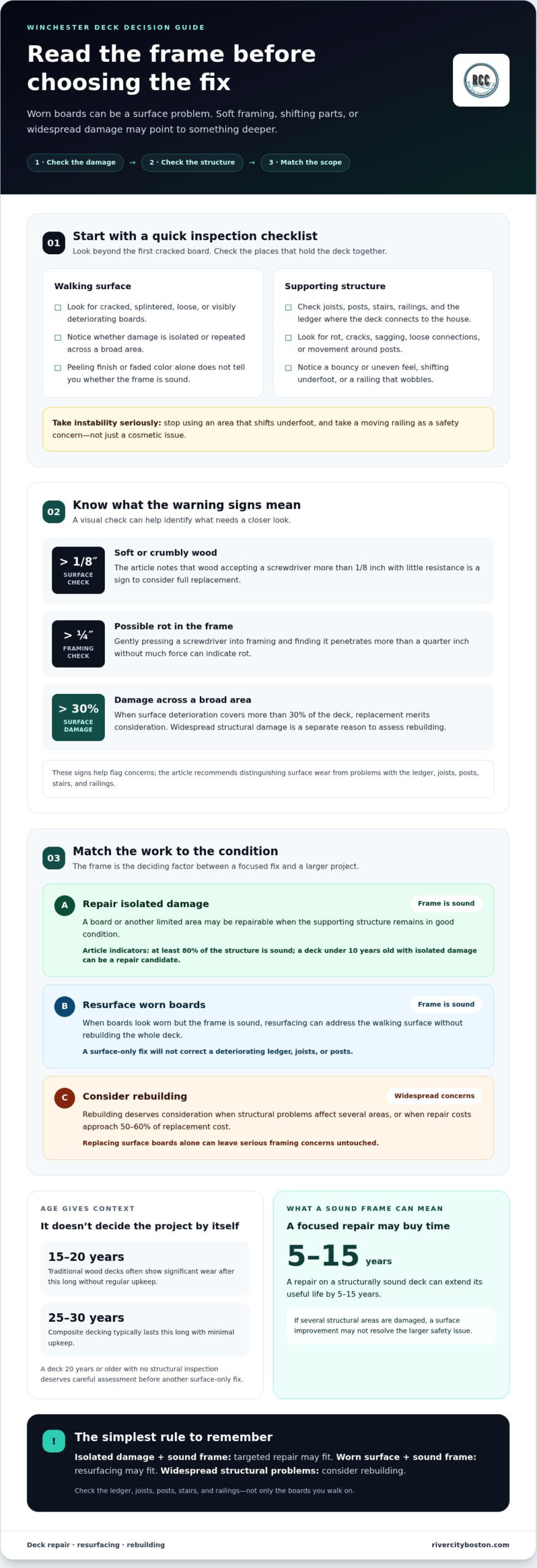
Replacement becomes a stronger option when age combines with widespread wear or structural concerns. Traditional wood decks often show significant wear after 15 to 20 years without regular upkeep, while composite decking typically lasts 25 to 30 years with minimal upkeep. Age alone doesn’t decide the project, but it helps frame the inspection.
Notice whether damage appears across the deck or in isolated spots. Widespread surface damage covering more than 30% of the deck is a reason to consider replacement. A deck that is 20 years or older and has never had a structural inspection also deserves careful assessment before another surface-only fix.
Visible Surface-Board Damage
Surface damage affects the walking area: boards may be cracked, splintered, loose, or visibly deteriorating. One or two damaged boards may be replaceable without rebuilding the deck, provided the supporting frame is sound.
Look across the boards for damage that repeats over a broad area, rather than focusing only on the first obvious crack. If deterioration reaches more than 30% of the surface, replacement merits consideration. A peeling finish or faded color alone doesn’t show whether the ledger or framing is sound.
Safety signs call for more than a cosmetic review. If wood feels soft or crumbles, press a screwdriver into the affected area gently. Wood that accepts the screwdriver more than 1/8 inch with little resistance is a sign to consider full replacement. Stop using an area that feels unstable, shifts underfoot, or has a railing that moves when held.
An assessment should distinguish surface damage from framing problems. The ledger, which connects the deck to the house, matters alongside the joists, posts, stairs, and railings. Replacing a cracked board won’t fix a ledger that has begun to rot. A sound frame can support targeted repairs, while damage across several structural areas may point toward rebuilding.
Think of the decision in three parts: repair isolated damage, resurface a sound frame with worn boards, or rebuild when structural problems are widespread. A repair on a structurally sound deck can extend its useful life by 5-15 years. If repairs would leave serious framing concerns untouched, the immediate surface improvement may not resolve the larger safety issue.
Inspecting deck framing for rot and structural damage
A deck’s surface can look sound while the framing beneath it has problems. Inspect both, with particular attention to the connection between the deck and the house.
Deck Components and Common Damage
A deck’s main components include the surface boards, joists, posts, railings, stairs, and ledger board, which connects the structure to the house. Any of them can loosen, crack, sag, or rot, so checking only the walking surface can miss damage that affects the whole deck.
Look closely where framing meets other wood, around posts, and at the ledger connection. Gently press a screwdriver into the framing; if it penetrates more than a quarter inch without much force, that can indicate rot. Composite decking still relies on a supporting frame, so composite boards don’t rule out structural damage below.
Notice whether the deck feels bouncy or uneven, posts shift, or railings wobble. These signs can point to different repairs. A loose railing post, for example, may need added blocking, while a sagging section may involve damaged joists or supports.
When Isolated Damage Can Be Repaired
Isolated damage means a problem affects a limited area while the rest of the structure remains sound. Localized repairs are recommended when at least 80% of the deck structure is sound, and a deck under 10 years old with isolated damage can be a repair candidate.
An assessment should distinguish a single damaged board from rot affecting multiple joists or the ledger. Replacing a board won’t correct a weak support beneath it. The location and extent of damage matter as much as its appearance: they help show whether the work can address the cause, rather than just the visible symptom.
Repair Costs by Damage Type
Typical component costs depend on what needs replacing or reinforcing.
Structural repairs involve different scopes of work. Replacing a board is not the same job as repairing the framing, which is why estimates can differ.
For a Winchester deck, an assessment should identify which components are damaged and whether the ledger, joists, and posts remain sound. If you’re weighing repair against replacement, discuss the deck’s framing concerns as part of planning the next step.
Ledger board, joist, post, and railing failures
Problems with the ledger, joists, posts, or railings can affect how securely a deck stands and feels underfoot. The location and extent of damage help distinguish a focused repair from several connected structural problems.
Inspecting Boards, Railings, and Framing
An assessment compares the visible boards and railings with the framing that supports them. Notice whether boards move under pressure, railings shift when held, or posts appear loose at their bases. A loose railing may need reinforcement, but movement across several connected parts calls for a broader assessment.
The ledger deserves close attention because it connects the deck to the house. A gap, visible deterioration, or movement near that connection can change the scope of work. An estimate should identify the affected parts and explain whether the problem is limited to one area or extends through the frame.
Board and Joist Repairs
Board repairs address the walking surface; joist repairs address the framing directly beneath it. Replacing a damaged board can be a focused job if its supports are sound. A damaged joist needs a different repair because it carries the boards and helps support the deck.
Replacing one or two boards may be appropriate when the surrounding structure is sound. If several joists or the ledger are affected, the work may extend beyond a small patch and should be assessed as a connected structural repair.
Railing problems range from a loose connection to posts that wobble under pressure. Securing loose railing components with construction screws takes about 1 hour.
The extent of structural damage can substantially affect the estimate. Look for a breakdown that identifies each affected component, rather than a general label such as “deck repair.”
A project’s estimate depends on its condition and scope. Materials, access, the number of damaged parts, and whether the ledger or several joists need work all affect the cost. Comparing these details helps show whether targeted repairs address the cause or leave related problems in place.
Relative cost of resurfacing compared with rebuilding
Resurfacing renews the visible decking while retaining a sound frame; rebuilding replaces the deck structure. Compare the work required with the condition of each component that could remain.
Choosing Repair, Resurfacing, or Rebuilding
Repair suits damage limited to a few boards or components. Resurfacing suits worn decking over a sound frame, while rebuilding addresses widespread structural failure. New boards won’t correct damaged supports, and replacing a sound frame may add unnecessary work when the problem is only on the surface.
Compare the repair scope with the full replacement estimate. Repairs make sense when their total stays under 40-50% of replacement cost; replacement merits consideration as repair costs approach 50-60%. Treat those ranges as decision guides, not a substitute for assessing which components need work.
Resurfacing and Rebuilding Costs
Resurfacing renews the deck surface, while rebuilding may include removing and replacing the structure. The cost difference depends on how much of the original frame can remain, which decking you choose, and whether the project changes the deck’s size or layout.
Use these figures to understand how scope affects the total, not as a quote for a specific home or project.
When comparing options, separate visible decking from hidden structural work. If the frame is sound, resurfacing can avoid replacing supports that still serve their purpose. If the estimate includes joists, posts, or the ledger, compare those repairs with a full rebuild rather than weighing surface materials alone.
Deck size also changes the comparison: a 300-square-foot surface requires more decking than a smaller one, while railing adds separate material and labor. Material choice matters too. Pressure-treated wood and composite decking have different material costs, and installation scope depends on the design and existing structure.
Winchester’s climate adds another reason to consider the whole assembly. The area averages more than 90 freeze-thaw cycles per year, so homeowners should look beyond fresh-looking decking and consider how the frame and connections have held up. A resurfaced surface may look renewed, but it cannot strengthen a deteriorated structure.
To compare estimates, ask what each scope includes: removal, surface boards, railing, framing repairs, and disposal. Then compare those items against the 40-50% repair guide and the 50-60% replacement consideration range. Matching like with like helps show whether resurfacing preserves sound components or simply postpones necessary structural work.
Typical repair and replacement cost examples
When evaluating the **deck repair vs replacement cost Winchester** homeowners should expect, a single headline figure rarely describes every project accurately. An estimate depends heavily on the deck’s size, materials, removal work, railings, and the overall condition of the supporting frame. A surface-only project and a rebuild that replaces structural supports involve entirely different scopes of work, even if they cover the exact same square footage.
For minor repairs, local Winchester projects typically start at a few hundred dollars for isolated fixes, while more extensive restoration involving multiple boards and joists can reach several thousand dollars. Those figures cover varied jobs, so fixing a single loose board and a comprehensive repair involving several damaged areas shouldn’t be treated as equivalent.
Costs also look different when measured by area. Minor board replacements or surface resurfacing generally cost significantly less per square foot than a complete tear-down and rebuild, which requires structural engineering, new footings, and extensive framing materials.
Imagine noticing one damaged board beside a leaning railing. The project may involve replacing the board and securing the railing, rather than replacing the entire deck. An assessment should identify whether the railing moves because of a loose connection or a damaged support. Compare estimates that include the exact same tasks to ensure you are making an apples-to-apples comparison.
For an accurate estimate in Winchester, describe the deck’s size, material, visible damage, and desired scope. Ask for a breakdown of surface work, framing repairs, removal, and new materials. This makes it easier to compare repair with rebuilding without mistaking a partial project for a complete replacement.
Check what each estimate keeps and removes. A resurfacing estimate may retain the frame, while a rebuild estimate may include demolition and new supports. If one includes railings and another excludes them, the totals don’t cover the same project. Compare the listed work before deciding which option costs less.
Use cost ranges as planning benchmarks, not as a substitute for a project-specific assessment. Homeowners in Winchester should also consider site conditions, access, material selection, and the extent of structural work. These factors explain why decks of similar dimensions may require different scopes and estimates.
River City Construction Inc: Kitchen Remodeling
River City Construction Inc. specializes in home remodeling, including kitchen, bathroom, and basement remodeling, as well as ADU design-build solutions. For homeowners in Winchester considering broader home improvements alongside a deck project, the company can help plan and carry out that interior remodeling work.
If you’re weighing a deck project while planning changes inside your home, consider how a kitchen, bathroom, basement, or accessory dwelling unit fits your priorities. River City Construction Inc. offers these remodeling services to homeowners across Boston, Winchester, Medford, Somerville, Cambridge, Belmont, Lexington, Concord, Wellesley, Newton, Wayland, and Natick.
Contact River City Construction Inc to discuss your remodeling plans.
Plan the Next Step for Your Winchester Deck
Use deck repair-versus-replacement cost in Winchester as one part of a bigger decision: how you want the outdoor space to work for your household. Before moving ahead, write down your priorities, such as easier upkeep, a place to gather, or a layout that better suits your home. Those goals can help shape the project scope.
If an assessment points toward a new deck, River City Construction Inc. offers deck installation services. Discuss how you plan to use the space, your preferred materials, and the existing site to shape a practical plan. If repair still makes sense, focus on the work needed to address the actual problem.
With a defined goal and clear scope, you can make a more informed decision and plan an outdoor space that works better for the seasons ahead.
Frequently Asked Questions
When Should You Replace Your Deck?
Consider replacement when structural damage is widespread or the repair scope approaches the cost of rebuilding. A deteriorating house connection combined with failing joists, for example, calls for more extensive work than replacing surface boards alone. Account for supports, railings, and removal when comparing options. If the damage is limited and the frame remains sound, repairs or resurfacing may still be practical.
Is it worth repairing a 20-year-old deck?
It can be worthwhile if the structure is sound and the repair addresses a limited problem. A 20-year-old deck with a damaged stair or isolated board needs a different response from one with widespread rot or shifting supports. Focus on the condition of the frame, not just the deck’s age. A professional assessment can distinguish a contained repair from work that leaves underlying damage in place.
Quick decision checklist: repair or replace?
First, identify whether the problem affects the surface, the frame, or both. Then note which components need work, such as boards, railings, posts, or stairs. Repair suits contained damage; resurfacing renews the surface over a sound frame; rebuilding addresses broader structural problems. Finally, compare estimates with matching scopes, including removal and materials, so each option covers comparable work.
What are the signs that a deck is unsafe?
Movement underfoot, a railing that shifts when held, or soft, crumbling framing can indicate a problem. A railing pulling away from a post may point to a loose connection, while a bouncy area could signal an issue with the supports beneath the boards. Keep people off any visibly unstable section and arrange an assessment before using it. A fresh-looking surface alone doesn’t establish that the structure is sound.
What is the average cost to repair a deck in Winchester, Massachusetts?
For Winchester, Massachusetts, use these figures as a guide, not a local average. A small board repair differs from work involving several supports or railings. The deck’s size, material, access, and damage affect the scope, so compare estimates that describe the same tasks and materials.
How much does deck repair cost per square foot compared with deck replacement?
U.S. Those ranges don’t represent identical scopes: replacement materials alone don’t cover all project work. To compare deck repair vs replacement cost in Winchester, line up labor, removal, materials, and structural work in each estimate.
What factors affect deck repair and replacement costs in Winchester?
Deck dimensions, material, site access, removal needs, and the extent of framing damage shape the project scope. A deck with stairs and railings, for example, requires different work from a simple platform. In Winchester, Massachusetts, weather exposure also makes the condition of connections and supports important to assess. A clear estimate separates surface work from framing repairs, so you can see what each proposed scope includes.
When is deck repair more cost-effective than full replacement?
Repair is more cost-effective when the frame is sound and the work can address isolated damage. Replacing a few boards, for example, may preserve the rest of a well-supported deck. The deck repair vs replacement cost in Winchester should be weighed against the work each option actually covers, not just the lowest initial figure. Repairs make sense when their total is under 40-50% of full replacement cost.