Ceiling damage from ceiling fan installation in Cambridge depends largely on what is above the planned fixture location. A new fan may require an opening to route wiring through the ceiling or walls, while an existing wired location can reduce how much needs to be opened. The fan also needs secure ceiling support.
It’s reasonable to want the comfort of a fan without turning a straightforward home project into a larger ceiling repair. River City Construction Inc knows the work depends on existing wiring, mounting support, and the fan’s location, so these details should be assessed before installation.
This guide explains how wiring and ceiling support affect installation, what to consider when choosing a room location, and how mounting materials help secure a fan. It also covers differences between home spaces and what to expect when wiring isn’t already in place.
Key Takeaways
- The ceiling work depends on whether wiring and suitable mounting support are already in place, which can shape the installation steps.
- Room dimensions help guide fan size: the article explains examples for small, medium, and large rooms.
- Blade height and clearance from ceilings, walls, and nearby furnishings affect where a fan can be positioned.
- Secure mounting materials and careful installation help address ceiling damage concerns and support steady operation.
- Learn how fan placement and installation considerations can vary across different areas of a home.
Electrical wiring and ceiling support challenges
Fan installation involves two connected tasks: making a suitable electrical connection and securing the fan to the ceiling. How much ceiling access is needed depends on the wiring and the fan’s location.
Ceiling Fan Electrical Wiring
At an existing ceiling connection, the installer checks that the home’s electrical supply is suitable for the fan. The fan’s voltage is the electrical level it is designed to use, and it must match the supply. The installer also checks that the system can handle the fan’s power needs before making connections.
A fan with a light may need different connections from a fan without one. The fan’s instructions and the existing wiring guide the work. Even at an existing ceiling connection, the setup needs assessment before the fan is attached.
Installing Without Existing Wiring
If wiring doesn’t reach the chosen location, installation may require routing it through a wall or ceiling. That can mean opening a section to access the wiring path, then connecting the fan to the home’s electrical supply. The route and access needed determine how much of the finished surface may need to be opened.
This work may require electrical experience or a licensed electrician. For example, a room without a ceiling fixture needs a wiring plan before a fan can be installed. Planning the route first helps clarify the access work involved.
Fan Mounting and Ceiling Support
The mounting point is where the fan’s bracket attaches to the ceiling structure. The installer assesses whether that spot can support the fan and whether different mounting materials are needed. A regular light-fixture connection may not provide the support a fan requires.
Wiring and ceiling support need separate attention. Correct wiring won’t secure a fan to a weak attachment point, and a secure bracket won’t provide power. The chosen ceiling location affects both parts of the installation.
Permits and Safety Requirements
Do electricians in Cambridge need a permit to install a ceiling fan? Permit requirements depend on the work involved and applicable local requirements. Replacing a fan at an existing wired location differs from adding new wiring, so the project scope matters.
What electrical code and safety requirements apply to ceiling fan installation in Massachusetts? Requirements depend on the location and scope of work. Practical checks include matching the fan to the electrical supply, ensuring the system can handle its power needs, and securing the fan to suitable ceiling support. New wiring calls for electrical experience.
Installing fans in different areas of a home
A room’s size, ceiling height, and everyday use help determine where a fan belongs. Consider a bedroom and an open living area: one fan size and placement may not suit both rooms. Start by thinking about how each space will be used.
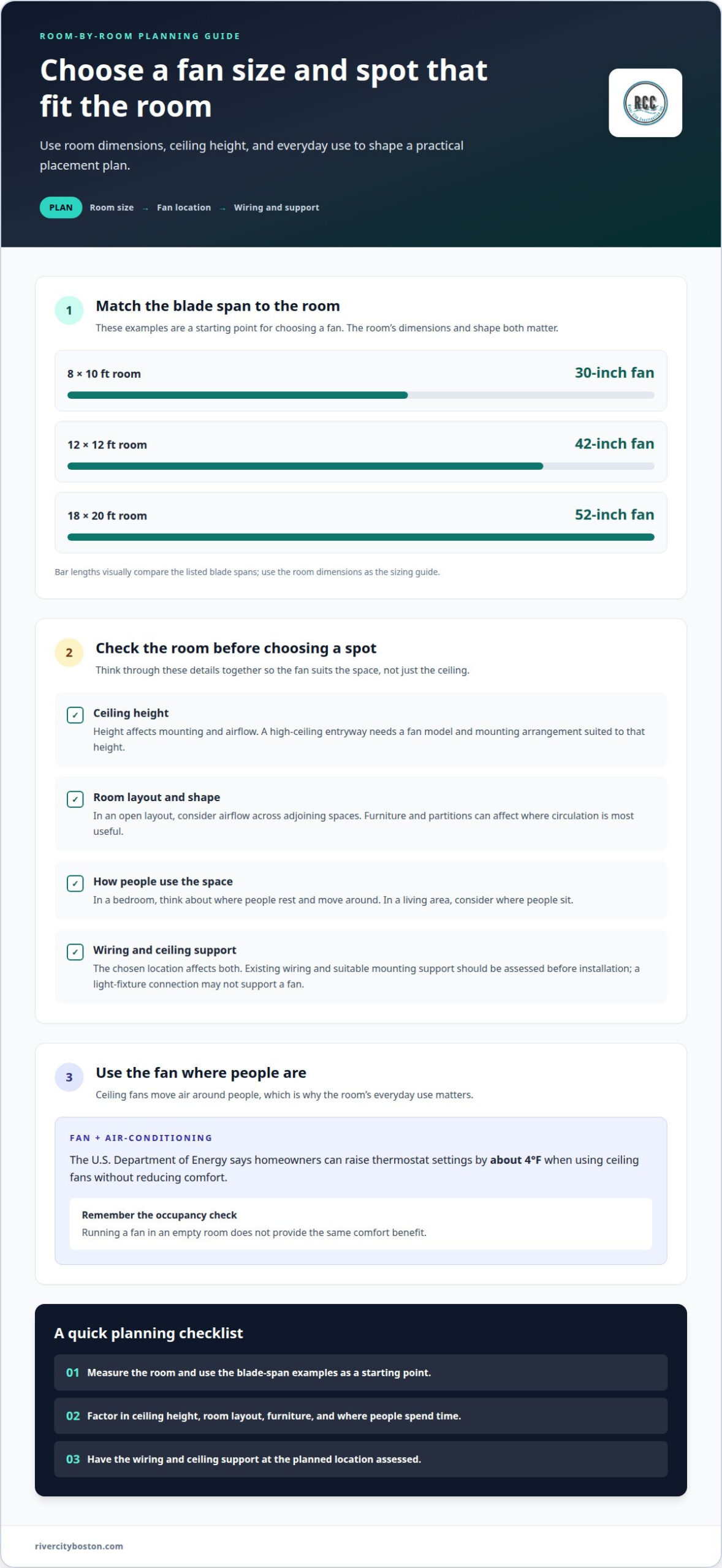
How do I choose a ceiling fan sized for my room and ceiling height? Match the fan’s blade span to the room: a 30-inch fan is recommended for an 8-by-10-foot room, a 42-inch fan for a 12-by-12-foot room, and a 52-inch fan for an 18-by-20-foot room. Ceiling height also affects mounting and airflow, so consider it alongside room dimensions.
These examples offer a starting point for selecting a fan. A smaller room may call for a compact blade span, while a large open room may need broader coverage. Room shape matters too. In an open layout, a homeowner may want airflow across adjoining spaces. Furniture and partitions can affect where circulation is most useful, so the room’s layout should inform the plan.
Different spaces call for different choices. In a bedroom, consider where people rest and move around. In a living area, think about where people sit. A high-ceiling entryway calls for a model and mounting arrangement suited to the height. Remote-controlled and high-ceiling fan models can be installed, with the room’s wiring and layout informing the plan.
Ceiling fans can work alongside air-conditioning. The U.S. Department of Energy says homeowners can raise thermostat settings by about 4°F when using ceiling fans without reducing comfort. Fans move air around people, so running one in an empty room doesn’t provide the same comfort benefit. E3 Electric says ceiling fans can save homeowners money on air-conditioning bills. How a household uses both systems affects the result.
For a Cambridge home, a useful plan considers room dimensions, ceiling height, intended use, wiring, and obstacles. A contractor can use these details to plan the fan location and installation approach. This is especially helpful when choosing between a tall entryway and a frequently used living space, which have different layout needs.
Before settling on a location, connect the fan choice to the room’s purpose. A homeowner planning changes across several rooms can discuss how the spaces will be used and factor that into the installation plan. If you’re considering broader home improvements, talk through your project as part of planning the work.
Professional installation and materials
A professional installation plan connects the fan, ceiling support, and finish work. Suitable materials and a clear repair plan help manage ceiling damage.
Electrician or Handyman Installation
An electrician is suited to work involving new wiring or electrical troubleshooting. A handyman may handle mounting and assembly when the electrical setup is suitable. The scope of the job, especially whether wiring changes are needed, determines the right expertise.
Before hiring an installer in Cambridge, clarify the scope: wiring, mounting, fan assembly, and any ceiling repairs. Replacing a fan at an existing wired location differs from adding wiring in a room without a ceiling fixture. Relevant electrical experience matters when the work involves wiring.
Ceiling Fan Installation Costs
How much does ceiling fan installation cost in Cambridge, MA? The price depends on the project and is provided after a quote request. Factors include existing wiring, mounting needs, ceiling access, materials, and repairs.
These factors shape the work more than the fan alone. Replacing a fan at an existing location may need different preparation from a new installation that requires wiring through the ceiling. A quote should reflect the actual scope, including any additional mounting support or ceiling repair.
Materials are part of secure mounting. The installer brings the materials needed to attach the fan, guided by the mounting location and ceiling structure. A suitable fan mount holds the fixture to the ceiling, while wiring connects it to power. Both need attention before the fan is ready to operate.
Ceiling damage depends partly on access. Routing wiring through a finished ceiling may require an opening. A professional may cover or repair damage caused during installation. Planning finish work alongside the wiring helps ensure the ceiling opening is addressed as part of the project.
For a room with an existing fixture, the installer can assess the wiring and mounting point before fitting a replacement fan. A new location calls for a different sequence: plan the wiring route, prepare access, secure the mount, connect the fan, and address any resulting ceiling damage. Each step affects the finished appearance.
Before work begins, establish what the installation includes. Confirm whether the scope covers fan mounting, electrical connections, mounting materials, and any ceiling repairs resulting from the work. These details clarify the finished job, whether it’s a simple replacement or more involved residential work.
Ceiling fan installation
A sound installation brings together placement, mounting, and a final operating check. In a bedroom, living room, or entryway, the fan needs enough room to move air without nearby surfaces blocking its blades.
Start by assessing the ceiling and the room layout. Fan blades should sit at least 8 inches below the ceiling, 8 to 9 feet above the floor, and 18 inches from walls. These clearances help keep the blades away from nearby surfaces while leaving space for airflow. Furniture, beams, and sloped ceilings can affect the best mounting point.
Placement matters as much as the fan itself. A fan installed too close to the ceiling, or where airflow is obstructed, may not work effectively. If a room has a large wardrobe or ceiling beam, the installer considers these obstacles before choosing the mounting location. A ceiling fan should never be installed directly above a bed.
- Choose the location. Consider room use, ceiling height, walls, and obstructions before positioning the mount.
- Secure the mounting point. Attach the fan using materials suited to the ceiling and mounting location.
- Connect and assemble. Complete the wiring and fit the fan components according to the installation requirements.
- Test the fan. Check that the mount is tight and the fan is balanced before finishing the work.
Replacing a fan may take within an hour. Installing one at a new location can involve additional work, especially if the wiring or access differs from the existing setup. The sequence still matters: establish the mounting point, complete the connections, assemble the fan, and test its operation. This helps identify movement or noise before the work is finished.
A balanced fan and secure mounting can help prevent wobbling and operating noise. During the final check, the installer looks for movement at the mount and uneven rotation. If the fan wobbles, check its balance and mounting before regular use. A small adjustment at this stage can address a problem that might otherwise affect comfort.
Maintenance supports the result after installation. Clean the blades regularly to prevent dust buildup that can hinder performance and affect air quality. A dusty bedroom fan, for example, may circulate settled particles as it runs. Before installation, discuss practical details such as placement, clearance, and a careful final test to help the fan work well in the room.
In Houston, installation can take as little as 1 hour when existing wiring is present, the mounting location is still desired, and the connected joist is viable; those conditions shape the timeline.
Ceiling fan installation in Cambridge, Massachusetts
For a home in Cambridge, Massachusetts, start by matching the installation plan to the room and existing ceiling setup. The intended location, electrical connection, ceiling access, and mounting point all shape the work. Replacing a fan at an existing fixture location can involve different steps from adding one where no wiring currently reaches.
Room use helps guide the location. A bedroom fan should suit how people use the space and avoid placement directly above a bed. In a living area, furniture and other obstacles can affect where circulating air will be useful. The chosen location should also leave the fan room to operate without blocked airflow.
Next, the installer assesses the electrical connection and fan requirements. The home’s electrical system must handle the fan’s power needs, and the wiring must suit its voltage. If wiring needs to reach a new ceiling location, the route through walls or ceilings affects access and the amount of work. Existing outlets or fixture locations may inform the plan, but they don’t replace assessing the intended fan connection.
Ceiling access is a separate planning consideration. Routing wiring to a new location may require opening part of a finished ceiling or wall. The installer considers the route and mounting position together, which helps clarify where access may be needed. Professional electricians may cover or repair ceiling damage caused during installation.
Secure mounting also depends on the ceiling location and materials used. Before fitting the fan, the installer assesses the mount and prepares the materials needed to secure it. After assembly and connection, checking the fan’s balance and mounting tightness can help prevent wobbling and operating noise.
Homeowners can use these details to understand the project scope:
- Whether the intended location already has wiring.
- Whether new wiring requires access through a ceiling or wall.
- How the fan will be securely mounted at that location.
- Whether the installation may require ceiling repairs.
- How the completed fan will be checked for balance and a tight mount.
These considerations make a local installation plan specific to the home, rather than relying on a one-size-fits-all sequence. A project in Cambridge, Massachusetts, may involve a straightforward replacement or additional wiring and ceiling access. Connecting the location, wiring route, mounting plan, and finish work gives homeowners a clear picture of the work ahead.
River City Construction Inc: Deck Installation
River City Construction Inc offers Deck Installation for homeowners planning a more useful outdoor living area. If considering a ceiling fan has you thinking about comfort throughout your home, a deck can create another place to relax and spend time outside. For interior projects, the company also offers Kitchen Remodeling, Bathroom Remodeling, and Basement Remodeling.
These services can suit homeowners whose plans extend beyond one room. You might, for example, be considering a basement update while planning a deck for outdoor use. Start by identifying which space matters most and describing the improvements you have in mind.
Contact River City Construction Inc to discuss your home improvement plans.
Plan the next improvement with confidence
Planning ceiling fan installation in Cambridge is also a chance to think about how each room should feel and function. A considered home improvement plan can connect practical needs with spaces you want to enjoy every day, indoors and out. If your next project reaches beyond a fan, River City Construction Inc offers Kitchen Remodeling, Bathroom Remodeling, and Basement Remodeling. Its Deck Installation service can extend everyday living outdoors.
Choose the change that matters most to your household, whether that means improving an interior space or creating a more useful outdoor area. A clear starting point makes it easier to describe your goals and discuss a practical direction for the work.
With a thoughtful plan, your next improvement can make your home more comfortable and better suited to the way you live.
Frequently Asked Questions
How Extensive Will The Damage To The Ceiling Be?
The amount of ceiling damage depends on the wiring already in place and the access required. Replacing a fan where one was installed may involve less ceiling work than adding wiring at a new location. A room without a ceiling connection, for example, may need an opening to route wires. The installer can include likely ceiling repairs in the work plan.
How Long Does An Installation Take?
Replacing a fan may take less time than installing one at a new location. Removing the old fan and fitting another may take within an hour. Adding wiring or changing the mounting location involves more steps. The installer considers access, wiring, and ceiling support to plan the work sequence and estimate the time needed for the specific job.
What factors affect the cost of installing a ceiling fan in Cambridge?
The price depends on the project and is provided after a quote request. Factors include whether wiring reaches the chosen location, the work needed to secure the fan, ceiling access, materials, and any repairs. Replacing a fan at an existing fixture location has a different scope from adding wiring and preparing a new ceiling location.
Can an existing light fixture box support a ceiling fan, or is a fan-rated box required?
An existing light-fixture box may not be strong enough for a fan. A fan-rated box is designed to support a fan’s weight and movement while it runs. The installer checks the box and ceiling attachment before using them. If they can’t support the fan securely, the mounting setup needs to be changed before installation.
How long does professional ceiling fan installation take?
Replacing one fan with another may take within an hour, but that timing doesn’t cover every project. A new location can involve additional wiring, ceiling access, or mounting work. The installer may need to prepare the ceiling before assembling the fan. The work required at the specific location determines the installation sequence and overall duration.
What are common ceiling fan installation risks and warning signs of faulty wiring?
Common concerns include a loose fan, wobbling during operation, unusual noise, or wiring that doesn’t suit the fan’s electrical requirements. Wobbling and noise can point to balance or mounting problems. If wiring looks damaged or the fan behaves unexpectedly after installation, stop using it and have the setup assessed by someone with electrical experience. Don’t ignore signs of a poor connection.
What electrical code and safety requirements apply to ceiling fan installation in Massachusetts?
Requirements depend on the location and scope of work. Check that the fan matches the electrical supply, the system can handle its power needs, and the ceiling support is suitable. New wiring calls for electrical experience.