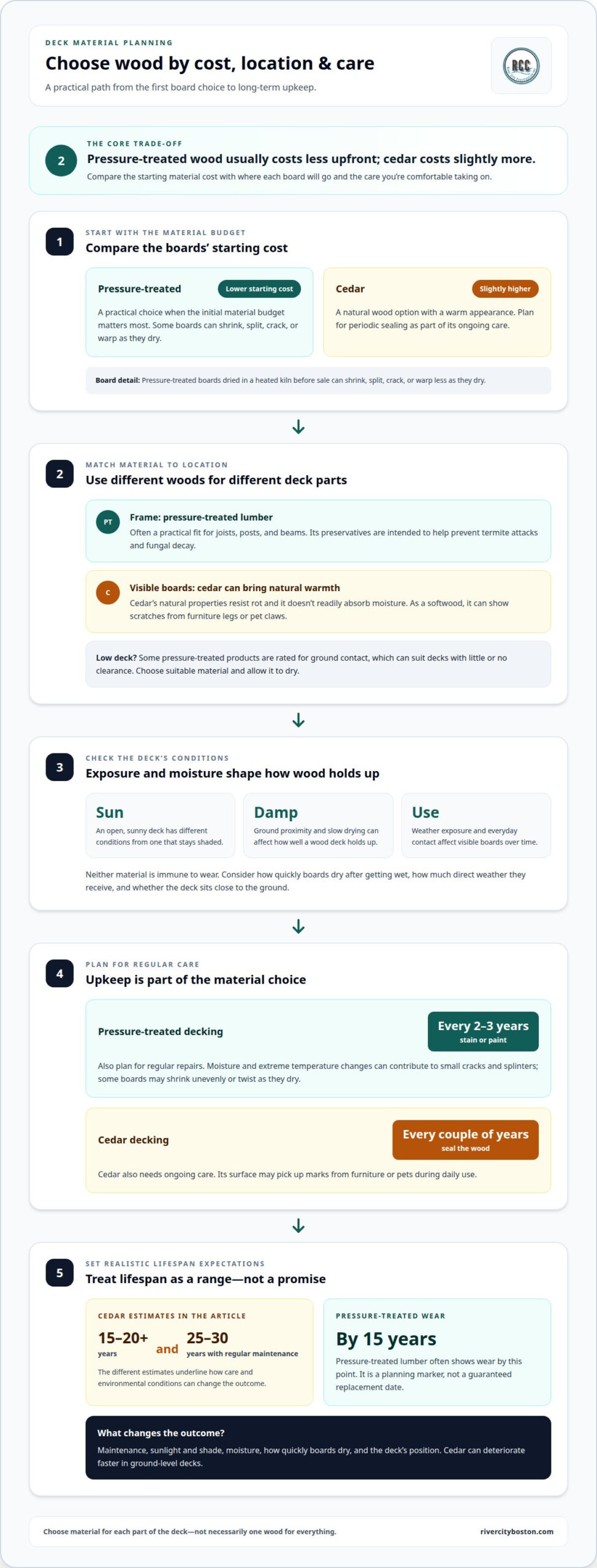
The lowest upfront cost can come with more upkeep over time. Pressure-treated decking generally costs less to buy than cedar, while cedar costs slightly more; the better fit depends on how you weigh initial materials against durability, maintenance, and appearance.
The pressure treated vs cedar decking cost difference is only part of the decision. Pressure-treated lumber is often a practical choice for the deck’s framing, while cedar can suit visible surfaces when its natural look matters. Both materials have trade-offs, and their lifespan depends in part on exposure and care. This comparison explains how the two options differ in upfront cost, resistance to wear and rot, long-term maintenance, and typical uses in framing or decking boards. You’ll come away with a clearer sense of which material fits your priorities, so you can plan a deck that feels right for your home and is built with its long-term upkeep in mind.
Key Takeaways
- Pressure-treated decking generally costs less upfront, while cedar costs slightly more. Compare the initial material choice with the upkeep you’re comfortable handling over time.
- Pressure-treated wood is often a practical choice for joists, posts, and beams; cedar can bring natural warmth to visible deck surfaces.
- Both materials need care. Pressure-treated wood can shrink, split, or splinter, while cedar’s durability depends on exposure and maintenance.
- Think about sunlight, shade, and ground clearance when weighing lifespan, since damp conditions can affect how well a wood deck holds up.
- Use the comparison to decide which material belongs in each part of your deck, rather than assuming one wood must suit every component.
What about pressure-treated?
Pressure-treated lumber usually has the lower starting material cost, while cedar boards cost slightly more. Pressure-treated decks need staining or painting every 2-3 years and regular repairs; cedar decks should be sealed every couple of years.
Pressure-Treated Decking Costs
Its price advantage can make it useful when the initial material budget matters most. Boards dried in a heated kiln before sale can shrink, split, crack, or warp less as they dry.
Other materials offer different upfront trade-offs. These figures describe material costs, not installation, and the right comparison depends on the surface you want and its expected upkeep.
| Material | Material cost | Useful distinction |
|---|---|---|
| Pressure-treated softwood | Lower starting cost; can shrink or twist as it dries | |
| Standard 2×6 cedar | Natural wood option; needs periodic sealing | |
| Composite | Higher material cost than many wood options | |
| PVC | Different material category and cost range |
Choose by weighing the initial board cost against the look and maintenance you prefer.
Maintenance and Repair Costs
Pressure-treated decking needs staining or painting every 2-3 years, plus regular repairs. Moisture and extreme temperature changes can contribute to small cracks in the wood and splinters, while inexpensive boards may shrink unevenly or twist as they dry. Cedar also needs ongoing care: plan to seal it every couple of years. These tasks take time, and repair needs depend on the deck’s condition.
Ground clearance affects material choice. Some pressure-treated products are rated for ground contact, making them suitable for low decks with little or no clearance. That rating can help when the deck sits close to the ground, but board performance still depends on selecting suitable material and allowing it to dry. For a visible surface, compare cedar’s appearance with pressure-treated boards’ maintenance needs.
For Boston homeowners planning broader renovations, kitchen remodeling in Boston can be part of the same home-improvement conversation.
Durability and resistance to rot and insects
Pressure-treated wood and cedar resist decay in different ways. Pressure-treated lumber, usually pine, contains chemical preservatives intended to prevent termite attacks and fungal decay. Cedar relies on its natural properties: it resists rot and doesn’t readily absorb moisture. That distinction matters for boards exposed to weather, damp ground, and changing conditions around a deck.
Preservative treatment helps protect pressure-treated wood, especially where insects or fungal decay threaten the structure. Cedar’s natural resistance can make it an appealing choice for exposed decking, but neither material is immune to wear. A deck’s durability also depends on how quickly its boards dry after getting wet and how much direct weather exposure they receive.
Cedar has a trade-off that matters under daily use. It’s a softwood, so furniture legs can scratch its surface, and pet claws can leave marks. For a household that regularly moves chairs or lets pets onto the deck, those small scratches may become part of the visible surface over time. Pressure-treated lumber is also wood, but the research facts here don’t establish that it avoids surface scratches.
Cedar’s expected lifespan is 15 to 20+ years, depending on maintenance and environmental conditions. That range makes the setting important: a shaded deck that dries slowly faces different conditions from a sunny, open deck. Cedar also deteriorates faster in ground-level decks. Those details help explain why two decks built with cedar boards may age differently, even when both receive routine care.
For either wood, look at the deck as a whole rather than judging one board alone. The boards people walk on receive direct exposure and everyday contact; the supporting frame may sit closer to damp ground. Pressure-treated lumber is especially well suited to the horizontal supports under the deck (joists), the upright supports (posts), and the main horizontal supports (beams), while cedar offers a naturally rot-resistant option for visible boards. Matching the material to its position helps address different durability demands.
In practical terms, pressure-treated lumber prioritizes preservative protection, while cedar offers natural rot resistance and a distinct appearance. Neither choice removes the need to account for weather, moisture, and use. A Boston homeowner weighing cedar’s natural resistance against pressure-treated protection can talk through a deck plan that considers the home’s exposure and how the space will be used.
Cedar and pressure-treated deck lifespan
Cedar decks can last 15 to 20+ years, depending on maintenance and environmental conditions. Another estimate puts cedar decks at 25-30 years with regular maintenance. These figures show why a lifespan isn’t fixed: exposure, moisture, upkeep, and the deck’s position all influence how long its boards remain serviceable. A shaded deck that dries slowly faces different conditions from an open, sunny one.
Pressure-treated lumber often shows wear by the 15-year mark. That’s a planning point, not a guaranteed replacement date. The deck may need repairs or board replacement as wear develops, while its supporting structure may age differently from its visible surface. Regular attention can help spot loose, damaged, or splintering boards before they affect how the deck feels underfoot.
Material protection also differs. Pressure-treated wood, usually pine, contains chemical preservatives intended to prevent termite attacks and fungal decay. Cedar relies on natural rot resistance and doesn’t readily absorb moisture. Neither quality removes the effect of standing water or slow drying. Ground-level cedar decks deteriorate faster, so a low, shaded deck can face more demanding conditions than one with open airflow.
For cedar, finish care supports the wood’s appearance and helps manage exposure. Apply an oil finish that soaks into the wood and allows moisture to escape within the first three to six months after construction. Check the finish for wear every 1-2 years, then treat worn areas as needed. Sweeping or washing debris away each spring and fall helps keep leaves and dirt from lingering on deck boards.
Those steps matter because cedar changes as it weathers. Sunlight can turn cedar gray after a year or two, even when the boards remain usable. A sealed surface may help maintain the chosen appearance, but keeping the finish in good condition takes recurring attention. Homeowners who prefer a weathered, silvery look may accept the color change instead of trying to preserve cedar’s original tone.
Pressure-treated wood also needs upkeep as its surface wears. Its treatment is intended to resist decay and insects, but it doesn’t prevent every check, splinter, or repair need. Plan for periodic inspection and maintenance rather than assuming the chemical treatment makes the deck maintenance-free. The 15-year wear point is a reminder to consider board condition alongside the original material choice.
Compare the lifespan estimates with the care each material asks of you. Cedar estimates range from 15 to 20+ years to 25-30 years with regular maintenance; pressure-treated lumber often shows wear by 15 years. Exposure and upkeep shape the comparison, so the deck’s setting and your willingness to maintain its finish matter as much as the material name.
Choosing wood for deck framing and visible surfaces
A deck has two distinct wood choices: the structure underneath and the boards people see. Pressure-treated lumber is especially well suited to joists, the horizontal supports beneath the deck boards, as well as posts and beams. Cedar can work well for visible decking when its natural color and grain are part of the design. Choosing material by location lets each part meet a different need.
Start by separating the frame from the walking surface in your plan. For example, pressure-treated posts and joists can support cedar deck boards above. This approach pairs treated lumber in structural areas with cedar where appearance matters most. It also avoids treating every deck component as though it needs the same finish or visual character.
Cedar accepts stains readily, giving homeowners more options for the visible surface. Left outdoors, cedar can turn silvery gray after a year or two in the sun. That color change is part of its natural aging. Decide whether you prefer a stained appearance or the weathered look before choosing cedar for prominent boards.
Pressure-treated lumber presents a different finishing challenge. Its chemical treatment is already impregnated into the wood, so stains may not absorb readily. Instead, stain can sit on the surface and become sticky or dark over time. That makes pressure-treated boards a less straightforward choice when the plan depends on a particular stain color.
Think through the finish before selecting the boards. If a consistent stained surface is central to the design, cedar readily accepts stain. If pressure-treated lumber is used for framing, its role can remain structural rather than decorative. This division can keep the exposed surface aligned with the look you want, without relying on a stain that may not behave as expected.
Material selection also depends on how much of each wood will remain visible. A raised deck may expose posts and beams from the yard, while another layout hides most framing beneath deck boards. In the first example, the frame’s appearance may matter alongside its function. In the second, the walking surface may be the main consideration.
Before settling on a combination, map the deck’s visible areas and intended finish. Mark the framing, posts, beams, and surface boards separately. Then choose pressure-treated lumber where its structural suitability matters, and cedar where its stain-friendly surface or natural weathering fits the design. This simple division makes the material decision more specific than choosing one wood for the entire deck.
Upfront cost of pressure-treated wood and cedar decking
Pressure-treated decking generally costs less upfront, while cedar’s board size, wood quality, and deck design shape the comparison. For Boston homeowners, the pressure treated vs cedar decking cost comparison starts with material prices, then accounts for the deck’s layout and installation needs. Material ranges alone don’t establish building-code requirements; those depend on the deck design and applicable local rules.
Pressure-Treated and Cedar Board Prices
Standard 2×6 cedar decking boards typically cost between $3.00 and $6.00 per square foot. These figures are per square foot, not per individual board, so they don’t provide a price for every board size. The pressure treated vs cedar decking cost difference can be narrower than expected because the listed ranges overlap.
Board width and length affect how much surface each board covers and how many boards a layout needs. For pressure-treated wood, the available range is stated by square foot rather than by board dimensions. Compare prices using the same deck area and material unit to keep the estimate consistent.
Some pressure-treated products are rated for ground contact, which can suit low decks with little or no clearance. That product rating helps inform material selection, but it doesn’t answer every building-code question. Deck structure and local requirements remain relevant to the project.
Factors Affecting Decking Costs
Wood quality, location, and design all influence material needs and total project cost. Cedar pricing can vary by board length and thickness, while pressure-treated lumber prices depend on the selected material. Boston pricing should be compared locally rather than assumed from a different market. The figures above describe materials, not labor or installation.
Deck shape also matters. A straightforward rectangle and a design with multiple angles require different board layouts and material quantities. Framing materials add another consideration because joists, posts, and beams serve different roles from visible deck boards. For a fair comparison, estimate both materials against the same dimensions, layout, and intended finish.
Composite decking provides context at roughly $7.00 to $15.00 per square foot, above the listed material ranges for pressure-treated wood and standard 2×6 cedar. A stained finish can also affect ongoing care; treated wood may not readily accept stain, so a finish plan matters alongside the initial material choice. Keep material and installation costs separate when comparing options.
River City Construction Inc: Deck Installation
River City Construction Inc installs decks for homeowners ready to turn material choices into a finished outdoor space. If you’re weighing cedar boards against pressure-treated framing, the next step is a deck plan that considers the visible surface, structure, and upkeep you prefer. Deck Installation brings those choices together in a design shaped around your home.
Turn to River City Construction Inc when you’re ready to move from comparing materials to planning the build. A clear conversation about how you want to use the deck can help guide its layout and wood selection.
Contact River City Construction Inc to discuss your deck plans.
Turn Your Deck Ideas Into a Clear Plan
Your next step is to shape the material decision around how you want to use the space. Think about where you want the natural grain to show, how much maintenance fits your routine, and whether the deck is part of a broader home update. A pressure-treated vs cedar decking cost comparison becomes more useful when it reflects your actual layout and priorities, rather than a material price alone.
River City Construction Inc provides Deck Installation and can also coordinate a deck project with broader home improvements, including kitchen, bathroom, or basement remodeling. A clear conversation about your goals can help turn ideas about materials and appearance into a practical direction for the project.
With a thoughtful plan in place, you can move ahead with a deck that feels like a natural fit for your home.
Frequently Asked Questions
Final Thoughts: Should You Choose Cedar?
Choose cedar if its natural appearance and stain-friendly surface matter enough to justify the higher upfront material cost. It can suit visible deck boards where you want wood grain to remain part of the design. If your priority is keeping initial material spending lower, pressure-treated lumber may fit better. For a Boston deck, decide based on how you’ll use the space, the look you want, and the upkeep you’re comfortable taking on.
Should I Use Treated Lumber or Cedar?
Use pressure-treated lumber for structural parts such as joists, the horizontal supports beneath deck boards, posts, and beams; consider cedar for visible decking. That combination can match each material to a different job rather than forcing one choice across the entire deck. Cedar is naturally rot-resistant and readily accepts stain, while pressure-treated wood is treated to help prevent fungal decay and termite attacks. Your preferred finish and deck layout should guide the final selection.
What Is the Average Cost per Square Foot for Pressure-Treated Wood Decking in the US?
Treat this as a material range, not an installed-deck price or a single national average. Board selection and the amount of material required affect the total. For a Boston project, use the range as a starting point for comparing materials, then account separately for the deck’s layout, framing, and installation work.
What Is the Average Cost per Square Foot for Cedar Decking in the US?
Standard 2×6 cedar decking boards cost in the provided comparison. That range describes the material, not labor or the full installed project. Cedar grade, board dimensions, and the amount needed for the planned surface all influence the materials total. A Boston deck estimate should compare the same surface area and board format across cedar and pressure-treated options.
How Much Does It Cost to Install Pressure-Treated Versus Cedar Decking, Including Labor?
Installation cost depends on more than the decking material, including the deck’s design, framing, and labor involved. The material ranges alone can’t provide a complete installed price. A simple layout and a more involved design require different quantities and work. For a useful comparison, price the same deck dimensions and layout in both materials, then include the framing and installation in each estimate.
How Do Costs Compare for a 200-Square-Foot Pressure-Treated Deck Versus a Cedar Deck?
Standard 2×6 cedar materials work out to $800 to $1,600 using . These calculations exclude framing, labor, and other project costs, so they aren’t installed-deck totals.
How Long Do Pressure-Treated and Cedar Decks Last, and How Does Lifespan Affect Total Cost?
Cedar lifespan estimates range from 15 to 20+ years, with another estimate of 25-30 years when maintained regularly. Pressure-treated lumber often shows wear by the 15-year mark. These are estimates, not fixed replacement dates. To think about long-term cost, consider how much maintenance each surface needs and whether weather, shade, or ground-level placement may affect how quickly the deck wears.
How Do Pressure-Treated and Cedar Decking Compare in Durability, Appearance, and Resistance to Rot and Insects?
Pressure-treated wood uses preservatives intended to help prevent termite attacks and fungal decay. Cedar is naturally rot-resistant and doesn’t readily absorb moisture, but it’s a softwood that can scratch from furniture or pet claws. Visually, cedar can weather to silvery gray or accept stain. Consider whether your priority is treated protection, cedar’s natural look, or a blend of materials across the structure and visible surface.