Did you know that in the 2026 Boston market, a minor kitchen remodel yields a higher return than a full luxury overhaul, recouping nearly 85% of its cost? Many homeowners in towns like Somerville and Winchester feel a deep sense of anxiety when they start planning a renovation. You likely worry about overspending or failing to increase home value with remodeling after months of work. It’s also common to feel overwhelmed by the complex local building codes that seem to change every season. It’s a lot to manage when you just want a home that works better for your family.
We understand that your house is your most significant investment. This guide will show you exactly how to plan your renovation by focusing on the specific projects that the current Greater Boston market rewards. We’ll explore the latest ROI data for kitchens and bathrooms, explain the recent July 2026 updates to ADU regulations, and provide a clear roadmap for a project that balances functional luxury with long-term equity. You can move forward with a plan that brings both peace of mind and a more valuable property.
Key Takeaways
- Identify why minor kitchen and bathroom updates often outperform major overhauls in the current Boston real estate landscape.
- Learn how to increase home value with remodeling by selecting projects that solve specific space constraints common in older New England homes.
- Navigate the latest 2026 zoning shifts to see if an Accessory Dwelling Unit (ADU) or basement conversion is the right move for your property.
- Discover the “Value-First” planning method that helps you avoid “Remodeler’s Regret” by balancing immediate lifestyle needs with long-term resale potential.
- Gain confidence in your renovation timeline by learning how to manage the complex permitting processes unique to the Greater Boston area.
Understanding ROI: What Really Drives Home Value in Greater Boston?
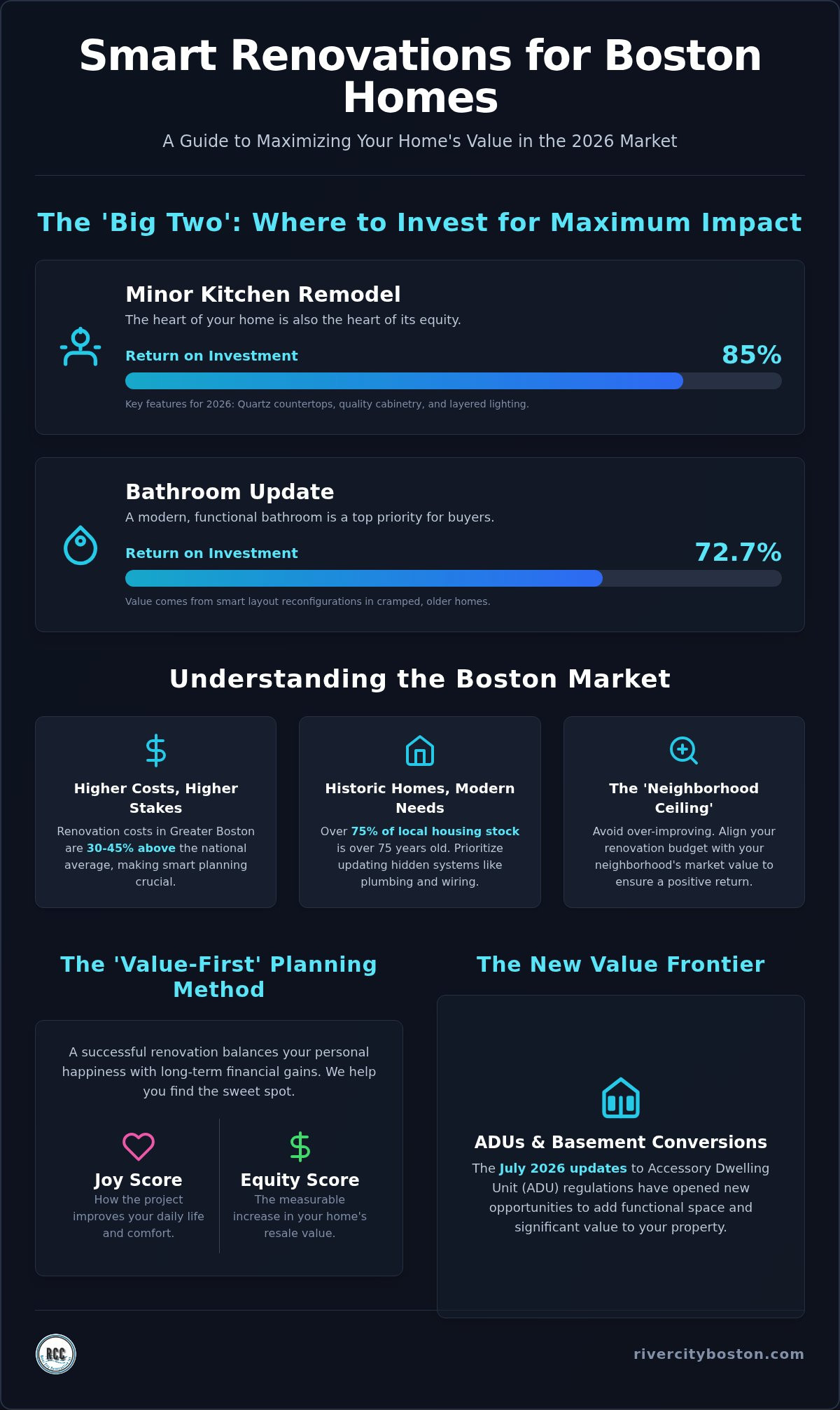
When you decide to increase home value with remodeling, you’re looking at more than just a fresh coat of paint or a new countertop. You’re making a calculated investment in your property’s future. To do this effectively, you must understand the financial metrics behind the work. Remodeling ROI is the percentage of project cost recouped through increased property resale value. In our local market, where renovation costs are often 1.3 to 1.45 times the national average, hitting the right mark requires precision and local insight.
There’s a significant difference between “cost recovered” and “added lifestyle value.” While a project might return 70% of its cost in a sale, the remaining 30% is often justified by the daily ease and comfort you experience while living there. Understanding the basics of renovation helps clarify why some updates are purely for your enjoyment, while others are essential for maintaining equity. In Boston, where over 75% of our housing stock is more than 75 years old, value is often found in modernizing hidden systems like plumbing and wiring before focusing on the finishes.
The ‘Neighborhood Ceiling’ and Local Market Dynamics
Every street has a limit on what a buyer will pay. If you’re looking at comparable homes in Winchester or Lexington, you’ll see a clear range of prices. It’s easy to fall into the trap of over-improving your home beyond what the local market can support. For example, installing a professional-grade chef’s kitchen in a neighborhood of modest starter homes might not yield the same return as it would in a high-end district. This strategic approach ensures you increase home value with remodeling without pricing yourself out of your own street. Working with a partner who understands these micro-markets is vital for keeping your budget aligned with reality.
Emotional vs. Financial Returns
We often talk about the “Joy Score” versus the “Equity Score.” Your Joy Score reflects how much a more functional kitchen or a spa-like bathroom improves your mood and daily routine. The Equity Score is the hard data. A minor kitchen remodel in Boston currently shows an 85% ROI, which is a strong financial win. However, if a project makes you love your home again, that’s a return that doesn’t always show up on a spreadsheet. Professional design-build services bridge this gap. We help you make choices that satisfy your personal taste while keeping a steady eye on what the next owner will value most.
The ‘Big Two’: Kitchen and Bathroom Remodeling for Maximum Impact
If you’ve ever tried to host a holiday dinner in a kitchen designed in the 1970s, you know that layout matters just as much as looks. In the Greater Boston area, buyers are looking for spaces that handle the chaos of modern life with grace. While curb appeal gets people in the door, the kitchen and the primary bathroom are where they decide to make an offer. These rooms are the heavy hitters when you want to increase home value with remodeling because they represent the most functional parts of the home.
Current data shows that a minor kitchen remodel in Boston returns approximately 85% of its cost. Meanwhile, a bathroom update sees an average ROI of 72.7%. These numbers are strong, but the real value comes from layout reconfigurations. In many older Boston homes, rooms are walled off and cramped. Opening up these spaces to create a better flow is often what moves a property from “listed” to “sold.”
Kitchen Renovations: The Heart of Home Equity
The kitchen is no longer just a place to cook; it’s the command center of the house. To see the best return, focus on high-traffic areas. This means investing in quality cabinetry, layered lighting, and spacious islands. In the 2026 market, quartz has overtaken granite as the preferred material. It offers a clean, modern look and requires much less maintenance than natural stone, which appeals to busy professionals.
Choosing a design-build approach for your kitchen remodel in Boston is often safer than hiring separate parties. It ensures that the person drawing the plans understands the actual cost of the materials and labor from day one. This prevents the heartbreak of falling in love with a design that is impossible to build on your budget. If you’re curious about how a new layout could work in your space, it’s helpful to speak with a local expert who knows the architectural quirks of our area.
Master Bathroom Upgrades: Creating a Spa Oasis
In towns like Medford and Newton, a luxury bathroom remodel has become a top priority for buyers. The trend for 2026 is “functional luxury.” People aren’t looking for oversized whirlpool tubs anymore. Instead, they want large walk-in showers with frameless glass and custom vanities that offer plenty of storage.
Even if you have a small footprint, you can make a big impact. Using large-format tiles can make a tiny bathroom feel much bigger because there are fewer grout lines to break up the visual space. High-quality fixtures and smart storage solutions prove that you don’t need massive square footage to increase home value with remodeling. It’s about making every inch count with professional finishes that stand the test of time.
The New Value Frontier: ADUs and Basement Conversions
Adding legal square footage is one of the fastest ways to jump into a higher price bracket when you sell. In the past, Boston homeowners were often limited by the existing footprint of their homes. However, 2026 has brought a major shift in how we look at our backyards and lower levels. If you want to increase home value with remodeling, converting underused space into a legal living area is the “new frontier” of home equity. It’s not just about more room; it’s about creating a separate, functional asset on your property.
While a basement finish typically starts between $30,000 and $40,000, a detached Accessory Dwelling Unit (ADU) often ranges from $200,000 to $400,000. The cost-per-square-foot for an ADU is higher because you’re building a standalone structure with its own foundation, plumbing, and electrical systems. Even with that higher entry point, the payoff is substantial. A well-built ADU in the current market can generate between $2,200 and $3,200 in monthly rental income. This turns your home from a monthly expense into a monthly revenue stream, which is incredibly attractive to future buyers.
ADUs: The Ultimate Property Value Multiplier
As of July 2026, Massachusetts has seen a surge in ADU interest due to updated zoning rules. While interior conversions like attic or basement flats are now “as-of-right” for many owner-occupied homes, navigating ADU regulations in Somerville and Newton still requires a steady hand. Detached units are particularly popular because they offer privacy for renters or aging parents. Even in neighborhoods where a variance is still required, the massive boost in property value often makes the extra paperwork worth the effort. Professional permitting is non-negotiable here; without it, that extra unit won’t count toward your home’s official appraisal value.
Basement Finishing: Unlocking Hidden Equity
For many, the most accessible way to increase home value with remodeling is right beneath their feet. Transforming a dark, damp storage area into a high-end basement home office or guest suite adds immediate functionality. To count as legal living space, you must prioritize moisture control and “egress.” Egress is a term for a safe emergency exit, like a specific type of window or a walk-out door. Adding a bedroom and bathroom combination in the basement is a “safe bet” for ROI because it officially changes your home’s listing from a three-bedroom to a four-bedroom. That single change can significantly increase the pool of interested buyers when you eventually hit the market.
Avoiding ‘Remodeler’s Regret’: Planning for Long-Term Gains
We’ve all seen that house on the market with the neon backsplash or the ultra-modern hardware that already looks dated. While it’s tempting to follow the latest design blogs, the goal to increase home value with remodeling requires a longer view. True value doesn’t come from chasing fads. It comes from making choices that will still look sophisticated and function perfectly ten years from now. In our region, this means prioritizing durability against the harsh New England seasons and choosing finishes that appeal to the widest possible range of buyers.
External projects like a well-built deck or a solid entry door act as the “handshake” of your home. They are the first things a buyer touches and sees. If a deck feels spongy or a front door has a draft, it sets a negative tone for the rest of the tour. High-quality exterior work signals that the home has been well-maintained. This is why hiring a licensed contractor who understands our local climate is the best way to protect your investment from future red flags.
Quality Materials vs. Trendy Fads
In the 2026 market, buyers are more discerning than ever. They can tell the difference between “big box” store cabinetry and custom-built units. Custom cabinetry doesn’t just look better; it lasts longer and fits the specific dimensions of older Boston homes perfectly. Another high-ROI choice is investing in energy-efficient windows and insulation. With Massachusetts energy costs always on the mind, a home that stays warm without a massive bill is a huge selling point. When it comes to aesthetics, stick to neutral palettes. Whites, grays, and warm wood tones allow potential buyers to visualize their own lives in the space, rather than being distracted by your personal color preferences.
The Critical Role of Professional Craftsmanship
A beautiful room is only valuable if the “bones” are correct. Poor plumbing or amateur electrical work can kill a sale during the home inspection phase. We’ve seen many homeowners lose out on equity because a DIY project didn’t meet local building codes. This is where the “Master Craftsman” approach makes a difference. At River City Construction Inc, we emphasize integrity and transparency in every build. We ensure that the work behind the walls is just as high-quality as the finishes on top. This level of professional standards provides peace of mind that your renovation will stand up to scrutiny and add lasting equity to your property.
Ready to Increase Your Home Value? Start Your Project Today
Every successful renovation begins with a clear goal. At River City Construction Inc, we operate on a “Value-First” philosophy. This means we don’t just look at what looks good; we look at what makes financial sense for your specific street in the Greater Boston area. We’ve spent years learning the nuances of the local market, from the historic charm of Winchester to the modern demands of Somerville. Our team understands that when you choose to increase home value with remodeling, you’re looking for a partner who treats your equity with the same respect you do.
Take the Miller family in Belmont, for example. They loved their neighborhood but felt their home was stuck in the past. Their basement was a dark storage space, and their kitchen layout made hosting nearly impossible. By choosing a strategic plan that prioritized a minor kitchen update and a legal basement conversion, they transformed their daily life. More importantly, their recent appraisal showed a significant jump in equity that far exceeded the project cost. They now have a home that is more functional, more beautiful, and a much stronger financial asset.
Our Design-Build Process in Greater Boston
One of the biggest fears homeowners have is “budget creep,” where costs keep rising after the work has started. Our design-build process is designed to eliminate these surprises. Because we handle both the design and the construction, we can ensure your vision stays aligned with your budget from the very first sketch. We also take the weight of paperwork off your shoulders. Navigating the permitting headaches in towns like Cambridge and Belmont is part of our daily routine. We know exactly what the local inspectors are looking for, which keeps your project on schedule and avoids costly delays. To ensure complete peace of mind, we offer transparency through fixed-price or cost-plus contracts, so you always know where your investment is going.
- Integrated design and construction teams for better communication.
- Expert handling of local zoning and building codes.
- Detailed project timelines and clear financial reporting.
- A final walkthrough to ensure every detail meets our “Master Craftsman” standards.
Schedule Your Free Consultation
The 2026 market is moving quickly, and now is the perfect time to start planning your home goals. Whether you want to add a guest suite, modernize your kitchen, or explore the potential of an ADU, taking the first step is easier than you think. You deserve a home that works for your family today while building wealth for tomorrow. Let’s work together to increase home value with remodeling through a plan that is grounded in quality and local expertise.
Building Your Future in the Greater Boston Market
Remodeling in 2026 is about more than simple aesthetics; it’s about making strategic choices that align with the high standards of the Massachusetts real estate market. By focusing on functional luxury in your kitchen and bathroom or exploring the rental potential of a new ADU, you create a home that works for your family today and pays for itself tomorrow. Choosing the right projects to increase home value with remodeling ensures your house remains a comfortable sanctuary while becoming a significantly smarter long-term investment.
Working with a team that offers comprehensive design-build solutions removes the guesswork from budgeting and permitting. Our licensed local craftsmen understand the specific structural needs of historic homes in towns like Winchester and Somerville. We stay ahead of Greater Boston market trends to help you avoid trendy fads and focus on timeless quality that buyers will always respect. You don’t have to navigate these big decisions alone.
We’re here to help you turn your vision into a reality that adds lasting value and peace of mind to your home. Let’s start building something great together.
Frequently Asked Questions
Which remodeling project has the highest ROI in Boston?
Garage door replacements and manufactured stone veneer currently offer the highest return on investment in the Boston area, often recouping over 90% of their cost. If you want to increase home value with remodeling inside the house, focus on minor kitchen updates. These smaller projects typically outperform full luxury gut renovations in terms of percentage recovered. Boosting your home’s curb appeal is often the most efficient way to see an immediate jump in market interest.
How much does a typical kitchen remodel increase home value?
A minor kitchen remodel typically recovers about 85% of its cost in the current Greater Boston market. This room remains the most influential space for potential buyers. Instead of a full luxury overhaul, focus on functional luxury like high-quality cabinetry and quartz countertops. These updates create a modern feel without the massive price tag of a high-end renovation. It’s the most reliable way to build equity while improving your daily routine.
Do I need a permit for minor home renovations in Massachusetts?
Yes, most renovations in Massachusetts require a permit. While very small cosmetic tasks might be exempt, anything involving structural changes, plumbing, or electrical work needs official approval in towns like Somerville and Winchester. Skipping this step can create major red flags during a home inspection when you try to sell. Working with a professional team ensures that all work is legally documented, which protects your long-term investment and ensures safety.
Is an ADU worth the investment for a single-family home?
An ADU is often a fantastic investment for single-family homes in Newton or Cambridge. With the July 2026 zoning changes, these units have become a powerful way to add rental income or house aging parents. Beyond the monthly rent potential, a legal ADU adds significant square footage that is highly sought after by modern buyers. It officially moves your property into a different value bracket, making it one of the most effective ways to increase home value with remodeling.
How can I avoid over-improving my home for my neighborhood?
Start by researching comparable homes on your specific street in Winchester or Lexington. Look at the “neighborhood ceiling,” which is the maximum price buyers are willing to pay for a home in that area. If your planned renovation makes your house significantly more expensive than your neighbors’, you may not see a full return. A local design-build expert can help you choose high-quality materials that match the architectural standards of your community without overspending.
Does a finished basement count toward my home’s total square footage?
A finished basement only counts toward your total square footage if it meets specific legal requirements for egress and moisture control. This means you must have a safe emergency exit, such as a walk-out door or a specific type of window. If the space is legally permitted and finished to the same standard as the rest of your home, it adds official value. Without these legal sign-offs, it’s just finished storage rather than living space.
What are the red flags to look for when hiring a Boston contractor?
Watch out for contractors who don’t have deep experience with the complex permit processes in towns like Belmont or Medford. A major red flag is a lack of transparency regarding project timelines or a refusal to offer fixed-price contracts. You should also be wary of anyone who suggests skipping permits. A reliable partner will have a clear design-build process and a portfolio of licensed work that emphasizes integrity and long-term durability over quick fixes.
How long does a major home renovation usually take?
Timeline varies by project, but a major home renovation in Greater Boston typically takes several months from the initial design phase to the final walkthrough. You should also account for local permitting backlogs, which can add weeks to the schedule in some neighborhoods. A design-build approach helps streamline this by coordinating the design and construction teams early. This organized rhythm helps lower your anxiety and keeps the project moving toward a predictable finish date.