Material costs may be included in progress payments or listed as a separate upfront payment. The contract should explain how and when materials are paid for, including any costs due before ordering. A clear kitchen remodel payment schedule ties each payment to the work and materials planned for that stage.
It’s understandable to want clarity before committing funds, especially when cabinets, countertops, and other materials are part of a larger renovation. A material payment may feel different from a milestone payment, but the agreement should specify what each covers and when it’s due.
This article explains how material costs fit into a remodel payment plan, how progress payments can align with visible milestones, and what to expect if the project timeline shifts or work nears completion. You’ll also learn why larger projects often use several scheduled payments rather than one deposit and one final bill.
Key Takeaways
- Material costs may be paid through scheduled progress payments or as a separate upfront amount, depending on the agreement.
- Linking payments to visible project milestones can make timing clearer when the renovation schedule changes.
- Custom-ordered materials can affect when funds are due, so their payment terms should be clear in the contract.
- Understand what substantial completion means and how it relates to the final payment and any remaining small tasks.
- Larger remodels often use several payments across the project, helping connect costs with work as it moves forward.
What forms of payment do contractors accept?
Contractors may accept checks, bank transfers, Automated Clearing House (ACH) payments, and credit cards. Some also accept financing. The contract should list accepted methods and explain when each payment is due. For larger remodels, an initial deposit commonly ranges from 20% to 30% of the project cost. Larger-project deposits may also fall around 25% to 35%, while a small, quick job may use a 50% deposit. The agreement sets the actual terms.
A deposit can reserve a place in the contractor’s schedule and cover early expenses, including custom materials that must be ordered before work starts. The contract should identify those items, state when their costs are due, and explain how the amounts fit with later payments. For a small, straightforward project completed in a few days, a deposit followed by a final payment may suit the short work sequence.
In a fixed-price contract, payments follow the agreed price and schedule for the defined work. Individual material receipts may not be included. With a time-and-materials or cost-plus agreement, material charges reflect purchases, and contractors typically provide receipts.
Deposit limits and payment rules vary by state. For example, California caps a contractor’s deposit at 10% of the total project cost or $1,000, whichever is less. That California rule should not be assumed to apply in Massachusetts; location and contract terms matter.
Paying too much upfront can leave less leverage if work stops or ordered materials are delayed. It can also leave too little of the balance for later project stages. Payments should have clear purposes, such as covering an identified material order or completed work, rather than an unexplained large request.
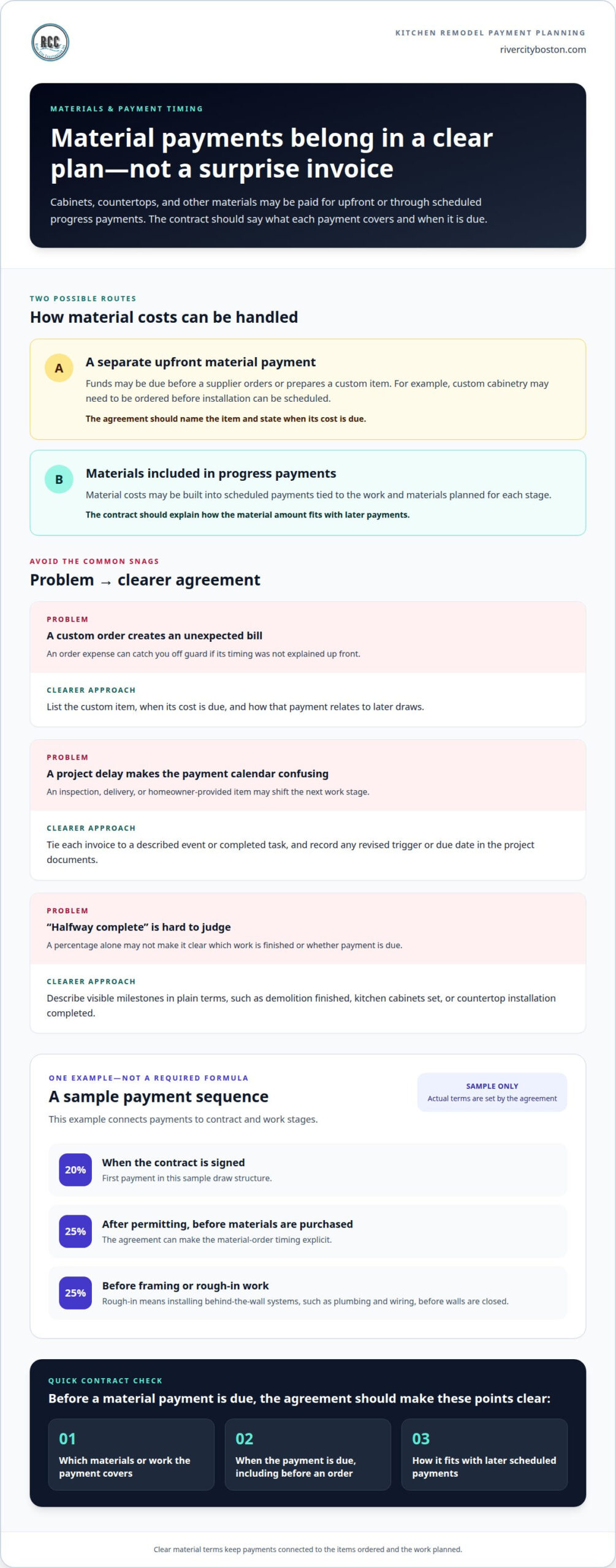
One sample draw structure calls for 20% when the contract is signed, then 25% after permitting and before materials are purchased. Another 25% is due before framing or rough-in work. Rough-in means installing behind-the-wall systems, such as plumbing and wiring, before walls are closed. These percentages are one example, not a required formula.
A longer renovation needs a schedule that reflects its distinct work stages. If custom cabinets must be ordered before installation, the agreement should show when that material cost is due and how it relates to later draws. This helps prevent an order expense from appearing unexpectedly on a later invoice.
For local context, the Boston kitchen remodeling page describes the work involved in planning a kitchen renovation.
Can I adjust payment terms if the project timeline shifts?
Yes, the payment calendar can be revised when the work sequence changes, but the change should be agreed to and recorded clearly. A delayed inspection, late delivery, or homeowner-provided item that has not arrived can shift a milestone without changing the amount already paid. The written schedule should show which event triggers each invoice, how a delay affects that trigger, and whether a revised due date applies. This keeps progress payments connected to actual work rather than an outdated calendar estimate.
For example, a typical progress payment may be 20% to 30% after a major stage, such as demolition or rough-in work. A sample schedule places a 20% payment at rough-in, once the work is ready for sheetrock. If a required inspection has not happened, that milestone may not be complete yet. The schedule should describe the completed work in plain terms, so both sides can tell whether the payment is due.
Milestone-based payments use specific, visible events: demolition finished, cabinets installed, or countertop installation completed. Progress-based payments may instead refer to a portion of the overall work. That can be harder to assess if the contract only says “halfway complete.” A useful description identifies the work that counts, such as setting kitchen cabinets, rather than relying only on a percentage estimate.
Homeowner-provided items can affect the sequence, too. If a sink supplied by the homeowner arrives after the countertop is ready for installation, the crew may need to shift that step. The payment schedule should distinguish completed work from the delayed task. A delay in one item does not automatically mean every milestone is complete or that every payment date moves the same way. The written terms should explain how affected work and due dates are handled.
When the timeline changes, compare the scheduled milestone with the work actually completed. Then record any revised trigger or due date in the project documents before the next payment. For instance, if cabinet installation moves because an earlier stage remains unfinished, the related payment should stay tied to its stated trigger. Clear descriptions make the schedule easier to follow as the work sequence changes.
Final payment should also have a defined point. A sample construction schedule sets a 5% final payment after project completion and a walkthrough. The walkthrough gives both sides a chance to review finished work and identify remaining items. The contract should state how that final step relates to payment, so a shifted installation date doesn’t create confusion near the finish.
For a kitchen remodel with changing milestones, discuss the project timeline and how its payment stages can be described clearly.
Are materials paid upfront or in the payment schedule?
Material costs may be included in scheduled payments or due separately before an order is placed. The contract should explain which approach applies and how material payments affect the project timeline.
Upfront Costs for Custom Materials
An upfront material cost is a payment due before a supplier orders or prepares a custom item. For example, custom cabinetry may need to be ordered before installation can be scheduled. The contract should name the item, state when payment is due, and explain how that amount fits into the remaining payment terms.
This detail matters because a custom order can connect payment timing to the renovation sequence. If the agreement says cabinetry is ordered after a specified payment, that event gives both parties a clear reference point. If the order or delivery timeline changes, the contract can show how the change affects the next scheduled stage. A clear written record also distinguishes an item-specific payment from a general project deposit.
Some large home-improvement retailers require full payment before ordering materials or starting remodeling work. That differs from a contractor’s staged schedule, where material expenses may be part of a progress payment. The agreement should identify which arrangement applies to each purchase. It should also clarify whether a separate payment is credited toward the contract total rather than added to it.
Payments Tied to Material Costs
A material-linked payment is a scheduled amount connected to specific items purchased for the project. For example, payment may be due when materials are ordered or when they arrive for installation. This structure shows when funds are needed and which purchase they cover. The contract should set out the payment terms before it is signed.
Material receipts depend on the contract type. Under time-and-materials or cost-plus agreements, contractors typically provide receipts for purchased materials. A fixed-price contract may not include individual material receipts, since the agreement sets a price for the defined work rather than billing for each item separately. Knowing the difference helps you understand what documentation accompanies an invoice.
Consider a countertop order. The written terms can identify whether its cost is included in a scheduled payment or handled as a separate upfront amount. They can also explain what happens if the order is delayed and installation must move. A clear description links the invoice to the purchase or milestone, making it easier to see how the payment fits into the project.
Before signing the contract, review the material list alongside the payment dates. Confirm that custom items, their ordering point, and any separate upfront costs appear in the same written plan. This gives the order, payment, and installation stage a defined relationship instead of leaving them as unexpected steps during the renovation.
Final payment and substantial completion
The last payment should follow the completion point defined in the contract. That definition matters because a functional kitchen may still have minor punch-list items.
Final Payment
The final payment is the remaining amount due at the contract’s stated completion stage. For a kitchen remodel, that stage is typically substantial completion, when the kitchen functions and major work is done. The final balance commonly represents 10% to 20% of project cost. Keeping that amount tied to a clear event helps avoid confusion about whether a payment is due before essential work is finished.
A sample construction payment structure leaves 5% until project completion and a walkthrough. That final portion gives the homeowner a reason to review the finished work with the contractor. The contract should say what the walkthrough covers, how the remaining balance is calculated, and whether any small items affect payment timing.
Substantial Completion
Substantial completion means the kitchen is functional and major construction work is complete, even if minor punch-list items remain. For example, the sink, cabinets, and main work areas may be usable while a small adjustment still needs attention. Defining this point in the agreement helps distinguish a working kitchen from a project with major unfinished work.
That distinction matters because the contract may make a final payment due at substantial completion, while a smaller retained balance remains until the walkthrough. The written terms should state what counts as a minor item and how it will be addressed. Clear wording helps prevent disagreement over whether a detail delays completion.
Before paying the final balance, compare the finished kitchen with the agreed scope. Review key work such as cabinet installation, countertop fit, sink function, and listed finishing tasks. Note any incomplete items during the walkthrough, then record how and when they will be completed. This creates a shared record instead of relying on memory after the construction crew leaves.
Final payment timing also affects leverage. Paying the entire balance before major work is complete leaves less financial incentive to finish outstanding tasks. On the other hand, withholding an amount beyond the contract’s terms can create a dispute. The payment structure should balance these concerns by tying each amount to a stated completion stage.
A practical closeout has distinct steps: confirm substantial completion, walk through the kitchen, document remaining punch-list work, and follow the contract’s payment terms. If the agreement leaves 5% until the final walkthrough, that amount remains due at the stated point. If the final balance is tied to substantial completion, the contract’s definition guides the timing. Clear terms protect both parties and make the finish of the project easier to manage.
Typical payment schedules for larger remodeling projects
A larger renovation usually needs more than an initial deposit and one final payment. Several draws can align the payment plan with permits, material orders, installation, and finishing. The written schedule gives the homeowner a clear view of upcoming payments while helping the contractor plan cash flow for labor and subcontractors.
For larger kitchen remodels, a deposit closer to 25-35% is more common. The balance can then be divided among key stages, such as cabinetry and countertop installation. A later payment should correspond to work that can be clearly identified, not a vague estimate that the project is “mostly done.” This makes the agreement easier to follow as the work progresses.
One sample construction schedule divides payments this way:
- 20% when the contract is signed.
- 25% after permitting and before materials are purchased.
- 25% before framing or rough-in work, which includes installing plumbing and wiring before the walls are closed.
- 25% before finishes or inspections.
- 5% after project completion and the final walkthrough.
This example totals 100%. The homeowner can see how each draw connects to a point in the build, from signing through closeout. A permit-related payment, for example, has a defined trigger rather than an uncertain calendar date. The contract should describe the work or event required for every draw.
Another sample schedule uses smaller stages across the renovation. It calls for 10% when the proposal is signed, 30% at the start, 15% when tile floors are complete, 10% when interior trim is complete, and 10% when the stone counter template is completed. That sample comes from a larger renovation, but it is an example, not a standard formula. It shows how a payment plan can reflect the order of work.
These milestones also help manage cash flow. A contractor needs funds to coordinate labor, order materials, and pay subcontractors as their work is completed. A homeowner benefits from knowing which stage each payment supports. Clear terms can build trust by connecting each invoice with a stated project event.
Before signing, review the entire payment structure as one plan. Confirm that the percentages add up to the contract total, and that each due point names a permit, purchase, or completed stage. The final balance commonly represents 10-20% of project cost, though sample schedules may leave a different amount. A clear written schedule helps prevent unexpected payment requests during a long renovation.
River City Construction: Kitchen Remodeling
River City Construction Inc provides kitchen remodeling for homeowners planning a renovation, from updating key features to reshaping the room. If you’re considering a project, the payment schedule is part of understanding how the work and material costs fit together. Discussing your goals, planned materials, and project scope helps lay the groundwork for a clear conversation about the renovation.
Bring the questions that matter to your household, such as when custom materials may need to be ordered and how payments can align with project milestones. A remodel should also suit the way you cook, gather, and move through the space. Contact River City Construction Inc to discuss your kitchen remodeling plans and the next steps for your project.
Plan the next step with confidence
A renovation is easier to plan when financial decisions support the way you want the finished room to work. Before moving ahead, consider how your priorities, material choices, and project scope fit together. A well-defined kitchen remodel payment schedule can keep those decisions connected as planning turns into construction.
River City Construction Inc offers Kitchen Remodeling, Bathroom Remodeling, and Basement Remodeling. If your next project is a kitchen, a conversation about the space and your goals can help shape the path forward without rushing your decisions.
A thoughtful plan is a solid start toward a kitchen that feels right for your home.
Frequently Asked Questions
Are the payments made to contractors refundable if the project is canceled?
Not automatically. Whether a deposit or progress payment is refundable depends on the contract; a partial refund may be negotiated for materials not yet purchased or work not completed. If cancellation happens after a custom item has been ordered, the agreement’s terms for that purchase matter. Review cancellation terms alongside payment milestones before signing, so you understand how completed work, committed purchases, and remaining funds are handled.
Are there any hidden fees I should be aware of when working with contractors?
There’s no single fee that applies to every remodel, so look for the charges listed in your agreement. For example, some contractors charge fees or interest when payments are late. Check how the contract describes added work, material purchases, and payment timing, then compare each invoice with those terms. If a charge relates to a scope change, the written record should explain what changed and why.
Are there penalties for late payments to contractors?
Some contractors charge additional fees or interest when an invoice is paid late. The contract should state the applicable terms, including when an invoice becomes overdue and how any added amount is calculated. For example, if payment is due after an inspection milestone, make sure the invoice reflects that agreed trigger. Knowing the terms helps you plan payments and address timing concerns before they become a dispute.
Can I request a lien waiver after each payment to a contractor?
Yes, homeowners can request a lien waiver after each contractor payment. A waiver helps protect against potential claims by subcontractors or suppliers related to the work or materials covered by that payment. For example, after paying a draw tied to cabinet installation, request documentation for that payment. Keep the waiver with the invoice and payment record so the paperwork reflects which stage and amount it covers.
Can I review the cost breakdown before making a payment to a contractor?
Yes. Compare the invoice with the signed agreement and the stage that triggered payment. Under time-and-materials or cost-plus agreements, contractors typically provide receipts for purchased materials. Fixed-price agreements may not include individual material receipts because the price covers defined work. If an invoice includes a change or added item, look for its written approval and description. This makes it easier to understand whether the amount follows the agreed scope.
What is a typical payment schedule for a kitchen remodel?
A typical kitchen remodel payment schedule uses an initial deposit, progress payments, and a final payment connected to project stages. One sample schedule calls for 20% when the contract is signed, 25% after permitting and before materials are purchased, 25% before framing or rough-in, 25% before finishes or inspections, and 5% after completion and walkthrough. It’s an example, not a required formula; the written contract defines the actual schedule.
What percentage deposit can a kitchen remodeling contractor legally require?
Deposit limits vary by state, so one state’s rule shouldn’t be assumed to apply in another. For example, California legally caps a contractor’s deposit at 10% of the total project cost or $1,000, whichever is less. That California limit does not establish the rule for a Boston project. The location matters, and the contract should clearly state the requested deposit and payment terms.
How should kitchen remodel payments be tied to project milestones?
Connect each payment to a specific, visible event rather than a vague estimate of how complete the project feels. For example, a contract can identify completed demolition, rough-in work ready for sheetrock, or cabinet installation as payment triggers. Include the work that must be finished for each milestone and explain how an inspection or delayed item affects timing. Clear definitions give the homeowner and contractor a shared basis for reviewing an invoice.