
Imagine pulling back the plaster in your century-old Cambridge home only to find structural issues and a contractor who won’t return your calls. It’s a stressful reality for many when they realize their builder doesn’t grasp the nuance of Massachusetts building codes. To avoid these pitfalls, you need a specific list of questions to ask a remodeling contractor Boston experts can answer with transparency. You deserve a partner who respects your investment and understands the unique architectural challenges of our local neighborhoods.
We’ve developed a comprehensive checklist to help you master the vetting process from the very first meeting. You’ll learn how to verify 2026 HIC Guaranty Fund protections and how to spot hidden costs common in older New England homes. This guide provides 25 critical ‘deal-breaker’ questions that ensure your chosen partner understands local zoning and has a predictable communication plan for your project. By the end, you’ll have the confidence to hire a professional who values integrity as much as craftsmanship.
Key Takeaways
- Learn how to distinguish between a CSL and HIC registration to ensure your project is fully protected under Massachusetts law.
- Discover specific questions to ask a remodeling contractor Boston homeowners need to use when vetting for historic home expertise and local zoning knowledge.
- Establish a clear communication plan and site management strategy to avoid the common pitfalls of contractor ghosting or messy job sites.
- Understand the benefits of a fixed-price contract and how to structure a payment schedule that aligns with state regulations to prevent budget creep.
- Identify critical red flags during the reference check process and learn what a professional workmanship warranty should actually cover.
Essential Legal and Licensing Questions for Massachusetts Contractors
Licensing in Massachusetts is unique and rigorous. You need more than just a business card to ensure your home is in safe hands. When searching for the right professional, the first set of questions to ask a remodeling contractor Boston homeowners should prioritize relates to legal credentials and state compliance. A legitimate contractor isn’t just someone who knows how to swing a hammer. Understanding what a general contractor does involves recognizing their duty to maintain proper state registrations and insurance to protect the client and the property.
Understanding the HIC vs. CSL Distinction
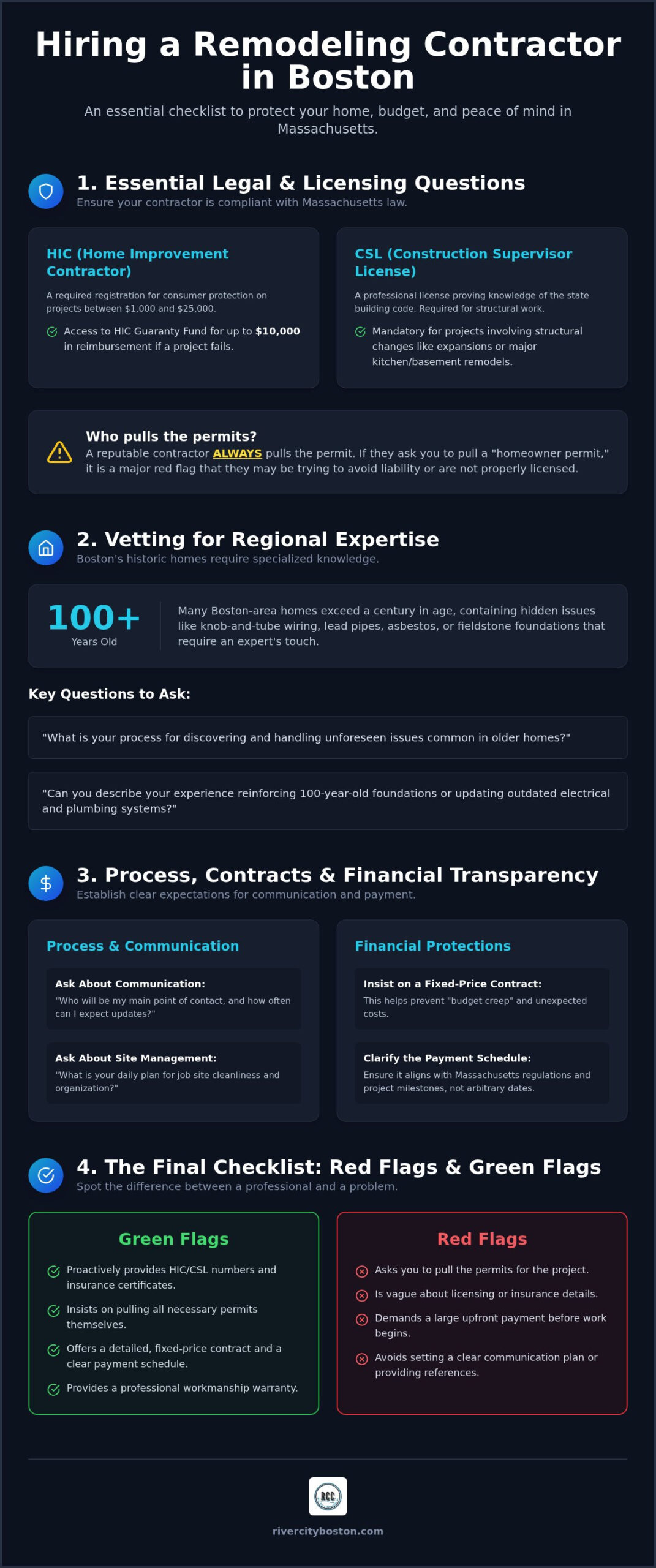
In Massachusetts, the distinction between a Home Improvement Contractor (HIC) registration and a Construction Supervisor License (CSL) is vital. An HIC registration is primarily for consumer protection. It allows you to access the HIC Guaranty Fund, which can provide up to $10,000 in reimbursement if a project fails legally. A CSL, however, is a professional license that proves the contractor has passed exams on the state building code. If your project involves structural changes, like a kitchen expansion or a basement remodel, your contractor must have a CSL. Hiring a handyman for structural work without this license is a major risk. You can verify these numbers on the Mass.gov portal to ensure they are current as of July 2026.
Insurance is another non-negotiable factor. Ask for a certificate of insurance that lists both General Liability and Workers’ Compensation. This protects you if a worker is injured on your property or if your home is damaged during construction. Without it, the financial liability could fall on your shoulders. It’s also wise to ask if they’ve ever had a claim filed against them with the HIC Guaranty Fund. A clean record indicates a history of transparency and integrity, which are the hallmarks of a trusted neighbor and master craftsman.
Permit Responsibility and Liability
One of the most important questions to ask a remodeling contractor Boston residents face is: “Who pulls the permits?” A reputable contractor always pulls the permit. If a builder asks you to pull a “homeowner permit,” they’re often trying to bypass their own liability or avoid licensing scrutiny. When you pull the permit, you become the one responsible for ensuring the work complies with the Massachusetts State Building Code (780 CMR).
In dense areas like Somerville and Cambridge, permit nuances are strict and local zoning changes fast. In 2026, the Boston building department continues to prioritize rigorous inspections for major alterations. For example, a “Long Form” permit for major work currently costs $50 plus $10 per $1,000 of the estimated cost. Let the professional handle the paperwork. This ensures your project meets all safety standards and protects your home’s future resale value.
Vetting for Regional Expertise: Boston-Specific Project Questions
Boston is a city defined by its history, and its homes reflect that legacy. When you interview potential partners, the questions to ask a remodeling contractor Boston experts suggest should focus on their ability to handle structures built long before modern building codes existed. A contractor who primarily works on new developments may struggle with the settling foundations of a Back Bay brownstone or the complex layouts of a Somerville triple-decker. Local expertise isn’t just a buzzword; it’s a technical requirement for success in this region.
Modernizing Historic Boston Structures
The median age of owner-occupied homes in Massachusetts is approximately 57 years, but in the Boston metro area, many properties exceed a century in age. This longevity brings specific challenges that require a specialized approach. You should ask your contractor about their specific process for renovating old homes in Boston while preserving architectural character. A critical query involves their protocol for discovery. Hidden issues like knob-and-tube wiring, lead pipes, or asbestos are common in our local housing stock. A seasoned expert will have a systematic plan for testing and remediation that complies with the Massachusetts Home Improvement Contractor (HIC) program standards.
Ask about structural reinforcement for 100-year-old foundations. It’s common to find original fieldstone foundations that require repointing or specific moisture management strategies before a basement can be finished. If you are planning a project for your historic property, reach out to us to discuss how we can preserve your home’s legacy while modernizing its function.
Specialized Vetting for ADUs and Extensions
The 2024-2026 Massachusetts Affordable Homes Act has significantly changed the landscape for Accessory Dwelling Units (ADUs). If you’re looking to add a guest house or a rental unit, you must ask if the contractor is familiar with the specific zoning laws in Somerville and Medford. These cities have tight urban lots that present unique challenges for utility connections and equipment access.
Inquiries should focus on how they handle detached units in small yards. How will they bring in heavy machinery without damaging neighboring properties? If you are considering this type of addition, consulting with experienced ADU builders Massachusetts residents rely on can prevent costly permitting errors. Finally, ask how they protect the job site against New England’s extreme humidity and freeze-thaw cycles. Proper flashing and material acclimation are the only ways to ensure your investment survives our harsh winters and damp springs.
Managing the Remodel: Questions About Process and Communication
Success in a project depends on more than just the final tile work. It relies on a disciplined management structure and clear expectations. One of the most vital questions to ask a remodeling contractor Boston homeowners often overlook is: “Who will be my primary point of contact?” You shouldn’t have to chase down a different person every time you have a question. A dedicated project manager ensures that your vision remains the priority from start to finish, providing a single source of accountability.
The Communication Framework
Site Logistics in Greater Boston
Managing a home renovation in Middlesex County requires a deep understanding of local logistics. In dense areas like Somerville or Medford, parking permits and dumpster placement are significant logistical hurdles. Ask how the contractor plans to handle these issues without upsetting your neighbors or violating city ordinances. A master craftsman respects the community as much as the home. Professional site management should include:
- Daily site cleanup to keep the neighborhood tidy and safe.
- Specific dust mitigation strategies like HEPA air scrubbers and plastic barriers.
- Detailed floor protection using heavy-duty materials to preserve your home’s original surfaces.
Finally, ask about the change order process. In older homes, unexpected issues are common. You need a written agreement that no additional work will be performed without a signed change order detailing the cost and schedule impact. Following these Boston home improvement contracting tips can prevent the budget creep that often plagues unmanaged projects. A clear structure protects both your financial investment and your peace of mind.
Financial Transparency and Contractual Protections
A successful remodel isn’t just about the quality of the finish; it’s about the clarity of the finances. When you move from the design phase to the hiring phase, the specific financial questions to ask a remodeling contractor Boston residents must prioritize will define the security of your investment. You need to know exactly how your money is being handled and what protections you have if the project encounters unexpected hurdles. A master craftsman understands that transparency is the foundation of a trusted partnership.
Fixed-Price vs. Cost-Plus in 2026
In the current remodeling landscape, you’ll likely encounter two main contract types: fixed-price and cost-plus. A fixed-price contract is generally the most protective option for homeowners. It provides a set total for the entire scope of work. This means the contractor absorbs the risk of minor labor delays or material price fluctuations. This model is ideal for kitchen and bathroom remodeling where the design is finalized before construction begins. It prevents budget creep and ensures you know the final cost before the first hammer swings.
Cost-plus contracts are more common in high-risk historic renovations where structural surprises are almost guaranteed. In these cases, you pay for the actual cost of materials and labor plus a predetermined fee. While this can offer flexibility, it requires a high level of trust and meticulous record-keeping to avoid overspending. For most Greater Boston projects, a fixed-price agreement remains the benchmark for financial predictability and peace of mind.
The Payment Schedule and Legal Compliance
Massachusetts state law provides several built-in protections for residential clients. For any project valued at $1,000 or more, a written contract is mandatory. One of the most important regulations to verify is the deposit limit. Under the Home Improvement Contractor (HIC) law, a contractor cannot require a deposit of more than one-third of the total project price upfront. If a builder asks for half of the money before they’ve even dropped off a dumpster, it’s a significant red flag that they may have cash flow issues.
We recommend a milestone-based payment schedule. This ties payments to specific, verifiable progress on the job site, such as the completion of rough plumbing or the installation of cabinetry, rather than arbitrary calendar dates. Additionally, you should always request lien waivers from every subcontractor and material supplier. This document proves that the contractor has paid their team, protecting you from having a legal claim placed against your property for unpaid bills. If you’re ready to start your project with a transparent, fixed-price agreement, contact us for a detailed project estimate today.
Finally, remember that the HIC Guaranty Fund serves as your ultimate safety net. As of July 2026, homeowners can be reimbursed up to $10,000 if a registered contractor fails to fulfill their contractual obligations and a court finds in the homeowner’s favor. Ensuring your contract is legally compliant isn’t just about following rules. It’s about securing your family’s financial future and ensuring your project stays on track.
The Final Checklist: Red Flags and Reference Verification
The final vetting phase is where you look beyond the paperwork to verify the character of the team. The closing questions to ask a remodeling contractor Boston homeowners should use focus on long-term reliability and accountability. You want a partner who stands by their work long after the final inspection is complete. This stage is about ensuring the “Master Craftsman” persona matches the reality of their past performance.
What to Ask a Contractor’s References
Asking for references is standard, but you must be specific. Request contacts for three projects completed in the last 18 months that are similar in scope to your own. A kitchen remodel in a modern Medford condo requires a different skill set than a historic brownstone renovation in the Back Bay. When you speak to these former clients, go beyond general satisfaction. Inquire about the following:
- Budget Adherence: Did the final price match the initial fixed-price contract, or were there frequent “surprises”?
- Timeline Accuracy: Was the project completed on schedule, and did the crew show up consistently?
- Communication: Was the contractor easy to reach when problems arose, and did they provide regular updates?
- Subcontractor Quality: Were the specialized trades like plumbers and electricians professional and respectful of the property?
A master craftsman provides a written warranty on their workmanship. Ask about the specific duration and exactly what it covers. You should also understand their “punch list” process. This is the structured system for identifying and completing small repairs or adjustments at the end of a project. A professional firm will ensure this list is finished before they request the final payment. Finally, ask how they handle disputes. A clear, calm process for resolving disagreements prevents minor issues from derailing your project.
Identifying Red Flags in the Boston Market
Our local market is competitive, which can sometimes attract less-than-reputable operators. High-pressure sales tactics or a demand to sign a contract “today” to lock in a deal are immediate deal-breakers. Similarly, a request for a “cash-only” discount often signals an attempt to avoid insurance requirements or tax obligations. This leaves you completely unprotected if an accident occurs on your site.
Always verify that the company has a permanent business address in the Greater Boston area. Contractors who lack deep roots in the community often miss critical local nuances. This lack of regional knowledge can lead to ROI-killing mistakes that decrease your home’s long-term value. Choosing a trusted neighbor ensures your project is handled with the diligence and integrity your investment deserves.
Building Confidence in Your Boston Remodel
Choosing the right partner for your home improvement is the most significant decision you’ll make in the renovation process. By using these specific questions to ask a remodeling contractor Boston homeowners can ensure their project is backed by proper Massachusetts licensing and a deep understanding of local architectural history. You now have the tools to verify regional expertise and establish a communication framework that prevents the stress of the unknown. A successful remodel depends on this foundation of trust and technical competence.
Your home is a major financial and emotional investment. It deserves the attention of a master craftsman who understands the nuances of local zoning and the structural demands of historic properties. We believe that transparency and integrity are just as important as the quality of the build. If you’re ready to move forward with confidence, Request a Transparent Quote from River City Construction Inc. We specialize in Greater Boston residential remodeling and offer fixed-price contracts for absolute peace of mind. Our team brings extensive expertise in historic home modernization to every project we undertake. We look forward to helping you build a space that lasts for generations.
Frequently Asked Questions
Is a contractor required to be licensed in Boston?
Yes, contractors must hold specific state-issued credentials to perform residential work. Most projects require a Home Improvement Contractor (HIC) registration for consumer protection. If your project involves structural changes, the professional must also hold a Construction Supervisor License (CSL) to ensure the work meets the Massachusetts State Building Code.
What is the maximum deposit a contractor can ask for in Massachusetts?
The legal limit for a deposit is one-third of the total project price. This is a strict requirement under Massachusetts law for any residential contracting work. You should never pay more than 33% of the total cost before the project begins on your property.
Do I need a permit for a kitchen or bathroom remodel in Boston?
You need a permit for almost any project that involves more than cosmetic changes. While painting or installing new flooring doesn’t usually require paperwork, any work involving plumbing, electrical, or structural alterations must be permitted by the city. These permits ensure the safety and legality of your home improvements.
How do I check a contractor’s HIC registration status?
You can verify a registration status through the official Mass.gov e-licensing portal. This tool allows you to search by the company name or their HIC number to confirm they are active and in good standing. This is one of the most important questions to ask a remodeling contractor Boston homeowners should verify before signing a contract.
What happens if a contractor doesn’t finish the job in Massachusetts?
If a registered contractor fails to complete the work, you may be eligible for the HIC Guaranty Fund. This state-managed fund can provide up to $10,000 in reimbursement if you win a court judgment against the contractor. This protection only applies if you hire a contractor who is properly registered with the state.
Should I hire a design-build firm or a general contractor for my Boston home?
A design-build firm is often the best choice for complex renovations because it offers a single point of accountability. While a general contractor focuses on executing plans provided to them, a design-build team manages the entire process from the initial architectural drawings to the final construction. This approach often leads to fewer communication gaps and more predictable budgets.
How long does a typical kitchen remodel take in the Greater Boston area?
The construction phase of a kitchen remodel usually takes between 8 and 12 weeks. However, the entire process can take several months when you account for design, material lead times, and the permitting process in cities like Cambridge or Medford. Establishing a clear timeline is one of the essential questions to ask a remodeling contractor Boston experts recommend during the vetting phase.
Can a contractor work without insurance in Massachusetts?
No, a professional contractor should never operate without proper insurance coverage. They are required by law to carry workers’ compensation for their employees. Additionally, a reputable firm will carry general liability insurance to protect your home and assets in the event of accidental damage during the construction process.
